


 Share
Share

Pitru Paksha is the time in the Hindu calendar when families remember and honour their ancestors through practices such as shradh and arpan. In 2026, Pitru Paksha will be observed from September 26 to October 10. Food forms an essential part of the observance as well, as it is not just about making a vegetarian meal.
The food is made as an offering and is traditionally kept simple, fresh and relevant for the Shradh ritual. Rice, sesame, milk, ghee, barley and fresh fruits and seasonal vegetables are generally used as offerings. In many traditions, a portion of the prepared food is first set aside on a daily basis during the time of Pitru Paksha before the family meal is served. However, the exact menu and customs differ from household to household.
What Goes Into A Traditional Shradh Meal?
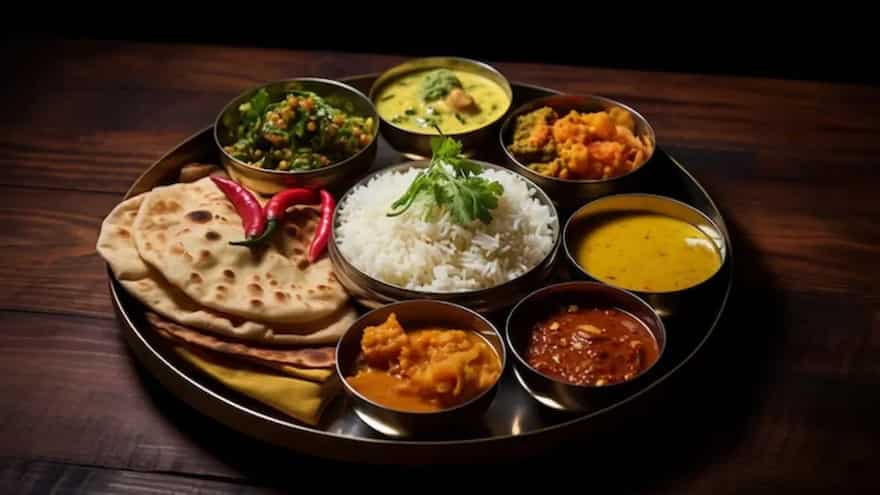
A Shradh meal is often prepared around familiar home-cooked food in place of elaborate festive-type dishes. Depending on the family practice, the meal may have dal, rice, a seasonal vegetable, puri or roti, a simple sweet and a milk-based preparation. Though it may look like an ordinary Indian home meal, its preparation and purpose give it a distinct significance.
One interesting part is the connection between memory and a certain food. Some families make a particular dish associated with the person who is being remembered, adhering to the shradh rules. This could be a familiar sweet, a vegetable they loved or another dish the person used to enjoy.
(Image credit: Freepik)
The cooking is also generally kept free from detailed preparations or strong flavours. The emphasis is on making food that can be offered fresh. In some households, the meal is cooked particularly for the Shradh day, while in others, a portion of the everyday prepared food is set aside for the offering.
What Food Is Avoided During Shradh?
Non-vegetarian food and alcohol are typically kept out of Shradh meals as the food prepared during the observance is traditionally sattvic and is prepared for ritual offering. Onion and garlic are also avoided during this time because they are not considered tamsic and are not part of the sattvic food prescribed for certain Hindu religious observances.
Some regional Shradh traditions follow a more precise list of ingredients. In Bihar, for instance, chana, black salt, black mustard, cucumber, brinjal, masoor dal and black urad dal are avoided during Pitru Paksha. These restrictions are embedded in the ritual and dietary customs as pursued by the community.
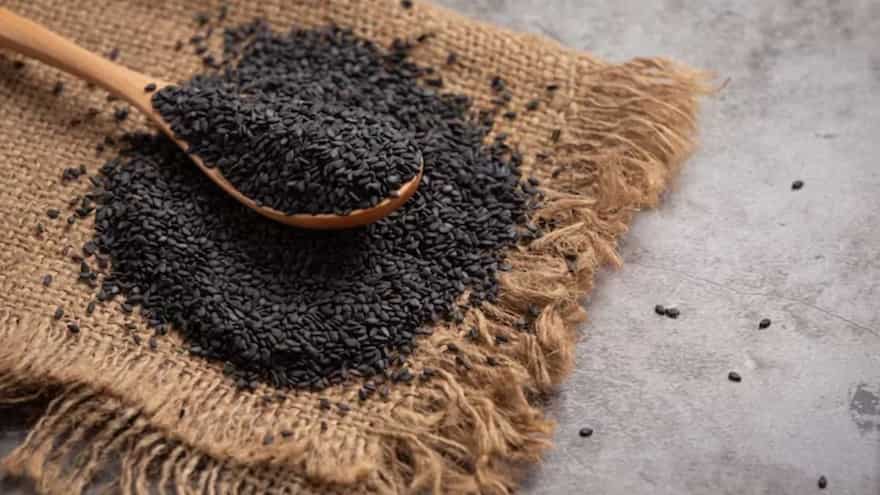
Masoor dal and chana are avoided because some pulses are considered tamasic and therefore inappropriate for the rules of Shradh food. Black urad dal is treated differently from black sesame, or kala til, which has an essential place in Shradh rituals. While black sesame is used for offerings and tarpan, black urad is regarded as a heavier food and is therefore excluded from everyday Shradh meals.
Brinjal is also avoided because it is associated with impurity and with exposure to insects during the monsoon and post-monsoon periods, and is not considered pure or sattvic.
Salt itself can also be treated differently from one household to another. Some families use regular salt in the meal, whereas others follow a salt-free or more specific preparation on the Shradh day.
What Is Offered To The Ancestors?
The offering is generally made from a portion of the freshly made meal. Depending on the ritual, pindas made from rice and other prescribed ingredients, water mixed with sesame for Tarpan, cooked food, fruits and sweets may form part of the offerings. In several traditions, food is also offered to crows, cows, dogs or other beings before the family eats.
The crow offering, commonly called Kaka Bali, is particularly recognisable in many Shradh practices. The food is therefore part of a sequence of remembrance and offering, rather than simply a special lunch cooked during Pitru Paksha.
(Image credit: Freepik)
What Is Offered To The Ancestors During Shradh?
Food offered during Shradh is made fresh and simple. Kheer, puri, seasonal vegetables, malpua, gulab jamuns and homemade sweets are commonly associated with Shradh meals. Kheer, generally made with rice, milk and sugar, has a central place in many traditional menus, and also puris are served along with a simple vegetable preparation.
In some regional traditions, malpua, halwa and other homemade sweets are also made for the occasion. In Maharashtra, for instance, the Shradh food traditions include dishes such as puran poli and god shevaya, which is made with fine vermicelli or seviya cooked in milk and sweetened with jaggery, often flavoured with cardamom and garnished with chopped nuts.
The prepared food may then be offered according to the family tradition before the meal is served. In many traditions, food is also given to crows, cows, and dogs and served to Brahmins first as part of the Shradh adherence.




