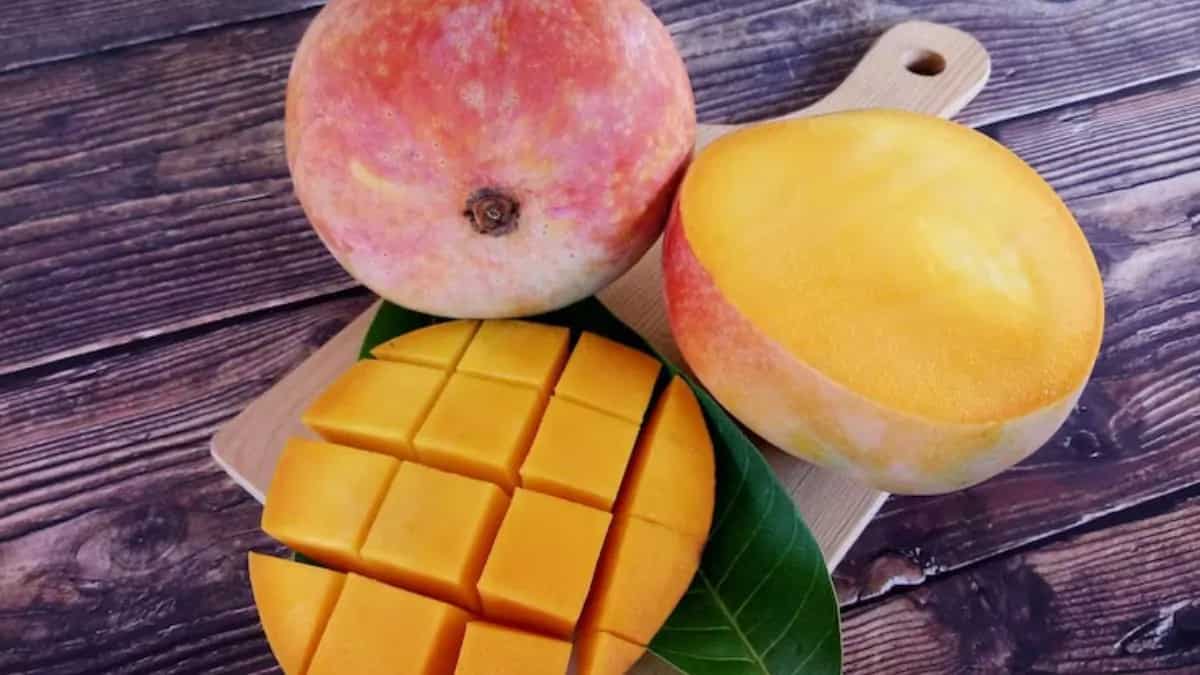
When people have a first glimpse of a Miyazaki mango, the reaction is usually disbelief. The fruit appears less like the regular mango and more like a polished luxury product, having deep ruby-red skin and carefully protected packaging. Originally produced in the Miyazaki area in Japan, these mangoes have slowly become renowned across the world for their distinctive appearance, extreme sweetness and staggering price tags. In recent years, social media has only built up to the fascination, turning Miyazaki mangoes into one of the internet’s most talked-about luxury mango varieties.
Unlike the common commercial mangoes, Miyazaki mangoes are produced under highly controlled conditions. Farmers have a close look at the sunlight exposure, temperature and the ripeness very carefully to reach their signature colour and the flavour. Many fruits are separately wrapped or suspended in nets while developing, so they ripen in a more natural way on the tree without any damage. As the production remains limited and quality standards are too strict, only a small number of them qualify for a premium sale every season. This rarity, mixed with Japan’s culture of treating fruits as a luxury, has made Miyazaki mangoes famous globally, far beyond just the world of common fruit markets.
What Do Miyazaki Mangoes Taste Like?
Miyazaki mangoes are usually described as incredibly sweet, but the taste is more layered than just being a simple sugary taste. The pulp feels smoother, buttery and almost fibreless, making every taste feel soft and rich. Unlike some of the mangoes that become too pulpy or sticky, Miyazaki mangoes remain pure and smooth in texture.
Many people compare the flavour to a mix of tropical mango sweetness, with hints of pineapple, peach and a floral undertone. The aroma is also unusually intense and aromatic. What makes the mango memorable is the balance of sweetness without feeling too heavy and juicy without too much fibre. Due to its texture and flavour profile, the mango is often enjoyed slowly and carefully, almost like a dessert rather than just a casual fruit.
(Image credit: Freepik)
Why Are Miyazaki Mangoes So Expensive?
The exceptionally high price of Miyazaki mangoes comes from a mix of labour, rarity and presentation. These mangoes are not produced in huge quantities like regular supermarket ones. Farmers spend months managing every tree and unique fruit to maintain its perfect colour, sweetness and appearance.
Japan also has a long-standing culture of luxury fruits being traded as gifts during special events. This means appearance matters greatly. Fruits are graded carefully, and only the best-quality mangoes join premium markets. Some top-class Miyazaki mangoes have been sold for stunning auction prices because collectors and luxury buyers value them like rare gourmet products. The fruit’s short season and limited production have increased the exclusivity even further.
Why Have Miyazaki Mangoes Become So Famous?
Part of the global obsession with Miyazaki mangoes stems from the visual appeal. Their shiny red skin looks different from the common traditional yellow or green mangoes, making them noticeable instantly. Once videos and photos of luxury fruit auctions began flooding social media, curiosity about the mangoes has grown more rapidly.
But beyond just the appearance, Miyazaki mangoes also represent Japan’s precision-driven food culture. People are mesmerised by how seriously Japanese growers treat the quality of the fruit, right from sunlight exposure to the packaging methods. In many ways, Miyazaki mangoes became well-known because they feel less like regular fruit and more like a luxury culinary experience linked to craftsmanship.
(Image credit: Freepik)
How Are Miyazaki Mangoes Usually Consumed?
As the fruit itself is deemed to be premium, Miyazaki mangoes are most commonly eaten fresh rather than cooked. People usually slice them and serve them chilled so that the flavour and texture remain the centre of attraction.
In Japan, they are also used in refined fruit parfaits, sponge cakes, luxury pastries and also in soft-serve desserts. Some high-end cafés pair the mango with light cream or yoghurt to highlight the sweetness without overwhelming the flavour. Unlike many mango desserts that depend heavily on sugar, preparations using Miyazaki mangoes often remain limited because the fruit itself already has a rich flavour.
Can Miyazaki Mangoes Grow Outside Japan?
Over the past few years, farmers in parts of India and other tropical countries have tested growing Miyazaki mangoes. Some farms in states such as Madhya Pradesh and West Bengal were successful in cultivating similar types under controlled conditions.
However, producing the exact taste and quality remains challenging because Miyazaki mangoes are closely connected to specific growing methods, climate conditions and the farming discipline used in Japan. This is why authentic Japanese Miyazaki mangoes continue to have a unique position in the global luxury fruit market.