Milk is one of the chief sources of ‘complete protein,’ meaning its consumption offers a comprehensive nutritional upliftment. World Milk Day, celebrated annually on 1 June, is dedicated to raising awareness on why milk and dairy overall are crucial to one’s diet. While it is well-known that milk is one of the richest and most readily available protein sources, there are still several culinary uses of milk and its products that people all over the world use. From cheese to butter to making sweets, the uses of milk are plenty.
Image Credit: Unsplash
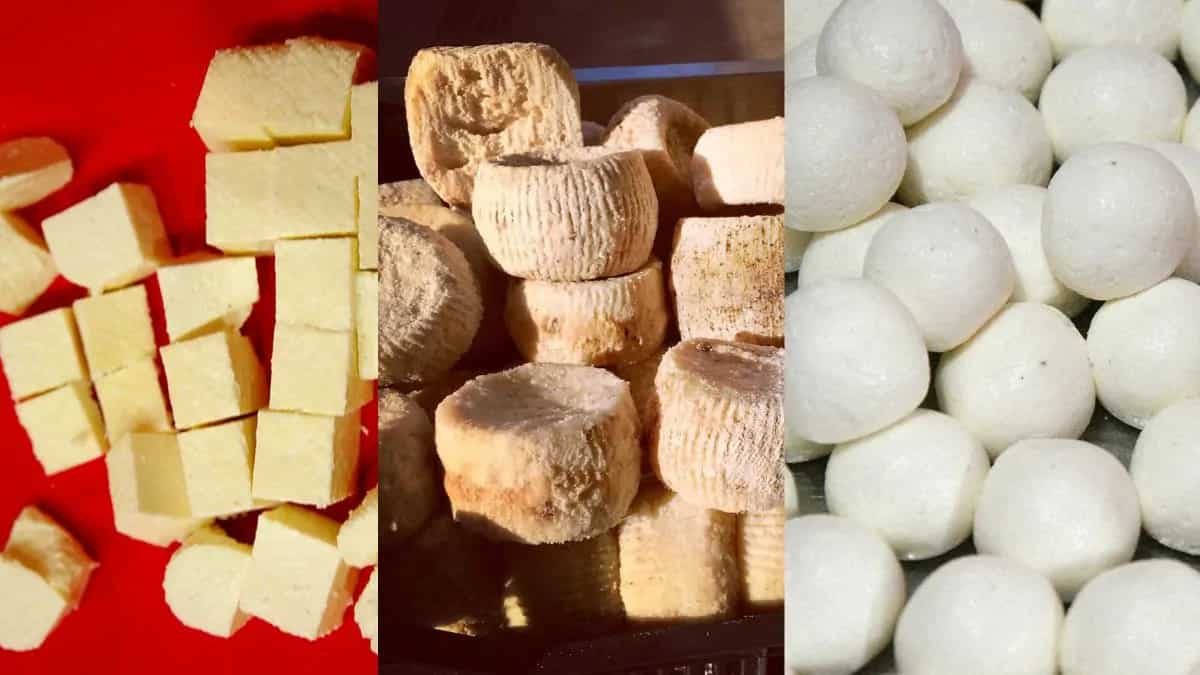
Let’s talk about chhenna, ricotta and paneer sitting in the same broad family of fresh, unaged milk products, but that is where the similarity quietly ends. One built Indian sweets into an art form, one became the foundation of Italian pasta and dessert culture, and one held its shape through centuries of subcontinental cooking and became irreplaceable in the process. Across three different continents, three different culinary traditions looked at milk, applied heat and acid and arrived at three entirely different answers, each shaped by the food culture around it. On World Milk Day 2026, let’s tell you that these three are not interchangeable, they are not even close and here’s why.
How The Milk Is Used
All three begin with milk, but not the same milk, and they are not prepared in the same manner. Both chhenna and paneer require full-fat cow or buffalo milk, which must be cooked to a full rolling boil before proceeding, while ricotta, in its classic form, is never produced from whole milk. It is instead created from whey, the liquid left over after other cheeses are manufactured and warmed to extract any remaining proteins. Whole milk ricotta is now widely available, although the essence of the recipe has always been softer and more indirect than its Indian equivalents.
Image Credit: Wikimedia Commons
The Process Of Curdling
Each one uses acid to separate the curds from the whey, but the approach is what makes the real difference in establishing what chhenna, ricotta and paneer. First and foremost, chhenna uses lemon juice or vinegar added at the boil, which makes the curdling process very sharp, immediate and deliberate, making curds form quickly and cleanly. Paneer follows the same steps with the acid introduced at the same stage and separation equally decisive. The curdling process in making ricotta is more patient in a way that here, the milk or whey is heated slowly to just below boiling, the acid is then added gently, and the curd is kind of encouraged or coaxed into forming rather than being forced to rise to the surface.
What Happens After The Curdling Process
This is where the three diverge most completely, and you can pinpoint which is which type. Chhenna curds are drained through muslin, rinsed with cold water to remove any sourness and hung just long enough to reach the right moisture. This is where you get the soft, crumbly and delicate texture called chhenna, it’s fine and more free if you feel it. On the other end, ricotta is treated with even more restraint and is barely disturbed. The curdles are never squeezed; they are spooned gently into their container and left to drain loosely, keeping the moisture intact so that it turns creamy. The simple rule to follow while handling curdles for ricotta is that you should not touch it at all, if possible. Now, paneer goes the opposite direction entirely, getting wrapped firmly in muslin and pressed under weight for thirty minutes to several hours to strain the moisture. Once this is done, you get a firm, sliceable block that will hold its shape through anything a kitchen throws at it.
The Process Depends Heavily On The Cuisine
The making process of each cheese is a direct answer to what the cuisine around it needed and is shaped over centuries of cooks working backwards from the dish to the ingredient. Chhenna needed to be soft, moist, and kneadable for all the Bengali mishtis built themselves entirely around this texture. Every step of chhenna's making protects that softness because without it, the entire tradition of all ingredients being held within collapses, whereas ricotta needs to be light, wet and designed to disappear into dishes rather than dominate them. Folded into stuffed pasta, layered into lasagne or spread simply onto bread with honey, ricotta supports whatever surrounds it. Lastly, paneer needs to be a workhorse because this particular block of cottage cheese is a core ingredient in all the largely vegetarian culinary traditions across the globe that require a protein to be cooked without melting or falling apart.