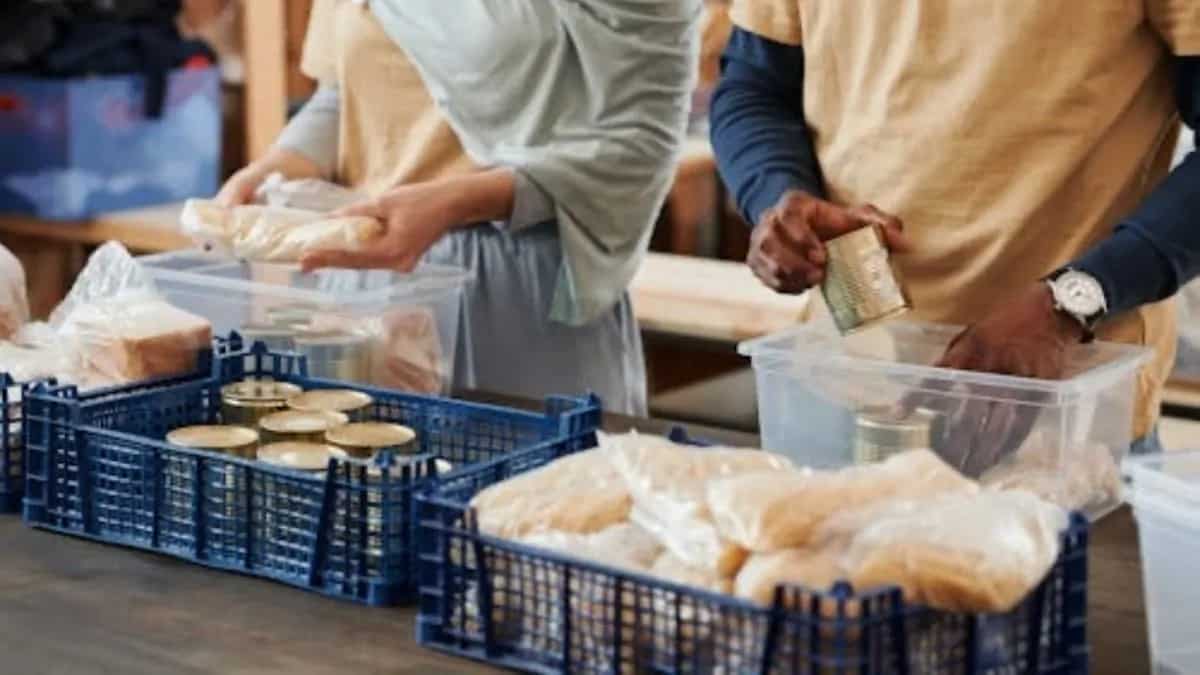
World Hunger Day serves as a critical checkpoint for global nutrition, throwing a harsh spotlight on a persistent structural paradox. Globally and regionally, agricultural systems generate historic grain yields, yet distributive inefficiencies leave large populations undernourished. In India, the food security challenge is rarely about aggregate production. Instead, it is a complex problem of last-mile logistics, seasonal vulnerabilities, economic displacement, and micronutrient deficiencies. To address a challenge of this magnitude, a varied ecosystem has emerged. This network combines state-enacted policy with massive institutional kitchens, corporate tech-driven food rescue operations, and hyper-local, community-focused agrarian support programmes. Examining this system reveals how different models work together to build a more resilient nutritional safety net across the country.
Image credit: ISCKON
Industrial Efficiency And The Public-Private Framework
At the core of large-scale nutrition delivery in India is the Public-Private Partnership (PPP) model. This framework blends corporate execution, philanthropic funding, and state infrastructure. The Akshaya Patra Foundation is a key example of this approach, using industrial engineering and supply chain management to scale nutritional welfare. Operating massive, highly automated centralised kitchens, the foundation works directly alongside state mechanisms to support the PM POSHAN school meal programme and the Integrated Child Development Services (ICDS) Anganwadi initiative.
While school-age children remain a core focus, the broader motivation behind this infrastructure is to build a comprehensive safety net for the community's most vulnerable members. When discussing how this model extends to other marginalised groups, Mr Shridhar Venkat, CEO of The Akshaya Patra Foundation, explains that, "Besides the core programme, i.e., the Mid-Day Meal Programme (PM POSHAN), Akshaya Patra also implements the ICDS Anganwadi feeding initiative. As part of this initiative, we serve children in the 0 to 6 age group, as well as pregnant women and nursing mothers. The infrastructure we have built, our kitchens, logistics network, and trained workforce, extends far beyond the school gate. During crises, natural disasters, and the COVID-19 pandemic, we leveraged this same infrastructure to serve daily wage workers, migrant labourers, and vulnerable families across the country. The spirit of Vasudhaiva Kutumbakam guides everything we do."
This capacity to scale up during emergencies shows that large-scale kitchen infrastructure serves a purpose beyond routine daily operations. Mr Venkat describes the operational agility of these systems during unexpected disruptions, noting that, "At Akshaya Patra, we have always strived to leverage our kitchen infrastructure to support vulnerable populations during emergencies such as floods, droughts, and other natural disasters. The COVID-19 pandemic, for instance, was a defining moment. When schools shut down, millions of children and families who depended on the mid-day meal were suddenly left without support. Responding to the need of the hour, we pivoted immediately from Food for Education to Food for All, serving not only children, but also migrant labourers, daily wage workers, and vulnerable families across multiple states. In the process, we served over 244 million meals. During floods and other disruptions, we have responded in a similar manner. A kitchen designed to prepare 100,000 meals for schoolchildren can be redirected within hours to serve a community in crisis. It is a reminder that investment in this infrastructure serves a purpose far beyond the school meal programme."
Image credit: Akshaya Patra Foundation
The foundational strategy here relies on collaborative mechanics, balancing government mandate with private sector accountability. In a country with a vast and varied population, execution is often the primary challenge. Mr Venkat highlights this operational reality, stating that, "India has a strong policy architecture in the nutrition and welfare space, built around the PM POSHAN programme, the ICDS Anganwadi initiative, and several other programmes for mothers, adolescent girls, and children. The challenge, however, lies in implementation. In a country of 1.4 billion people, executing welfare programmes at scale is a complex endeavour, and even well-funded initiatives can lose effectiveness at the last mile. That is the gap Akshaya Patra seeks to bridge by bringing operational rigour, technology, and accountability to where they are needed most. In essence, as an implementing partner for welfare initiatives, we work alongside the government to enhance the efficacy of these programmes."
On the ground, this public-private collaboration requires clear divisions of responsibility and shared resources to handle the daily operational load. Mr Venkat outlines how this framework functions in practice, explaining that, "Akshaya Patra’s scale has been made possible largely through the strength of the Public-Private Partnership (PPP) model. Over the past 25 years, we have worked closely with the government to build a robust and scalable framework for feeding children across the country. The government provides policy direction and contributes substantially towards meal support through grants and subsidies, covering approximately 54% of the programme cost. It also plays a critical operational role by allocating schools, facilitating kitchen locations, and coordinating with local authorities. Our donors and partners provide critical support in resource mobilisation, innovation, and infrastructure expansion. This collaborative framework has enabled us to combine the government’s reach and mandate with Akshaya Patra’s operational capability and execution at scale. Across governments and party lines, the shared commitment to child nutrition and education has remained steadfast, allowing the programme to create impact at a truly national scale."
To ensure long-term stability, these feeding ecosystems must also adapt to changing public utility landscapes, resource availability, and fuel price volatility. While rising commercial fuel costs challenge conventional distribution setups, automated institutional kitchens mitigate these risks through specialised engineering. Mr Venkat notes that, "Unlike conventional cooking setups, Akshaya Patra’s centralised kitchens are predominantly steam-based, with steam generated through boilers fuelled by briquettes. As a result, our dependence on LPG is relatively lower, making our operations inherently more resilient to fuel supply disruptions, therefore, we were not affected much by the recent LPG constraints. In addition, the onset of summer vacations across schools in India has naturally reduced demand on our kitchens during this period. We are confident that this reduction in operational load will provide the supply chain with adequate time to stabilise."
Managing global logistics also means handling intense localised daily pressure. Delivering meals consistently requires a strict operational culture among the workforce. According to Mr Venkat, "When you know that over 2.35 million children are waiting for their daily meal, there is no room for faltering. Challenges will always exist, but the discipline of our systems and the dedication of our 9,500 employees enable us to navigate them consistently. Every single day, without exception, our Hunger Warriors begin their work in the early hours of the morning and cumulatively travel thousands of kilometres to ensure that meals are delivered on time. Ultimately, it is the collective commitment of every individual involved that ensures each meal reaches a child hot, nutritious, and on time, despite the many operational challenges along the way."
Image credit: Pexels
Also read: Feeding The Frontline: How Kolkata’s Largest Institutional Kitchen Feeds Thousands Amidst LPG Crisis
Adapting To Structural Gaps And Marginalised Geographies
A centralised kitchen model relies heavily on strong road infrastructure and tight delivery timelines, which are often missing in remote regions. To avoid leaving vulnerable populations underserved, the operational model must adapt to weaker localised infrastructure. In remote districts, decentralised networks and community cluster kitchens fill these geographic gaps. Mr Venkat explains this adaptation, stating that, "At Akshaya Patra, we remain committed to ensuring that children receive safe and nutritious mid-day meals every school day. In regions such as Baran in Rajasthan and Nayagarh in Odisha, where remoteness and limited road connectivity make it difficult to establish and operate centralised kitchens, we have adopted the decentralised model. Under this system, smaller kitchens, typically serving one or two schools, are operated with the support of local women’s Self-Help Groups (SHGs), who prepare and serve the meals under the guidance and supervision of Akshaya Patra. In addition, we are piloting smaller cluster kitchens designed to prepare approximately 5,000 meals and serve schools within a tighter geographic radius. These kitchens will help reduce travel distances and better serve regions where operating large delivery vehicles is challenging."
The direct impact of this multi-generational focus extends well beyond immediate hunger relief. Sustained nutrition alters economic trajectories, changes parental outlooks on schooling, and drives human capital development. Mr Venkat emphasises this long-term societal return, stating that, "The transformation goes far beyond hunger relief. Across the world, the impact of school meal programmes has been well documented in the form of increased school enrolment, reduced dropout rates, and greater retention of girls in education. We have seen parents who once pulled their children out of school for work begin to view education as a viable pathway to a better future. For us, however, the greatest validation comes when former beneficiaries go on to succeed in life and return to support the very programme they once benefited from. We have seen children of daily wage workers grow up to become chartered accountants, architects, software engineers, and doctors. These are not isolated success stories, they are what becomes possible when a child is consistently nourished and able to remain in the classroom. The school meals programme is not merely an expenditure. It is an investment in human capital, with returns that extend across generations."
Image credit: Akshaya Patra Foundation
Tech-Driven Logistical Interventions And Food Rescue
While large public-private systems handle institutional feeding, corporate social responsibility (CSR) initiatives from tech aggregators target urban food waste and redistribution. In urban centres, substantial food surplus often exists alongside concentrated undernourishment. Tech platforms address this by turning their food delivery infrastructure into real-time food rescue networks.
Zomato has expanded its Feeding India initiative significantly. The non-profit arm released its annual report for the 2024 to 2025 fiscal year. The report highlights a cumulative impact of over 23 crore meals served to communities in need. The Daily Feeding Programme now supports 1,097 partner schools and 726 Anganwadi centres. The initiative ensures that meals are culturally accepted and nutritious. The platform relies heavily on community contributions. Customers using the Zomato and Blinkit apps contributed a large portion of the total funds raised. To increase transparency, donors can track the exact number of meals they have funded directly on the apps. In April 2026, the organisation hosted the Feeding India Concert featuring global artist Shakira. The event spanned multiple locations and aimed to amplify awareness around child malnutrition. The concert aligned with the United Nations goal of zero hunger by 2030.
Swiggy launched its own initiative called Swiggy Serves in January 2025. The programme focuses on combating food waste and hunger by redistributing surplus food. Swiggy partnered with the volunteer network Robin Hood Army for this effort. The collaboration aims to collect excess food from restaurant partners and deliver it to underserved communities. The joint effort has an ambitious target. They plan to provide 50 million meals by 2030. During its pilot phase, the programme successfully redistributed over 2,000 meals across 33 cities. More than 126 restaurants participated in the initial rollout. Swiggy intends to expand this initiative to more locations as it scales its operations.
Image credit: Pexels
Stabilising The Agrarian Base: Govardhan Annadaan Seva Mission
Urban distribution channels depend entirely on rural agricultural production. However, smallholder farmers, who form the foundation of the entire food supply chain, often face intense seasonal food insecurity themselves. During the harsh summer months in regions like the Palghar district of Maharashtra, where over 80 per cent of the population relies on farming, environmental and economic vulnerabilities intersect. To break this cycle, the ISKCON Govardhan Eco Village runs the Govardhan Annadaan Seva Mission, also known as the Gram Annadaan Seva Mission. This initiative provides freshly prepared, satvik meals to below-poverty-line farmers during the dry season. The programme aims to protect public health, prevent seasonal malnutrition, and reduce distress migration by easing the basic financial burden of daily food costs.
Inputs from Mr Ananda Prem Das, Project Officer at the Govardhan Eco Village (Govardhan Annakshetra), reveal the difficult conditions that modern smallholder farmers navigate. Mr Ananda Prem Das explains that, "Govardhan village is located right at the centre of Palghar district, and more than 80% of the people are involved in farming. It is a unique project to uplift the farming community, who live below the poverty line. Farmers are the backbone of society, and especially in the context of World Hunger Day, they play a very important role in producing grains that mitigate hunger. They need support to uplift them and their agricultural practices, keep them motivated in the farming occupation, reduce migration to cities, and discourage them from leaving farming. Feeding them during times of crisis is a big support that helps combat malnutrition. There is no consistent support from any single community, but rather scattered contributions from a variety of communities across the globe out of kindness to support the cause."
The motivation for this programme stems from a stark reality: the individuals responsible for national food production often go hungry themselves due to a lack of resources and reliable irrigation. Mr Das describes this seasonal vulnerability, noting that, "I went to a village for outreach, and more than 250 farmers came there. I asked them, 'What help do you need?' and the first answer they gave was, 'We need lunch.' They said monsoon is the only water-giving climate, and if there is no water, there is no agriculture. In the four months of the monsoon, they have to produce enough grain to sustain the entire family for the entire year. They work the entire day from 5:00 a.m. to 6:00 p.m. in the harsh sun and walk for kilometres and kilometres. In cities, people have restaurants, cafes, and house help. A few farmers get tiffins from home with very simple food, but many times they remain hungry in the afternoon. By the time they come home, they are completely tired, and sometimes this also leads them to addiction and alcohol, as their bodies are completely weak and without energy. Mental, physical, and emotional strength goes down because a lack of food affects everything. Regularly providing meals to them helps. City people have resources, but farmers face a scarcity of resources. When there is a scarcity, they cannot think of anything higher to progress in life if their basic needs are not met. Govardhan Eco Village is working tirelessly to help them."
Image credit: ISCKON
Direct Impact And Rural Preservation
The direct impact of this programme over the past twenty years shows how targeted nutrition can help preserve rural communities. By meeting a fundamental need, the initiative helps keep agricultural families stable. Mr Das shares the scale and depth of this outreach, stating that, "Over the last two decades, we have reached out to more than 159 villages in Palghar, and more than 2 million plates of Satvik food, prepared with care and love, have been distributed. We facilitate a community care programme where people of the village can gather, hold discourses, listen to each other's problems, and help one another. It operates like a true community. More than 2,500 families have committed to staying in their villages, continuing to farm rather than leaving, because this gives them hope. We are also facilitating the selling of flowering plants, which the farmers can grow in winter to build more revenue. Challenges in terms of reaching out to remote areas, collecting resources, finding volunteers, and managing operational hurdles have always been there. During the COVID-19 pandemic, these challenges were highlighted, but even then, we pushed through and provided over 1 million food packets. Post-COVID, the need increased exponentially. In this world, selfless service is the antidote to the biggest crises. In India, our tradition has always been self-sufficiency, simple living, and high thinking, which we follow. We use wood as fuel, and hence have not been affected by the LPG crisis."
Image credit: ISCKON
Interlocking Systems For Long-Term Food Security
An integrated look at India's food security network shows how these different models work together to build long-term stability. The first layer is the institutional public-private partnership, which uses automated mass kitchens, steam boilers fuelled by alternative briquettes, and decentralised women's self-help groups to provide long-term human capital retention, higher school enrolment, and continuous maternal-child safety nets. The second layer consists of tech logistical networks, which use surplus data mapping and real-time commercial routing to integrate aggregator fleets, directly reducing commercial food waste and building flexible food rescue channels for the urban poor. Finally, targeted grassroots missions focus on wood-fuelled community cooking and mobile rural distribution to support below-poverty-line smallholder farmers and seasonal labourers. This grassroots effort prevents distress migration, protects rural health during dry seasons, and preserves the vital agricultural workforce. Achieving comprehensive food security requires connecting the operational efficiency of industrial urban kitchens with the preservation of rural agrarian communities. Supporting the smallholder farmers who harvest the grain is just as vital as optimising the delivery networks that distribute it. India's evolving food security model demonstrates that the path to mitigating hunger lies in reinforcing every link across this vital supply chain.