


 Share
Share

In the landscape of Indian food content, few phrases are as instantly recognisable as “Ei Sunny, ki khabi?” (Hey Sunny, what do you want to eat?). Known to her audience through her Instagram account, @feashts, Sahini’s work often feels like a sanctuary of domestic bliss. However, behind the 60-second aesthetic lies a woman with a rigorous academic background, a sharp critique of patriarchal structures, and a firm boundary between her digital persona and her real-world partnership. Sahini, who spent part of her childhood in the US and later pursued research at the prestigious Indian Statistical Institute, brings a researcher’s eye to the kitchen. She views cooking not as a moral duty, but as a skill that should be separated from gender roles. In this interview, she deconstructs the "Tradwife" label, explains the gruelling labour behind "easy" videos, and shares why financial freedom is the ultimate ingredient for any modern woman.
1. Your content often features the catchphrase, “Ei Sunny, ki khabi?” and centres on the act of nourishing your partner. While this visually mirrors the Tradwife trend, you’ve been clear that this is a choice rather than a duty. How do you personally define the line between traditional domesticity and what you do?
Ans: Traditional domesticity to me is a rigid way of life, with clear and defined gender roles that limit women’s choices. It dictates a woman’s role in the kitchen as a baseline expectation, her moral duty - something that defines her worth and value in this life. What I do with cooking is one part of the many things I pursue in life. I cook, and it happens to be domestic, but my worth in life and in my relationship is not dependent on whether I cook or not. It is not a mandate. “Ei Sunny, Ki khabi” is a script, on social media. It’s a script to deliver a recipe. Not a standard for how other women should be.

Image credit: Sahini Banerjee
2. You’ve mentioned that you were once a researcher at the Indian Statistical Institute and moved from the US to India. How does having that professional, academic background change the way you view the labour of cooking and content creation?
Ans: I lived in the US as a child while my father was a postdoc scholar there. I have completed my education and pursued research in Bengal, India. I will say that the labour of cooking is not respected enough or at all, whether in real life or on reels. In online conversations where I express my opinion or disagreement, some men often insult me by saying “Go back to the kitchen. Who asked you for your opinion?” simply because I cook on social media. It’s ironic because the very thing that men seem to desire and romanticise so heavily, is the very thing they use to insult me and silence me. Coming from an academic background, I had the privilege of people’s automatic respect. I was thought of as someone productive to society’s development, as someone possessing intelligence, especially before my marriage. With cooking and content creation, such privileges are hard to come by - especially that of respect. Cooking is essential to survival and life itself. But because it is predominantly performed by women in most households, and often with perceived ease it lacks societal respect. Paradoxically, women are still expected to continue to cook, in order to maintain their social value.
3. Some viewers see your videos and comment that they want to be/find a wife like you. You’ve expressed that this worries you. What is the specific message or nuance about your life that you feel these commenters might be missing?
Ans: What concerns me is that people are falling in love with a 60-second aesthetic while missing the reality that makes those 60 seconds possible - which is a lot of hard work shared between me and my husband. "Ei Sunny, ki khabi?" works because it’s a reciprocal partnership, not a one-way service. The nuance that people miss out on is that it takes me 3-9 hours to create 60-second videos. Days if it is a longer video. I am able to create 60-second food videos, because behind the scenes my husband is the one who takes charge of domestic labour while I work on script writing, planning, shooting, and editing. To want to be “a wife like me” doesn’t make sense to me because most women already do what I do, if not more.
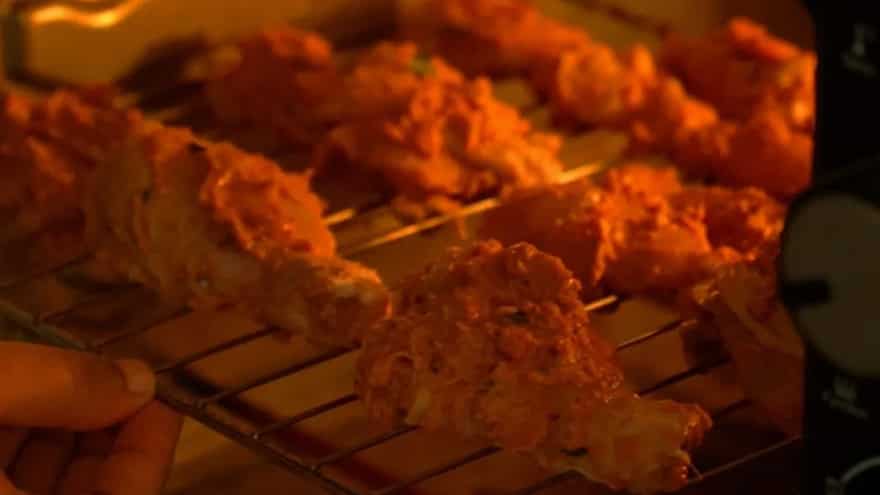
Image credit: Sahini Banerjee
4. You've mentioned that a single reel can take anywhere from 3 to 9 hours to create. When people describe your content as "simple" or "easy cooking videos," how does that sit with you?
Ans: It’s bittersweet. On one hand, I like that people find my recipe videos easy to follow. It means that I simplified what seemed unapproachable - it is a job well done. But I also think people miss out on how much effort I put into making things feel effortless. Not only hours, but sometimes I spend days and weeks learning techniques so that I can convey the easiest technique to people. People often ask me what my “original job” is, not realising that this takes most of my time. When I develop original recipes, I go through at least 4-7 testing phases. I think creation is inherently more challenging than consumption. This explains why we often devour a meal within minutes and fail to acknowledge the hours our mothers spend preparing it. I think that extends to social media as well.

Image credit: Sahini Banerjee
5. The Tradwife movement is often associated with financial dependence, yet you have built a successful business from home. How do you navigate the irony of being compared to a movement that often critiques the very financial independence you’ve achieved?
Ans: With a lot of frustration and anger if I am honest. I hope young men and women understand that people who promote the Tradwife lifestyle or critique financial independence are in fact financially independent. At the very least, from what I have observed, they profit from promoting a lifestyle that they don't live. Anyone who is not financially well-off is likely not producing high-quality videos or lecturing people with expensive podcast gears. Money runs this world. I think it makes, breaks and re-shapes every rule that exists, not only in India, but all over the world. Money makes many aspects of life easier and therefore better to live with. To critique financial independence is to intentionally harm people. And I stand against that.
6. In India, the kitchen has often been a complicated space for women. It can be a place of obligation, but sometimes a source of power. How do you see your kitchen, and what does it represent in your content?
Ans: I used to watch Nigella Lawson on TLC and imagined if I could ever afford to have a pantry full of spices and ingredients from around the world, beautiful crockery, and learn techniques that seemed impossible at the time. I am happy to say that I am getting there. My kitchen in my home is very dear to me. It’s a space that I have curated with things I enjoy, just the way I had imagined when I was a young girl. My Kitchen serves as a reminder that the things I dreamed for myself, I have managed to fulfil them by myself. In my content, I hope my Kitchen serves as a reminder for women that it is possible to dream big dreams and to find success in those dreams as well and also a source of inspiration to feed oneself well.
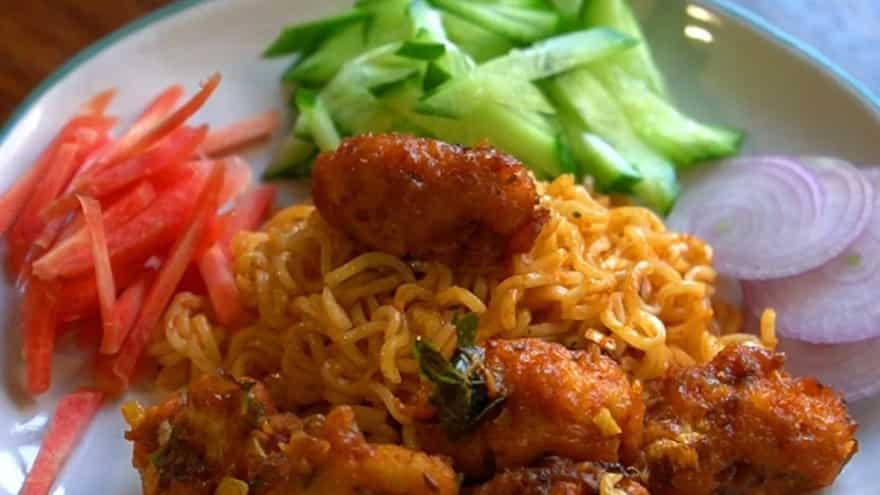
Image credit: Sahini Banerjee
7. We occasionally see Sunny taking over the domestic duties in your videos. What dialogue are you hoping to start with your audience by highlighting these moments of role-reversal and shared responsibility?
Ans: When I started out 3 years ago, I didn’t understand what I was projecting out in the world. I thought I was making “fun food videos”. When I started gaining a larger viewership, these “fun videos” seemed to carry the message that I was servile. My career has been shaped by the virality of these videos. I realised I, unknowingly, have been irresponsible on social media in projecting an image of myself that doesn’t exist in real life. I wanted to change what I was showing and inspiring in others. So, I started showing how we are really like in our day-to-day lives - If I cook, he cleans. When I work, he gets the pending household chores done. I do the things he doesn’t enjoy doing. I want my audience to know that sharing work-load & domestic labour is normal. And it is definitely not too much to ask for.
8. For the young women watching you who are trying to navigate their own roles in a modern relationship, what would you say is the secret ingredient to retaining your identity and agency while still enjoying traditional acts like cooking for your family?
Ans: For the kind of world we live in, the secret ingredient to retaining your identity and agency is financial freedom. Having your own money gives you multiple choices. More than things, money buys you time, comfort and services. On days I don’t want to cook, I don’t feel guilty anymore. I order from places that prepare healthy food. Because my mother-in-law is getting older, we have hired a cook for her. I outsource work I don’t want to do. I pursue all my hobbies throughout the week and it adds a lot of value to my life. I am also saving to study for my PhD in the future. I can dream of doing that again because I work hard. I don’t see cooking as a traditional act anymore. I think that privilege was afforded because I earn my own money.
9. You’ve mentioned your mother’s lack of interest in the kitchen and her hopes for your career. How do you think your mother’s perspective has shaped your relationship with cooking, and do you see your current work as a way of evolving her legacy?
Ans: My mother was 16 when my grandparents married her off, 17 when she had me. She is not an exception. I grew up in the same village, with the same standards that she did - that when I came of age, I would be married off and live a "traditional life”. When my father finally took us to the US, my mother experienced freedom for the first time. When we returned, I think she refused to let me grow up like girls do in our village. Even without terminologies, she understood what made a girl ideal for traditional life. So, she refused to let me enter any kitchen (which made me more curious about cooking), cut my hair short, never shut down my questions of traditions, faith and God, and she granted me a lot of trust (however much was possible for her).
Although I resented her for not letting me cook when I was younger, I understand now why she did it. She was protecting me from conforming to societal standards. I learnt to cook as an act of rebelliousness but I also learnt that she taught me to be a rebel. She and my father constantly tell me how proud they are of my independence, even when I didn't listen to them.
10. Finally, how do you think social media should evolve in its portrayal of domesticity? Is there a way for us to celebrate the soft life and the kitchen without reinforcing the patriarchal structures that originally put women there?
Ans: I think gendered roles as a concept should be removed from domestic labour. Many parts of life are inherently domestic and unavoidable in order to survive. To be healthy members of society, we should all learn to do the unavoidable. All of us.
11. Is there a way for us to celebrate the soft life and the kitchen without reinforcing the patriarchal structures that originally put women there?
Ans: Yes. I think so. As I see it, under 3 conditions it is possible:
1. If one has the support of their family and partner
2. If one possesses ample wealth and financial freedom
3. And an independent mindset




