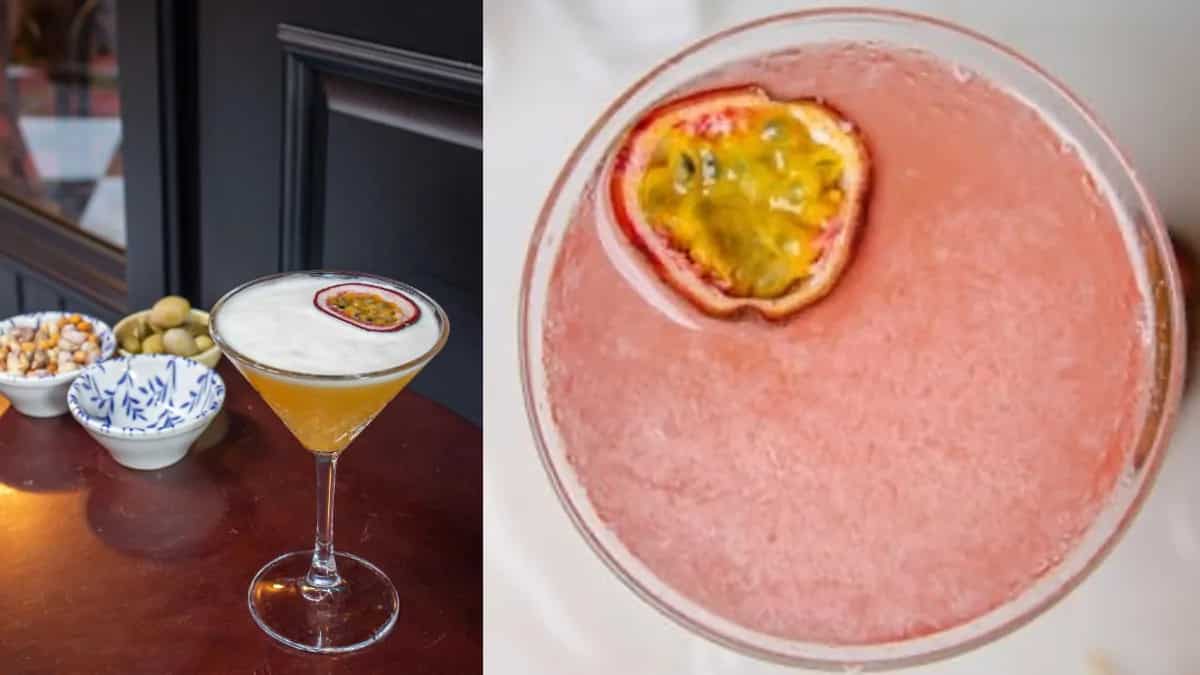
The Pornstar Martini is a modern bar classic: a shaken, passion-fruit-centred cocktail built on vanilla vodka and passion-fruit liqueur or purée, traditionally served with a small glass of sparkling wine. It was created in London in the early 2000s by Douglas Ankrah and quickly travelled from a single bar menu to an international circulation. Those facts explain why bartenders and bar-goers alike have an affinity for the drink; but they do not fully explain why the name forced it into public attention in India in 2025. To understand that, the name must be treated as an active ingredient and not just a label.
Image credit: Pexels
A name can do three things at once: it can signal taste and positioning to the trade, it can provoke curiosity among consumers, and it can create friction with cultural norms. The Pornstar Martini performs all three. When people encounter the name on a menu, in a thumbnail or in conversation, they are offered far more than an ingredient list; they are offered a story. The story invites verification, interpretation and, often, amplification. That psychological and social cascade is what pushed searches upward in India, long after the recipe itself had been available online.
The Mechanics Of A Name That Provokes Search Behaviour
There are specific mechanics by which a striking name becomes a search engine phenomenon:
Immediate semantic dissonance: The juxtaposition of a sexually suggestive phrase with a commonplace culinary term, “pornstar” + “martini”, creates predictable cognitive dissonance. Readers do a split-second check: is this a joke, a misprint, a real drink? That split-second curiosity frequently converts to an online search for clarification.
Memorability and repeat exposure: A provocative name is easier to recall and to mention aloud. Once the phrase is repeated on menus, in social feeds or in conversation, it gains a memetic advantage over more prosaic drink names. Memes and repeated naming drive algorithmic discovery because the same phrase gets typed, reposted and queried.
Social signalling and the “tell-me-more” impulse: Ordering or even knowing about a drink called the Pornstar Martini signals a certain familiarity with contemporary nightlife. For some people that is attractive; for others, the name triggers a desire to demystify the signal, again, prompting searches for the recipe or origin story.
Image credit: Freepik
Controversy as amplification: Names that brush against social norms often attract institutional responses. In the UK, retailers and regulators pushed back against the name in some settings; supermarkets renamed pre-mixed variants to more neutral terms. Those stories feed news cycles, which in turn drive curiosity and searches beyond the drink’s immediate consumer base.
Each of these mechanisms is observable in the public record around the Pornstar Martini: the creator’s own comments about why he chose the name; retail renaming decisions; and a long tail of cultural commentary and listicles that repeatedly reproduce the phrase. Those reproductions translate directly into search traffic.
Image credit: Freepik
Why The Name Mattered In India Specifically
India’s urban cocktail scene has, over the last decade, absorbed many international drinks and the language that comes with them. For Indian searchers in 2025, three contextual features made the name especially potent:
Cultural curiosity: The name sits at an axis of taboo and glamour; for a society that publicly negotiates both, the phrase invites both giggles and research.
Digital discovery patterns: Short-form video and list-driven journalism favour punchy, repeatable hooks. A video with a bold title (or a headline that uses the cocktail’s name) is likelier to generate a click and then a follow-up query.
Newsworthy friction: Coverage of the drink’s name in global retail or regulatory contexts filtered into Indian media; once the phrase appears in news copy it gains legitimacy as a search term rather than only an in-bar curiosity.
These are descriptive notes about how cultural attention migrates towards conspicuous labels and how that attention shows up quantitatively in search reports. The name provided the hook; the media ecosystem and social sharing did the rest.
Image credit: Freepik
The Creator’s Intent And How Meaning Stuck
Douglas Ankrah, who created the drink in London, described the name as intentionally evocative, intended to suggest indulgence, glamour and a playful, slightly risqué character rather than to promote pornography per se. That stated intent is important: it shows the name was a branding choice, not a slip. But once released into public use, the name accrued meanings that the creator could not fully control, shorthand cultural associations, regulatory discomfort, and marketing spin. That divergence between intent and public uptake is precisely why the name continued to produce searches: people wanted to trace that origin story and reconcile the creator’s explanation with the cultural effects they observed.
Image credit: Freepik
The Flavour Profile And Why It Reinforces The Drink’s Appeal
Beyond the force of its name, the Pornstar Martini’s rise is also tied to a flavour structure that is immediately understandable to a wide audience. The combination of passion fruit and vanilla creates a sweet-tart balance that is approachable even for people who do not regularly order cocktails. Passion fruit brings a bright acidity and aroma, while vanilla vodka smooths the edges and adds a rounded sweetness. The separate pour of sparkling wine introduces a contrasting dryness that cuts through the fruitiness without overwhelming it. This sequence: aromatic, then sweet, then lifted by a dry finish, gives the drink an appeal that many first-time tasters describe as easy to enjoy. In practical terms, this flavour map supports the drink’s visibility: people who encounter it in bars often recommend it to others, and that repeated word-of-mouth helps sustain the curiosity that ultimately shows up in search patterns.