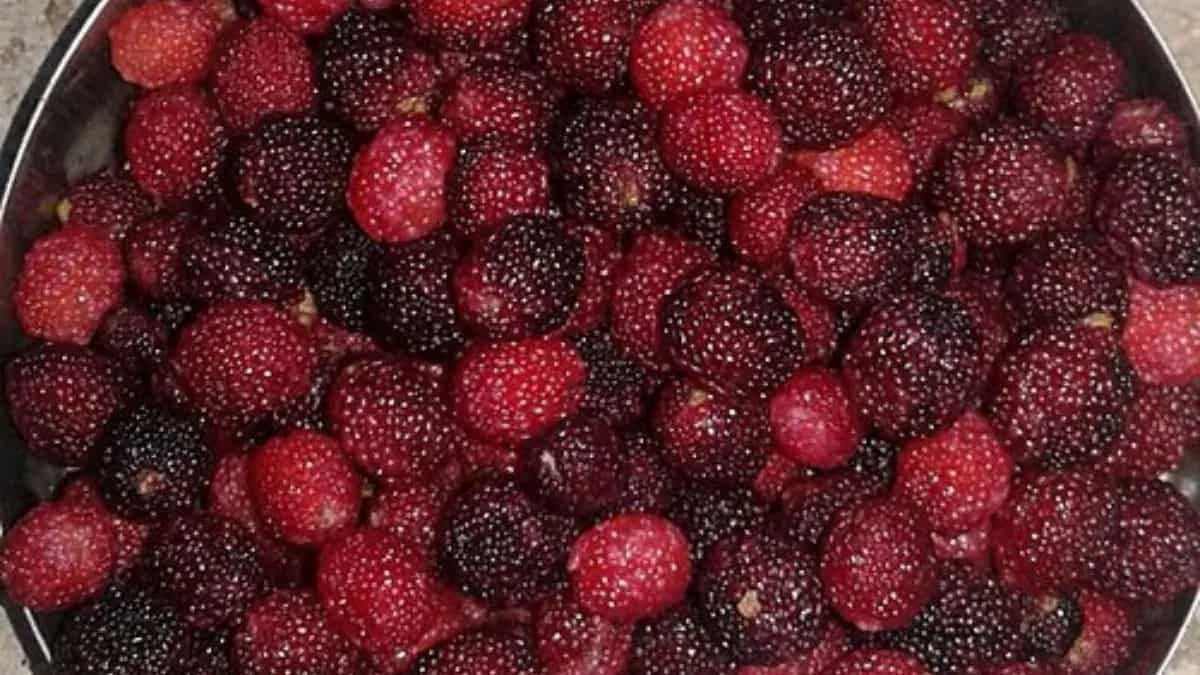
Hidden deep in the forests and mountain tracks of Uttarakhand grows a small red-purple berry that many hill residents wait for all year, i.e. kafal. For people hailing from the Kumaon and Garhwal regions, kafal is not just a fruit but an emotional element of the mountains during the summer season. The fruit grows wild on tall trees across the Himalayan regions and usually appears for a very short period between late spring and early summer. Small, soft and a little darker than the cherries, kafal tastes a bit tangy and also earthy at the same time.
Unlike the commercial fruits that are sold everywhere throughout the year, kafal stays seasonal and delicate, which is why it seldom travels far from the hills where it actually grows. The locals fill their baskets of freshly plucked kafal during the season, and then consume it instantly as the fruit tends to spoil fast. Over the period, Kafal has also become culturally meaningful through some folk songs, stories, and childhood memories linked deeply to mountain life.
Why Kafal Feels Is So Rare And Seasonal
Part of Kafal’s charm arrives from how short it is available every year. The fruit grows naturally in the Himalayan forests instead of large commercial orchards, which means production relies heavily on weather and the seasonal requirements.
As the fruit is light and delicate, it loses its freshness fast after plucking and becomes hard to transport to the cities via commuting. This is why many people outside Uttarakhand have never even tasted it, despite it being famous in hill regions.
How Is Kafal consumed?
Here are some of the traditional and regional ways in which kafal is typically consumed across the Himalayan households and by the local mountain communities:
Kafal Eaten Fresh With Salt And Chilli
The most classic way of eating kafal is the simplest one, i,e it is eaten fresh by sprinkling a little salt and red chilli powder from the top. The fruit already has natural sweetness and a bit of tanginess, so the spices only make the flavour a bit sharper and also more refreshing.
People often fill the small paper cones with kafal. The berries feel juicy, but also not too soft, and a bit earthy taste underneath makes them feel very different from the polished supermarket berries.
(Image credit: Wikimedia Commons)
Kafal Sorbet And Summer Drinks
As kafal feels naturally refreshing, many households use the fruit for homemade coolers and mountain-style summer drinks. The berries are lightly crushed with some sugar, black salt and chilled water to make a sharp fruity sherbet.
Unlike the artificially flavoured beverages, kafal drinks taste light because the fruit has a natural tartness undertone to its sweetness. Some local cafés in Uttarakhand have also begun experimenting with kafal lemonades and iced coolers during the season. Since the fruit itself already feels cooling, these drinks become particularly comforting during warm afternoons in the hills.
Kafal Chutneys And Preserves
In many hill households, kafal is also turned to make chutneys and preserves so that the flavour can last a little longer beyond the short fruit season. The berries are cooked slowly with little jaggery, spices or herbs, depending on the regional preference.
Kafal chutney usually perfectly balances the sweetness with a bit of heat from the local chillies, making it pair beautifully with everyday simple mountain meals such as mandua rotis or rice. Preserves made from the fruit have a deeper flavour because cooking boosts its earthy sweetness even further. Unlike the commercial jams, kafal preserves still maintain a bit of rustic mountain taste that feels closely linked to the local cooking traditions.
(Image credit: Wikimedia Commons)
Traditional Soups And Kaphlwani Preparations
In parts of Kumaon and Garhwal, kafal is sometimes used in traditional light broths locally known as kaphlwani. These preparations feel somewhat similar to that of rasam from South India, i.e., thin, warming and deeply linked to local food preparations rather than heavy restaurant-style dishes.
The fruit is a bit crushed and then simmered with some local spices, herbs and water to make a bit tangy broth that tastes earthy as well as comforting. Unlike the sweet fruit dishes, kaphlwani highlights the sharpness of kafal and the natural acidity. These soups are often eaten during the changing weather because they feel light on the stomach while still having an intense flavour.