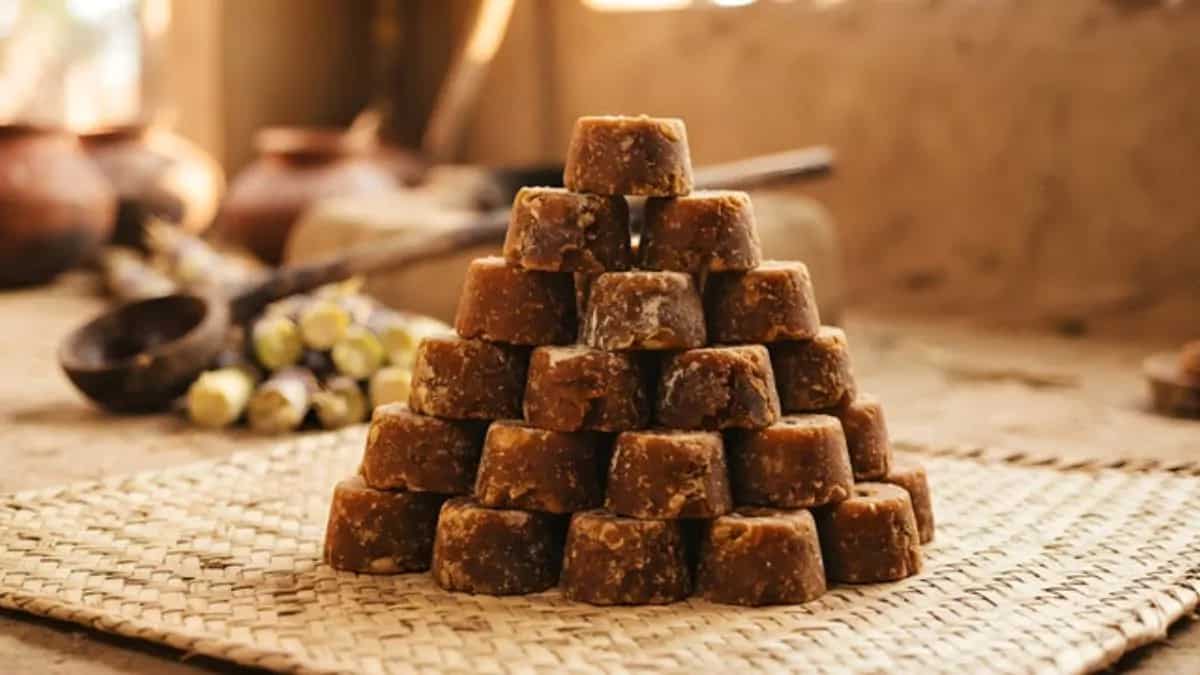
Karupatti is a dark that gives many classic South Indian sweets and drinks their deep, smoky sweetness. Unlike the usual familiar gur that is prepared from sugarcane juice, karupatti is prepared by concentrating the sap of the palmyra palm. In Tamil Nadu, it is also known as panai vellam and has long been utilised as a natural sweetener in home cooking.
The flavour is noticeably distinct from regular jaggery as well. Karupatti jaggery is particularly associated with Tamil kitchens. One of its regional varieties, Udangudi Panangkarupatti from Thoothukudi district, also acquired a Geographical Indication (GI) tag in 2023, recognising its distinctive production tradition and regional character.
How Is Karupatti Made From Palm Sap?
Before there is any jaggery to begin with, the sap has to be gathered from a palm. The liquid, which is commonly called padaneer or neera, is collected from the flower stalk and filtered before it is taken for processing. Traditionally, the sap is first boiled in large vessels over heat. During this process, the liquid slowly loses water and becomes thicker and darker. It is skimmed and mixed during cooking until it gets the right consistency. The concentrated syrup is then transferred into moulds, where it cools down thoroughly and sets into solid blocks.
(Image credit: Freepik)
Fresh padaneer is also inclined to ferment due to its sugar content. Traditional methods use measures to slow down fermentation before the sap is processed. This is one reason karupatti production involves much more than just boiling a sweet liquid: timing, collection and handling all influence what eventually reaches the cooking vessel.
The process may seem uncomplicated, but is labour-intensive in practice. The quality of the final jaggery totally relies on the sap, its handling and the concentration reached during boiling. In the Udangudi region, the blend of local palmyra groves, dry atmosphere and the area's red sandy soil has been rewarded as part of what gives panangkarupatti its unique characteristics.
What Does Karupatti Taste Like?
This is where karupatti can be distinguished from ordinary gur. Its sweetness is deep, with caramel, roasted and earthy notes that can remain even after the first bite. Some varieties have a light smoky character, whereas good-quality palm jaggery can also have a bit of a mineral or malty taste, as it is an unrefined sweetener. The colour can vary from dark brown to almost black relying on the sap and processing.
That stronger flavour is also why karupatti jaggery often transforms a recipe without dominating it. In coffee, it cuts through the bitterness with a dark caramel-like undertone. In sweets, it gives a more pronounced molasses-like depth that white sugar can never replicate.
Where Is Karupatti Used In South Indian Cooking?
One of the most common uses is karupatti coffee, especially in Tamil Nadu, where palm jaggery is melted into coffee in place of refined sugar. It is also used in traditional preparations like payasam, pongal, adhirasam and other sweets, where its darker sweetness evolves as a part of the dish's individuality rather than just adding sugar. Palm jaggery is also used in some regional snacks and drinks.
The use of karupatti jaggery is not limited to desserts either. Small quantities can also be used in tamarind-based preparations, where its sweetness rounds off the sourness and adds a deeper colour as well as taste. This is one reason karupatti works extremely well with ingredients like tamarind, coconut, cardamom and dry ginger. Its flavour is strong enough to be evident even when mixed with other ingredients.
(Image credit: Freepik)
How Should You Buy And Store Karupatti?
Karupatti is commonly sold in solid blocks; however, grated and powdered forms are also easily available. Since colour and texture can change with processing, a very dark block is not by itself a confirmation of quality. Check the ingredient information when buying packaged versions, particularly if you want traditional palm jaggery that does not have any additional ingredients.
Like other jaggery products, it should also be protected from moisture. Keep the karupatti jaggery in an airtight box in a cool, dark place, away from excess heat, sunlight and moisture.
Is Karupatti Healthier Than Sugar?
Karupatti is a natural sweetener and is often marketed as a healthier option to refined sugar, but the more useful difference is how it is made and what it adds to a dish. As it is unrefined, palm jaggery can have small amounts of naturally occurring minerals. However, it is still a concentrated source of sugar.
Its strongest culinary benefit is simpler: karupatti carries its own flavour to the table. Rather than just making coffee, payasam or a sweet dish sweeter, it gives them a darker, more complex essence. That is what has kept this South Indian palm jaggery suitable long after refined sugar became an everyday kitchen staple.