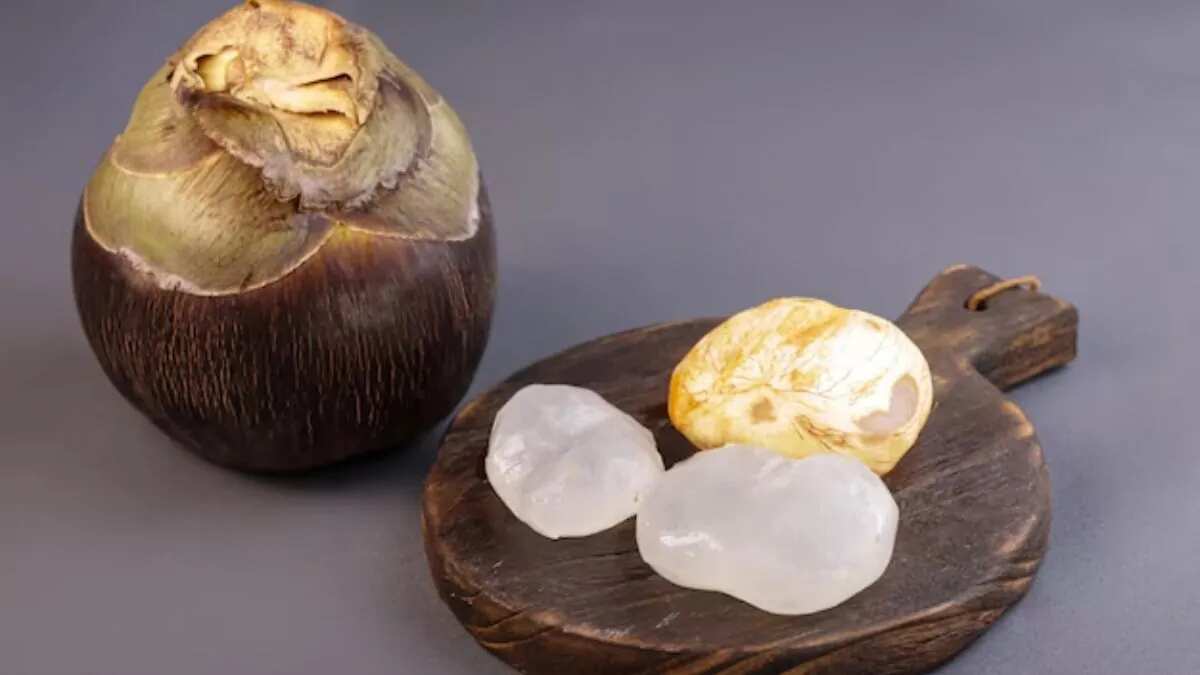
When the Indian summer becomes severe, and the temperature begins to soar high, you see certain seasonal foods appearing in the local markets, and ice apple is one of them. Sold mainly by roadside sellers, it is not available like mangoes throughout the season. Yet, in some coastal and southern states, it is regarded as one of the most useful natural coolants. The ice apple grows inside the palmyra palm and should be consumed fresh.
It has high water content that makes it particularly advantageous in regions that are prone to dehydration and heat pressure. Unlike other processed beverages, the ice apple offers hydration without any excess sugar and additives. It is more than a fruit, but a seasonal remedy that is loved for its heat management long before any modern drinks existed.
What Is An Ice Apple?
An ice apple is the soft fruit of the palmyra palm tree. When it is cracked open, it has two to three jelly-like, translucent pieces that are filled with a light, sweet water. The texture is soft, somewhat similar to that of lychee but more delicate than that. Unlike other common fruits, ice apple is delicate and extremely perishable, which is why it is usually sold fresh by vendors on the roadside in coastal and southern parts of India during the severe summer seasons.
(Image credit: Frepik)
Where Does Ice Apple Grow And When Is It Available?
The ice apple grows on the palmyra palm tree, a tall, drought-immune tree that is found across Tamil Nadu, Andhra Pradesh, Telangana, Odisha, West Bengal and in some parts of Maharashtra. The fruit appears specifically during the months of April and June, just when temperatures begin to soar. Because it contains high natural water content, the ice apple is harvested and consumed quickly before it begins to spoil. Unlike mangoes or watermelons that can be transported to far places, ice apples can rarely enter supermarkets. The availability of ice apples relies on the cycle of local harvest.
Nutritional Benefits Of Ice Apple
Ice apple is formed largely of water, which makes it a naturally hydrating fruit. Traditionally, it is consumed to control dehydration and heatstroke as the coastal areas are high in humidity and have extremely high temperatures during the summer season. The cooling effect of an ice apple helps in regulating body temperature. The mild sweetness of ice apple satisfies the cravings of sweet without adding excessive sugar intake.
(Image credit: Frepik)
Why Is Ice Apple Known As A Rare Indian Summer Fruit?
The ice apple is called a rare summer fruit, not because its production is short, but because it is highly time-bound and extremely delicate. It has to be consumed fresh, and once it is removed from its natural cover, it spoils fast. It cannot resist long-distance transport or cold storage for longer periods. Apart from this, urban development has also reduced the cultivation of the palmyra palm in some regions. As a result, ice apples remain mostly available only in specific places and regions, that too and for a short seasonal time.
How To Eat An Ice Apple?
The easiest way to eat an ice apple is fresh, straight from the cover. Shopkeepers slice open the outer husk to expose the soft parts inside. Some people also keep it to chill before eating to get that extra refreshment. In some parts of South India, ice apple is also added to some milk-based drinks, lightly sweetened syrups, or in summer desserts.
(Image credit: Frepik)