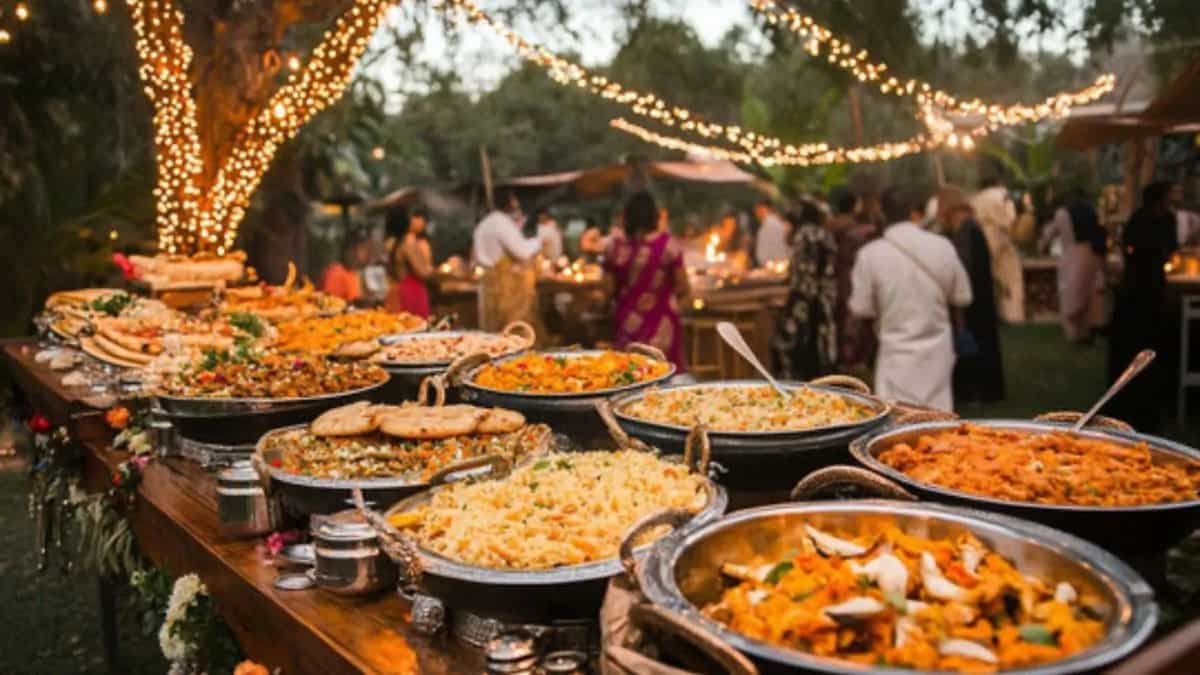
Planning a wedding meal in 2025 involves far more than organising a spread of familiar dishes. Across India, food at weddings has become a reflection of intent and creativity. Guests now pay attention to what is being served, how it connects with the couple’s identity, and how inclusive the menu feels. The most noticeable change is that even home celebrations are being planned with the sophistication once reserved for large-scale venues. People are not necessarily trying to replicate a five-star banquet; instead, they are shaping menus that hold emotional significance, comfort, and polish. The newest food trends for weddings mirror broader cultural preferences for local sourcing, cleaner flavours, reduced waste and inclusive choices. They also celebrate how regional cooking can coexist with modern presentation. For hosts preparing at home, this year’s trends bring opportunity: you can curate a meal that carries heritage, freshness and personal detail, all within an attainable scale.
1. Personalised Plates Rooted In Heritage
The return to family and regional roots is the most defining change in wedding menus this year. Couples and hosts are choosing dishes that connect with their upbringing or family identity, weaving nostalgia into modern form. Caterers across major cities are designing menus that read like personal archives, recipes from grandparents, sweets from ancestral towns, and cooking methods tied to specific communities. This trend recognises food as a medium of memory. For a home event, you can express this by selecting two or three dishes that narrate your family’s story: perhaps a Punjabi kadhi made in brass vessels, a Bihari litti with an updated filling, or a Goan prawn curry served in miniature clay bowls. Presentation also plays a role in evoking heritage. Use materials that reflect your region, brass urulis, earthen pots, wooden trays, bamboo serveware. These touches create a sense of authenticity and emotional depth, reminding guests that food can represent lineage as much as taste. When dishes carry a narrative, they stay in people’s minds long after the evening ends.
Image credit: Pexels
2. Global Flavours With Local Foundations
Global food at weddings no longer means overcomplicated “fusion.” The shift in 2025 is towards balance: adopting formats from abroad but retaining Indian identity. Modern weddings feature concepts like sushi rolls seasoned with Indian pickles, tacos filled with paneer tikka, and pasta dressed with mustard-seed butter. For home hosts, the easiest way to bring global energy to your wedding meal is to select one cuisine style and reinterpret it through Indian produce and palate. A “Mediterranean Table” can feature beetroot hummus, chickpea chaat with tahini dressing and flatbreads brushed with ghee and ajwain. A “Pan-Asian Station” could serve stir-fried noodles with Indian greens, chilli oil and sesame peanuts. The format, bowls, rolls, wraps, can stay global while the ingredients remain familiar. The charm lies in merging international inspiration with the comfort of Indian staples. Guests enjoy the surprise of new forms without losing the warmth of familiar spices. A well-executed fusion menu signals a refined sensibility and shows how Indian food culture continues to evolve with grace.
Image credit: Pexels
3. Diet-Inclusive And Sustainable Options
Awareness around dietary inclusivity is now central to wedding planning. Vegetarian and non-vegetarian labels alone no longer suffice; hosts are expected to accommodate vegan preferences, gluten sensitivities and low-sugar diets without compromising flavour or presentation. Wedding caterers are investing in plant-based innovation, where dishes feel indulgent while remaining mindful. At home, inclusivity can be managed through thoughtful composition rather than duplication. Replace heavy cream with cashew purée or coconut milk in curries, switch refined flour with amaranth or jowar in breads, and use jaggery or date syrup in desserts. Build your menu around abundant plant-based dishes that still feel festive: mushroom korma, beetroot kebabs, millet biryani, and sesame laddu with jaggery glaze. Offer one rich non-vegetarian centrepiece if you wish, but allow the rest of the spread to celebrate balance.
Image credit: Unsplash
Sustainability can be expressed quietly yet effectively. Use local, in-season vegetables, pumpkin, yam, cauliflower, spinach, and style them well. Serve in reusable crockery or palm-leaf plates rather than plastic. Leftovers can be packaged in compostable boxes for guests to take home, a gesture that feels gracious and responsible. Even small touches, like including seed-paper menu cards or serving water infused with local herbs instead of bottled brands, reflect an ethos that modern guests recognise and respect.
4. Interactive And Mobile Food Stations
One of the most engaging evolutions in wedding catering for 2025 is the shift from fixed buffets to dynamic food stations that invite participation and movement. Hosts are installing counters where dishes are assembled on the spot, giving guests the chance to personalise their plates and observe chefs in action. According to industry insights, live pasta bars, dosa wheels, and lab-style chaat counters are rising in popularity.
Image credit: Unsplash
For a home-based wedding you might designate a garden nook for a “build-your-own dosa” station, complete with a small tawa and coconut-and-mint chutney options, or set up a phuchka cart by the terrace where the phuchka maker mixes the water fresh for each guest. Another idea is to have roaming servers carrying warm paneer-or-mushroom skewers through the guest area during the baraat or cocktail hour, this keeps the energy alive and ensures that food service does not feel static. You could also arrange a mini slider station with lightly spiced koftas or jackfruit patties where guests choose their fillings and chutneys. When you integrate such stations into your home space, guests move, mingle, and become part of the meal rather than simply waiting at a table. That movement introduces a convivial rhythm and brings an element of theatrical service to a comfortable domestic setting. It also allows you to scale service more subtly yet with style: one or two well-placed live counters often make more of an impression than a large buffet row.
5. Dessert Theatre And Artful Presentation
In recent wedding menus the dessert category is no longer relegated to the end-of-table; it is being elevated into a designed moment of its own. Shared posts, styled displays and bite-sized sweets have transformed how hosts approach the finale of a meal. For your home wedding, you could create a dedicated dessert “boutique” table at one corner of the venue, perhaps with a backdrop of warm lighting and a chalkboard sign naming each sweet. Think of mini saffron panna cotta in clear jars, rose-cardamom brownies in golden leaf, and steamed coconut barfi cubes dusted with pistachio.
Image credit: Pexels, Unsplash
You might also offer a “decorate-your-own” dessert station where guests can top a small gulab jamun with flavoured syrups or crushed nuts; they serve themselves and then carry a little jar back to their seat. Presentation is important: arrange items on varying heights, use tiered stands and add small labels (such as “Mango-saffron mousse” or “Millet-chocolate truffle”) so that guests pause and read. At home you might use wooden crates or mirrored trays for display rather than heavy banquet-furniture to keep the look intimate yet polished. The result is that the dessert moment becomes a photo-worthy highlight while still feeling natural and comfortable for a house setting.
6. Late-Night Comfort Corners And Specialty Stations
Weddings typically stretch deep into the night, and hosts are responding with comfort-driven snack and beverage corners that combine indulgence with ease. The trend includes late-night food bars, mini burgers, tandoori wraps, stuffed kulchas, or spiced fries, served as guests continue to dance or socialise. Alongside these, independent beverage and comfort-food counters are making their mark. Coffee carts, hot chocolate stations, and ramen or noodle bars have become sophisticated additions, especially for evening and winter weddings. For home settings, such elements are simple to create yet instantly memorable. You could arrange a small coffee counter with espresso and pour-over options, or a ramen bar serving warm broth with seasonal toppings. The idea is to offer warmth, aroma and conversation in one corner of the event. These stations invite guests to linger, sip, and connect, giving your celebration a rhythm of comfort after the main meal. They also allow you to serve a thoughtful variety without expanding the formal menu. In cooler November evenings, the appeal of a hot coffee or bowl of noodles adds a layer of ease and charm that guests rarely forget.
Image credit: Pexels
7. Signature Cocktails And Mindful Mixology
The cocktail scene at Indian weddings has matured into a discipline of its own in 2025, combining flair with intention. Hosts are moving away from generic spirits and mixers to well-composed, themed drinks that reflect both the season and the couple’s personality. Bars now serve as conversation spaces rather than crowded corners, and even small home weddings can capture that sophistication.
Image credit: Pexels
You can set up a single, elegant cocktail counter curated around one idea, for instance, “The Indian Botanical Bar” featuring gin infusions with tulsi, lemongrass, and rose, or a “Tea and Tonic” concept with chilled Darjeeling and sparkling water. A signature cocktail menu of three drinks, one herbal, one citrus, one indulgent, keeps service streamlined. For those avoiding alcohol, serve crafted mocktails like kokum spritzers, sugarcane mojitos, or spiced apple coolers.
Image credit: Unsplash
If you want a personal touch, consider a “Couple’s Pour”, a cocktail inspired by the pair’s favourite flavours or travel memory. A drink combining tender coconut water, rum, and lime, for instance, could reference a beach engagement. Serve cocktails in glassware with subtle garnish rather than decorative overload. For a November wedding, warm cocktails such as mulled wine with Indian spices or hot toddy with jaggery syrup make for perfect seasonal signatures.