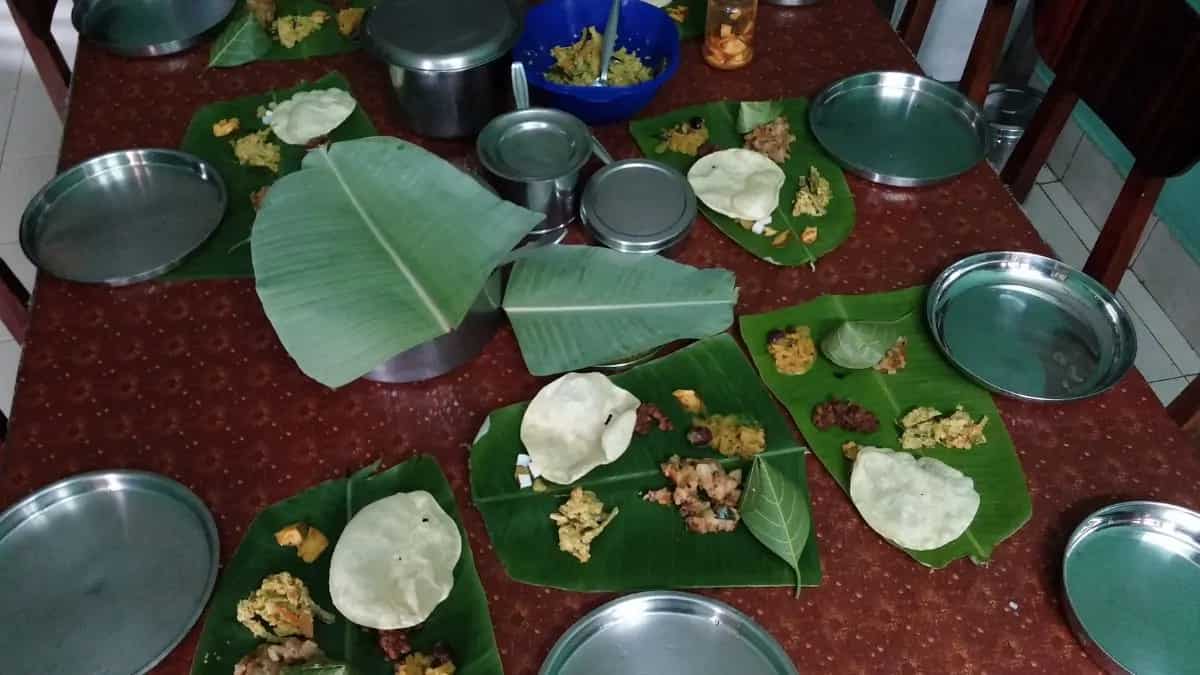
Vishu falls on Tuesday, the 14th of April in 2026 , and for Malayali families across Kerala and around the world, the day begins long before breakfast is on the table. It begins in darkness, with closed eyes. The eldest woman in the household wakes before dawn, takes a ritual bath, and lights the lamp. She then wakes each family member one by one, covers their eyes with her hands, and guides them to see the Vishukani as their first sight of the new year. Only once that sacred viewing is done, once the prayers have been offered and the blessings received, does the household turn its attention to food.
Why Breakfast Comes First
The Vishu morning meal is not a casual affair. It carries the weight of ritual, seasonality, and deep regional identity. The Sadhya is a major part of all Kerala festivals, but special dishes like Vishu Kanji, Thoran, and Vishu Katta are also prepared specifically for this day. These are not Sadhya dishes. They belong to the morning, to the quiet hours after the Kani is seen and before the grand lunch begins. They are what you eat when the year is brand new and the household is still tender with prayer. What makes Vishu breakfast genuinely fascinating is that it is not one thing. It shifts by district, by family, by which part of the river you grew up beside. Central Kerala eats differently from the north. Thrissur has its own non-negotiable traditions. And within households, grandmothers and mothers have passed down versions that diverge quietly from the recipe next door.
Vishu Kanji: The Porridge Of New Beginnings
If there is one dish most closely associated with Vishu morning, it is kanji. Vishu Kanji is made using high-quality rice, coconut milk, and spices. It is a porridge, warm and lightly seasoned, the kind of thing that feels appropriate after an early morning ritual when the stomach is empty and the spirit is full. There are many variations of Vishu Kanji. Some versions are thick enough to slice, others are thin like a soup. Some are sweetened with jaggery while others are pristine white and savoury. Towards central Kerala, the savoury versions are more common, often served alongside avial made from jackfruit or mixed vegetables. In other households, the kanji leans sweet, jaggery and coconut milk making it feel almost like a payasam that has not quite committed to being dessert. Vishu Kanji is a tasty porridge prepared from rice, white beans, coconut milk, and garnished with grated coconut on top. The beans add body and a gentle earthiness that balances the richness of the coconut milk. It is light enough to eat at dawn, nourishing enough to carry you through the morning rituals, and traditional enough that serving anything else in its place would feel like a small betrayal.
Vishu Katta: The Rice Cake Of Thrissur
In Thrissur and across much of central Kerala, Vishu Katta is not optional. Vishu Katta is a very traditional and popular dish in Thrissur. Vishu is not complete without Vishu Katta for breakfast. Known as a popular delicacy from Central Kerala, Vishu Katta is typically enjoyed for breakfast on the morning of the festival day. The fudgy rice cake is served with a spiced jaggery syrup. The base is straightforward: raw rice, ideally the unpolished local variety called unakkalari, cooked low and slow in fresh coconut milk with a pinch of cumin and sometimes a little dry ginger. Once the rice is cooked and the moisture is fully absorbed, the mixture is transferred into a steel plate or banana leaves and smoothed flat, then cooled until it sets firm enough to slice. The banana leaf matters here. The banana leaf imparts an amazing flavour to the dish, so if you have access to fresh banana leaves, you should use them. The gentle vegetal perfume that transfers to the katta as it sets is part of what makes it taste like a festival rather than just rice.
Image credit: Wikimedia Commons
Traditional methods involve the use of raw rice, also known as unakkalari, which is essentially grains with their bran intact and unpolished. The jaggery syrup served alongside it is enhanced with cardamom and sometimes a touch of dry ginger, adding warmth and spice to what is otherwise a calm, dairy-rich dish. Some families serve the katta with a cashew curry instead, giving it a more savoury character that pairs well with the mild sweetness of coconut milk.
Ada: Steamed Rice Parcels With Sweet Filling
Ada adds a different register to the Vishu breakfast table altogether. The ada or steamed rice cakes with sweet fillings absorbs an incredible aroma from the fresh plantain leaves in which it is wrapped. The outer layer is made from rice flour worked into a soft dough with coconut oil and a little salt. It is spread onto banana leaf, filled with a mixture of jaggery, grated coconut, cardamom, and sometimes banana, cashews, or raisins, then folded and steamed until the whole thing becomes fragrant and yielding. Vishu Ada is traditionally prepared as an evening snack in some regions, though it appears at the breakfast table in many households across northern Kerala. The distinction between morning and evening food is more fluid in festival cooking than it is on ordinary days, and ada crosses that boundary with ease. It is rich enough to feel celebratory, small enough to eat before the Sadhya begins.
Image credit: Freepik
The Bitter And The Sour: Completing The Flavour Map
Vishu food, even at breakfast, has always understood that a new year should taste like life rather than like confection. The foods consist of equal proportions of salty, sweet, sour, and bitter items. Veppampoorasam is a bitter preparation made from neem leaves, symbolising good health. Mampazhapachadi is a tangy, sour mango soup. These two dishes appear across the Vishu table as a kind of culinary philosophy, reminding everyone sitting down to eat that the year ahead will contain difficulty as well as sweetness, and that both are worth welcoming. Neem is famously unpleasant to eat on its own. Combined with a little jaggery and rasam, it becomes bearable, even meaningful. The mango dishes are particularly significant because it is during the time of Vishu that mangoes are in season , and the whole feast is shaped by what the land is offering. Mampazhapulissery, a sour ripe mango curry made with yoghurt and coconut, is both a celebration of the season and a counterpoint to all the sweetness elsewhere on the table.
Vishu is a beautiful blend of tradition, spirituality, and togetherness. Whether celebrated in Kerala or elsewhere, the essence remains the same: welcoming a year filled with happiness and abundance. The breakfast is where that welcome becomes edible.