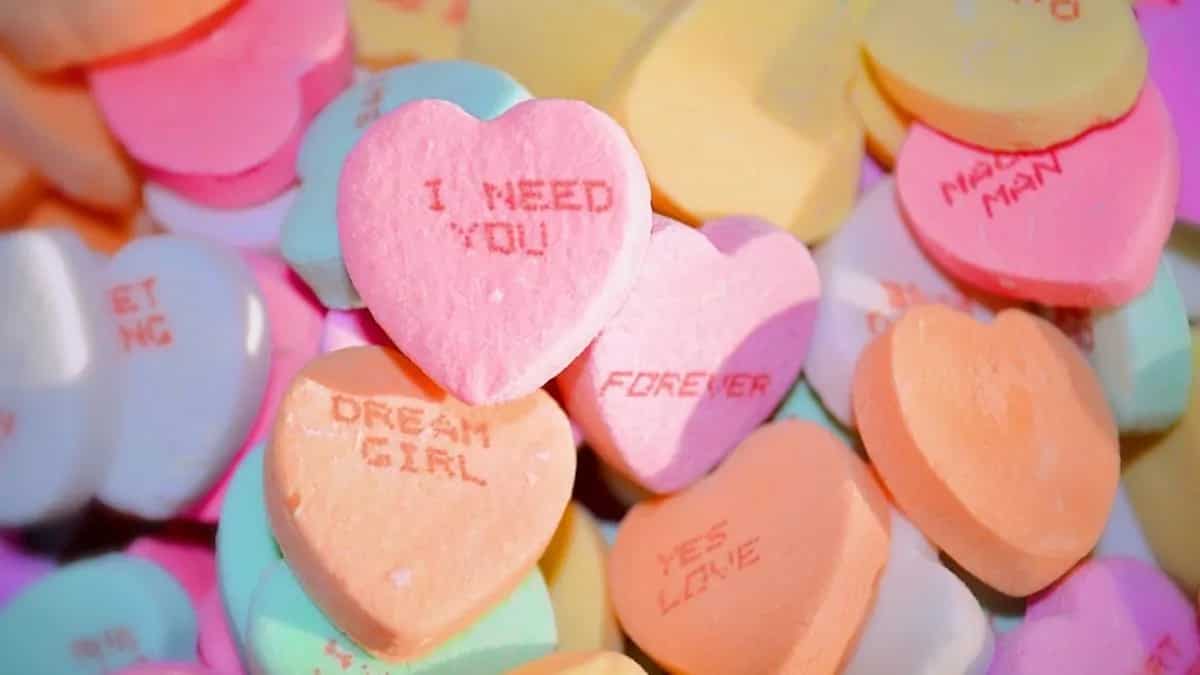
Valentine's Day is typically celebrated with chocolate and candy, either for oneself or a significant other. Seasonal sweets with heart themes are a common way to express yourself. Before the market was dominated by premium chocolates and specialised gift ensembles, candy hearts offered shops a basic, solid supply every February. They are simple to foresee, ship, and market due to their small size, bulk-friendly packaging, and standardised design, which lowers the total operational complexity for seasonal planning. Candy hearts are little, pastel-colored sugar candies with brief printed phrases like “Be Mine” or “Love You” on them. Although symbolism and meaning are given priority in their design, the format also provides distributors and merchants with practical and financial benefits.
Candy hearts, Necco hearts, conversation hearts, those little heart-shaped pieces of candy with brief messages that are common around Valentine's Day, are referred to by a variety of names, including sweethearts. Almost inextricably linked to the most romantic day of the year, the candy is iconic. However, when it comes to consuming actual conversation hearts, well, let's say it is a contentious issue. However, what exactly are they composed of? And from where did they originate? That’s exactly what will be dissected today. So, read on to know why and how these sugar candy hearts turned into the icon they are, for Valentine's Day!
How Candy Hearts Learned To Speak Love
The origins of candy hearts can be traced back to 1847, when Oliver Chase, a chemist from Boston, created a device that would facilitate the production of lozenges. A common treatment for sore throats and other conditions at the time was apothecary lozenges, which are essentially medicine combined with sugar paste. However, creating them required a lot of work, including pulverising the dough using a mill and pestle, kneading it, spreading it out, and cutting it into tiny discs. Oliver's lozenge cutter, which is frequently regarded as America's first candy-making device, made the procedure simpler.
Image Credit: Pexels
After turning his attention from medicinal lozenges to candy, the pharmacist established Chase and Company, which subsequently changed its name to the New England Confectionery Company, or Necco. Necco Wafers are the modern name for the sweet lozenges. Oliver Chase's brother, Daniel Chase, came up with a method in 1866 for pressing text onto the sweet lozenges using a felt roller pad soaked in vegetable colouring (often red). The origin of these specially printed lozenges is the subject of several theories. One unverified legend claims that Union soldiers in the Civil War carried around Necco Wafers, then known as “hub wafers,” and the practice of sending romantic letters to soldiers sparked the idea for conversation candy hearts.
Others contend that Daniel was motivated by the rising demand for Valentine's Day cards, which Massachusetts native Esther Howland began offering for sale in the middle of the 1800s. The more plausible argument is that Daniel was inspired by cockles, which are a common candy in the shape of a scallop shell with a motto printed on thin, rolled-up paper. He decided to figure out how to print the messages straight into candies. It wasn't until 1902 that Daniel's ‘conversation candies’ took on a heart form. Around that time, the candy, which had previously been marketed as small discs, also began to take on amusing designs like clocks, baseballs, and horseshoes.
Image Credit: Unsplash
In a mixing machine, manufacturers blend sugar, corn syrup, cornflour, flavours, gums and colours to make dough. This dough is then fed into a machine that flattens it, stamps it with phrases and cuts it into hearts. The six heart flavours are combined and packaged following 30 minutes in a drying tunnel. Citric acid, vegetable gums (tragacanth, xanthan, and Arabic), gelatin, artificial and natural flavours, corn syrup, dextrose, glycerine, sugar, and artificial colours (red 3, yellow 5, yellow 6, red 40, blue 1). Therefore, they are not composed of chalk.
A Love Language Made Of Sugar
In 1902, the messages became shorter and, well, much simpler, and smaller heart-shaped mottoes emerged. Classic sayings have been incorporated into numerous brands since their inception. Some of them are ‘Kiss Me’ and ‘Be Mine,’ but there are also ‘Sugar Pie,’ ‘Sweet Pea,’ ‘Cutie Pie,’ and ‘Crush on You.’ The brand Necco has spearheaded the candy hearts ever since. Staying relevant all year round and keeping up with trends, they also have amped the messages to the current generations' liking with ‘Lean on Me’, ‘Live 4ever’, ‘At Last’, and ‘IGot You Babe’.
Image Credit: Adobe Stock
According to reports, Necco’s sweethearts sold over 8 billion hearts in the six weeks before Valentine's Day, making them the most popular non-chocolate candy available. It took Necco eleven months to produce that many sweethearts. Regretfully, Necco filed for bankruptcy and closed its doors in 2018. In 2019, Spangler Candy purchased the candy's rights. After a two-year hiatus, Necco Wafers and Sweethearts were reintroduced in 2020 as a result of consumer demand. The candy hearts have reclaimed their position as the most popular non-chocolate Valentine's Day sweet and are now formally back on store shelves!
Following the custom, Spangler wanted to promote a few editions for ‘confused singles’ worldwide by creating a limited-edition ‘Situationship Box’ that sold out right away. There are hazy, erroneously printed candies inside the boxes that are as hard to read as Gen-Z relationships. About 100,000 pounds of candy hearts are produced daily from mid-February to January!