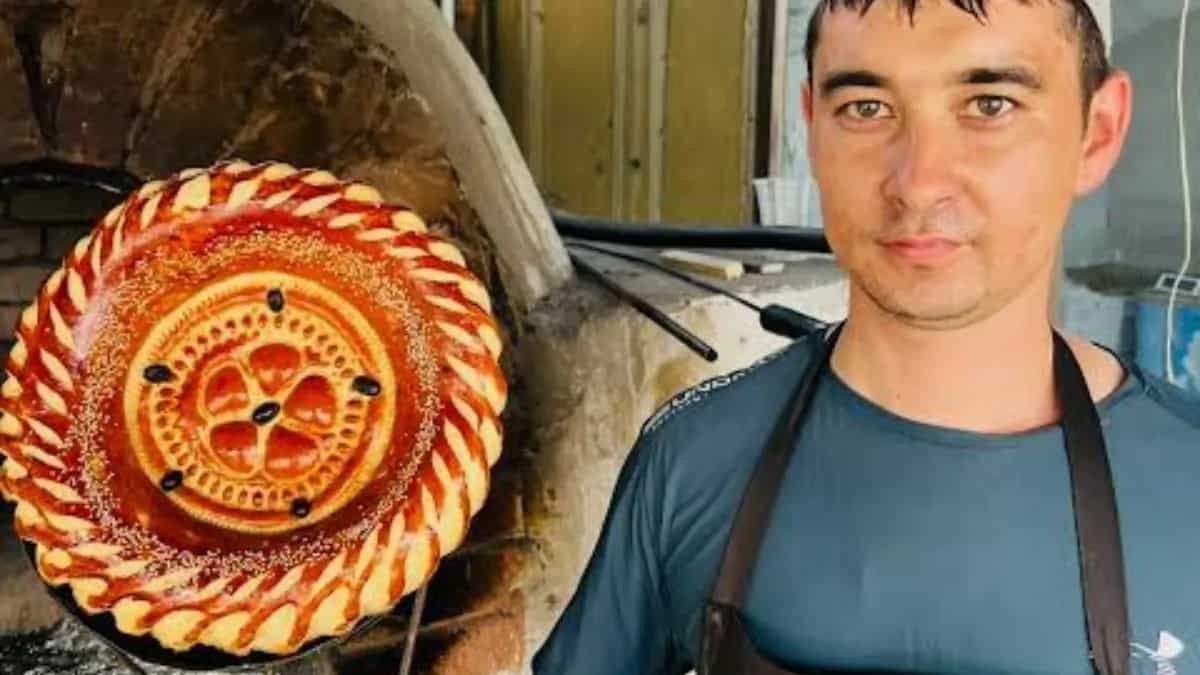
In the sun-drenched ancient cities of Uzbekistan, bread is far more than a staple food. It is a sacred symbol of hospitality, a central pillar of the community, and an artistic medium that has survived the rise and fall of empires. While the country is famous for its blue-tiled madrasas and silk-weaving traditions, a new wave of global attention has turned toward a humbler craft: the baking of Samarkand Patir. At the forefront of this movement is Bek Patrlari, a bakery that has transformed the traditional tandoor bread into a global sensation, captivating audiences across continents with its massive scale and mesmerising design process. The bread produced by Bek Patrlari is not the soft, pillowy flatbread found in a typical grocery store. This is Patir, a dense, rich, and celebratory variety of Uzbek Non that is as heavy as a stone and as intricate as a wood carving. It represents the pinnacle of tandoor baking, where heat, flour, and human skill converge to create something that looks less like a meal and more like a sun-baked medallion.
The Architecture Of The Sketch And Symbols
The surface of a Bek Patirlari loaf functions as an architectural blueprint, where every indentation serves a purpose both structural and spiritual. The design process follows a specific layout that distinguishes the thick, protective rim from the thin, decorated centre. This central depression is where the artistic sketching occurs, performed with a tool called a Chekich. This wooden stamp, fitted with iron pins, is used to create patterns that are often symbolic: many designs represent the sun, featuring radiating lines that suggest warmth and life, while others utilise starbursts or floral motifs known as gul. These symbols are not random; they represent wishes for abundance and protection. The mathematical precision required to strike the dough repeatedly without tearing it creates a symmetrical relief that resembles a stone mandala. This relief ensures the bread bakes evenly by preventing the centre from rising, essentially locking the ancient symbols into the crust as it hardens in the heat.
Image credit: bek_patrlari on Instagram
The Intricate Craft Of The Dough
The creation of a Bek Patirlari loaf is a masterclass in physical endurance. The process begins with a heavy, leavened dough enriched with milk, lamb fat or butter, and occasionally cream. This high fat content is what gives the bread its characteristic density and biscuit-like texture. Unlike many breads that rely on large air pockets, Patir is compressed and sturdy. Once the dough is shaped into a large, flat disc with a raised rim, the baker begins the stamping process. After the stamping, the bread undergoes a series of washes. A mixture of milk or egg yolk is brushed over the surface to produce a high-gloss finish. Then, the baker sprinkles a combination of nigella seeds and sesame seeds over the patterns. These seeds provide a nutty aroma and a sharp visual contrast against the pale dough, highlighting the intricate geometry created by the Chekich.
Image credit: bek_patrlari on Instagram
Trial By Fire: The Tandir Process
The transformation from raw dough to a golden disc takes place in the Tandir, a vertical clay oven that is a marvel of ancient engineering. The Tandir is preheated until the clay walls glow with intense, radiant heat. The baking process is physically demanding and requires a level of bravery that borders on the theatrical. The baker must lean deep into the mouth of the oven, often hanging nearly upside down, to slap the heavy dough against the vertical wall. The moisture in the dough creates a vacuum, allowing the heavy bread to defy gravity and stick to the vertical surface. As the bread bakes, the heat sears the bottom, creating a seal while the basted top develops a lacquer-like shine. Watching several of these oversized loaves clinging to the sides of a glowing oven is a sight of pure elemental power. When the bread reaches a deep amber hue, it is carefully pried off with a long metal hook and caught in a cushioned basket to prevent the delicate crust from cracking.
Image credit: bek_patrlari on Instagram
The Audiovisual Appeal of Viral Reels
In recent years, Bek Patirlari has become a staple of social media feeds, particularly in the realm of ASMR. The bakery’s reels have become famous because of their immense audiovisual appeal, capturing the rhythmic sounds of the workshop in high definition. The appeal lies in the specific textures and tones of the baking process: the rapid, heavy thud of the Chekich hitting the dough provides a satisfying percussion that sounds like a distant drumbeat.These reels highlight the contrast between the rugged, soot-stained environment of the bakery and the exquisite, lace-like patterns on the bread. It celebrates the dignity of manual labour and the beauty of a craft that does not require modern machinery to achieve perfection. The high-definition visual of the golden glaze and the deep black seeds makes the bread look almost three-dimensional on the screen, inviting the viewer into the heat of the Samarkand kitchen.
Image credit: bek_patrlari on Instagram
Consumption And Global Bread Parallels
The way Bek Patirlari bread is consumed is as ritualistic as its creation. In Uzbekistan, bread is never cut with a knife, as using a blade is seen as an act of disrespect to the food; instead, it is always broken by hand into communal pieces. This bread is the centrepiece of the meal, often paired with green tea, fresh grapes, or a thick, clotted cream known as kaymak. In its role as a designed bread, it shares a spirit with other global favourites. Much like the Italian focaccia, which is often decorated with vegetables and herbs to resemble a garden, the Patir uses its surface to tell a story through geometry. It also shares a commonality with the artisanal sourdough movement, where the scoring of the crust is used as a signature of the baker. However, while a sourdough boule relies on wild yeast and air, the Patir relies on density and decoration. It is a sculptural food, intended to be admired for its symmetry before it is shared.
Image credit: bek_patrlari on Instagram