India’s cheese story is far more diverse, regional, and fascinating than what the restrictive supermarket shelf suggests. In Bengal, Portuguese influence was closely associated with the birth of Bandel cheese as well as the development of acid-curdled, cloud-soft chhana, while in the Himalayan belt, communities developed cheeses such as chhurpi as practical ways of preserving milk. Meanwhile, in Jammu, Kalari grew into a unique Dogra cheese, and Gujarat and Maharashtra have their own Parsi speciality, topli nu paneer. As for the OG paneer itself, it became one of the country’s most widely used and fresh, acid-set cheeses, appearing across India in everyday cooking.
That tiny bit of history matters because these cheeses were never really created to imitate Cheddar, Gouda, or mozzarella cheeses. They evolved around local milk, climate, preservation needs, community practices, and cooking habits. For instance, Bandel cheese is small, salty, crumbly, and smoky, while Kalari has a firm exterior that becomes gloriously soft and stretchy when heated, and chhurpi ranges from fresh and yielding to exceptionally hard and chewy.
What happens when we give these regional cheeses a rightful place of honour in contemporary cooking? The local travels the globe, making friends in comfortable culinary corners and inspiring unique inclusions and variations, from earning a place in everyday cooking to a fancy September fondue soiree.
Give Bandel Cheese A Place On The Modern Snack Plate
Bandel is perhaps one of the easiest Indian cheeses to introduce to contemporary cooking, mainly due to its extroverted yet mysterious personality. Its dry, crumbly texture and pronounced saltiness ensure that a little goes a long way, while the smoked version brings an almost bacon-like savouriness without actually needing any meat.
Simply crumble smoked Bandel cheese over hot buttered sourdough with sliced pear, or grate it over a tray of roasted grapes and walnuts for an unforgettable experience. It also makes a superb finishing cheese for scrambled eggs, caramelised onion tartlets or a warm bowl of creamy mushroom soup. For a festive grazing board, you can pair it with guava paste, dates, roasted nuts, and something acidic, such as pickled chillies, to cut through the savouriness, rather than surrounding it with even more salty cheeses.
Let Kalari Do The Melting
Kalari is where the contemporary Indian kitchen can have some real fun. Research into its physical properties confirms that it behaves like a viscoelastic cheese when heated, helping explain its distinctive softening and melting behaviour. Traditionally associated with Jammu and Dogra foodways, the cheese is commonly cooked in its own fat until it has browned on the outside and is yielding on the inside.
Think beyond the familiar kulcha. Slide a pan-fried Kalari into a toasted brioche bun with mustard, sliced onions, and a sharp chutney for the ultimate vegetarian Indian burger. You can also cut it into thick fingers, sear until bronzed, and then serve with tomato or pineapple relish as a party appetiser. It can also replace mozzarella in a grilled sandwich when you want something richer, saltier, and considerably more nuanced in taste.
Turn Chhurpi Into A Himalayan Cheese Crunch
Chhurpi has two very different personalities. Soft chhurpi is fresh and tangy, while hard chhurpi is dried into a remarkably firm cheese that has been designed for longevity. The Food and Agriculture Organisation (FAO) has documented its use in Himalayan communities as a traditional, preserved dairy food.
Image credit: Wikimedia Commons
You can crumble soft chhurpi into warm grain bowls, stir it through sautéed greens, or fold it into a chilli-based dip. However, hard chhurpi deserves a completely different treatment: you can grate it finely over noodle dishes, soups or roasted vegetables for a concentrated savoury hit. It can even be placed on a contemporary grazing board alongside crisp apples, walnuts and chilli jam.
Make Topli Nu Paneer The Star Of A Grazing Board
Topli nu paneer, associated with Parsi food traditions in Gujarat and Maharashtra, is a wonderfully delicate cheese. Traditionally shaped in little cane baskets, it is soft, moist, mildly salty, and tangy, with the basket leaving its unique pattern on the surface. This mild cheese needs very little interference.
You can serve whole rounds with olive oil, cracked pepper, and toasted cumin, or place them beside watermelon cubes, with mint and a drizzle of chilli oil. The combination of creamy cheese, juicy fruit, and spicy condiments makes an elegant, festive starter without requiring any complicated recipe, but it does lead to guests constantly asking for seconds.
Rethink The Indian Cheese Fondue
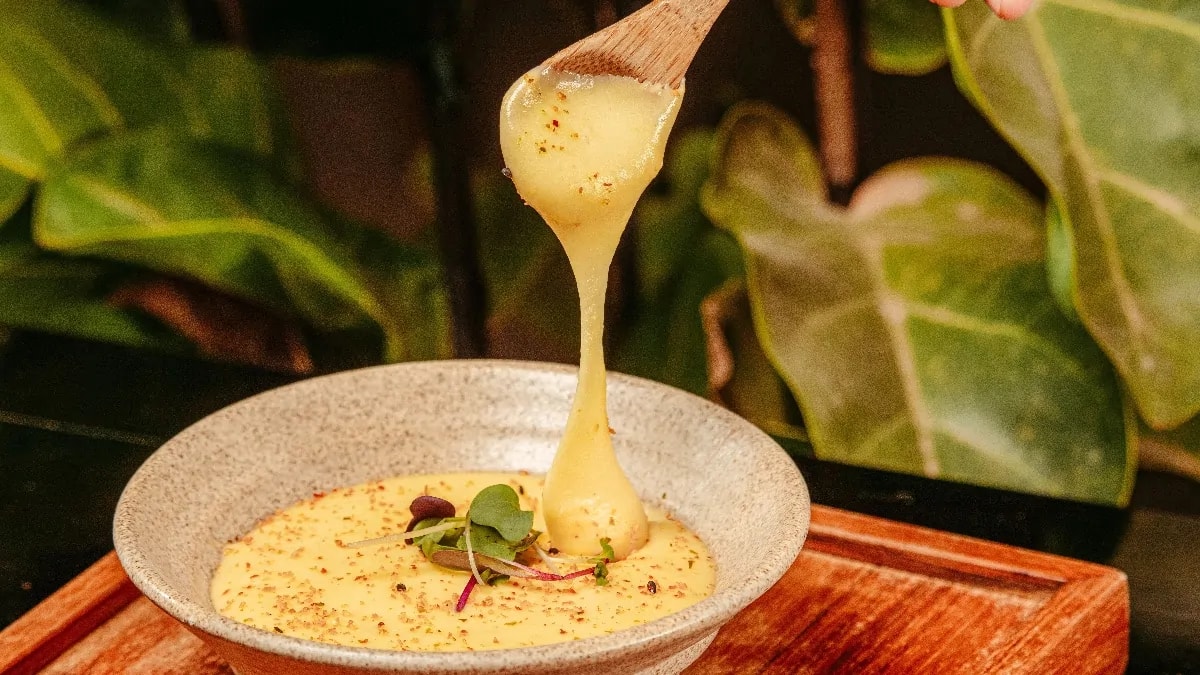
A fondue does not have to begin with aged Gruyère cheese. A small amount of Kalari combined with a milder melting cheese can create a wonderfully stretchy cheese pull, while finely grated Bandel can provide the much-needed salty and smoky counterpoint. The trick is to treat the stronger Indian cheeses as flavour ingredients rather than expecting every variety to perform like a classic Swiss fondue cheese.
Image credit: Pexels
Set realistic expectations, and you will be pleasantly surprised by the output. Serve the bubbling mixture with roasted potatoes, sourdough bread cubes, grilled mushrooms, apple wedges, and even pieces of tandoori roti, pickled onions, or flaky paratha. It turns an otherwise European party format into something unmistakably Indian without becoming gimmicky.
Put Them Into Festive Cooking
Indian cheeses can also slip neatly into dishes already occupying the festive table. For instance, crumbled Bandel can crown a savoury tart, cubes of Kalari can be browned and skewered with bell peppers, while soft chhurpi can be stuffed into mushrooms, and topli nu paneer can sit beside fruit and crackers as a fresh appetiser rather than being cooked at all.
Even everyday meals can benefit from this approach. Paneer remains the practical workhorse because of its firm, non-melting structure, which makes it ideal for curries, grilling, and frying. But regional cheeses can accompany it to offer different textures and flavours without requiring an entirely new cuisine built around them.
The Indian Regional Cheese Board Has Arrived
The most exciting possibility may simply be the opportunity to build an Indian grazing board based on Indian cheeses. Put smoked Bandel beside fresh topli nu paneer, browned Kalari, and a few shards of hard chhurpi. Then add seasonal fruits, your preferred regional chutneys, green chilli pickle, guava paste, spiced nuts, buttery, crisp breads, and perhaps a little honey, for balance.
Image credit: Pexels
It is not about making Indian cheese look fashionable by borrowing a Western format. It is about recognising and appreciating the fact that these cheeses already possess the flavour, history and personality needed to carry one. India has spent centuries making cheese in its own wonderfully idiosyncratic and personal ways. Contemporary cooking merely gives those cheeses a much larger stage and audience.