EDITOR'S NOTE: The Internet Ate It Up is Slurrp’s fortnightly look at the dishes, drinks and edible oddities that escaped the kitchen, conquered our feeds and made millions of people ask: but what does it actually taste like?
*
THERE are foods you eat, foods you photograph, and foods whose structural integrity you dismantle slowly before an audience of strangers on the internet.
Tissue bread belongs emphatically to the third category.
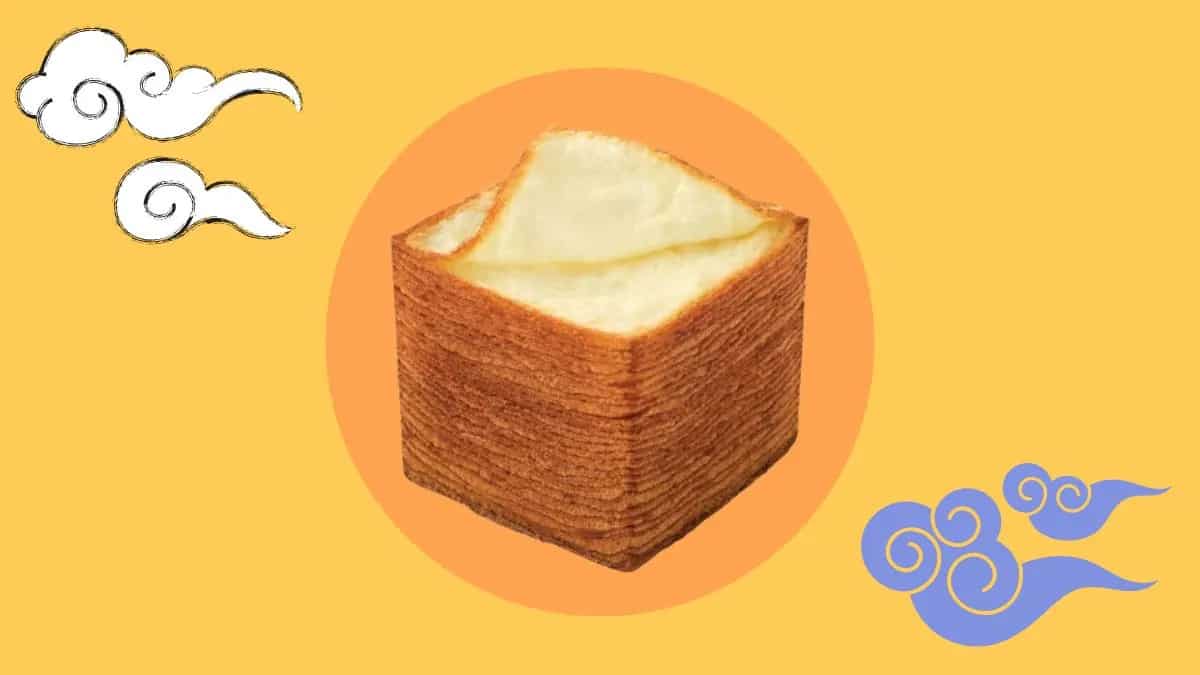
At first glance, it appears to be a handsome but otherwise restrained cube of bread: tall, golden and perhaps a little too geometrically perfect to trust. Then somebody reaches towards it, catches hold of one corner and begins to peel.
A layer lifts away. Then another. Each is so fine and floppy that it resembles a sheet of expensive stationery, a translucent handkerchief or — as the name suggests — a tissue pulled delicately from a box. It trembles between the fingers. It folds over itself. It looks less like bread than something a woodland fairy might use to wrap a very small present.
This is the moment the camera moves closer.
The appeal of tissue bread is not difficult to understand. It gives the internet precisely what it likes: butter, improbable textures and an activity that looks therapeutic when performed by somebody else. The peeling is methodical. The layers separate obediently. No crumbs explode across the table. Nothing collapses unexpectedly. For several hypnotic seconds, the world is organised into wafer-thin sheets of carbohydrate.
Also known as paper bread or 1,000-layer bread, the loaf became closely associated with Truffle Bakery in Seoul’s Hannam-dong neighbourhood. Produced in limited quantities and frequently sold out early, it moved from sought-after bakery item to global feed ornament during the great tissue-bread frenzy of 2024.
Videos travelled faster than loaves ever could. Soon, viewers thousands of kilometres from Seoul were watching hands pull the bread apart and trying to determine whether it was breakfast, pastry, engineering or an elaborate prank directed at people who simply wanted toast.
It is not, despite appearances, a normal loaf attacked by an extremely patient person holding a knife.
The layers are created through lamination, the pastry-making technique most readily associated with croissants. A block of butter is enclosed within dough, which is rolled, folded and chilled repeatedly. Each turn creates more alternating sheets of dough and fat. In the oven, the water in the butter turns to steam, nudging those layers apart and producing the airy internal architecture that makes a croissant flake dramatically over your clothes.
Tissue bread uses the same basic logic but changes the final assignment.
Rather than being shaped into individual crescents and baked until shatteringly crisp, the laminated dough is fitted tightly inside a loaf tin. The confined shape encourages it to rise as a soft cube, preserving the fine internal layers while avoiding the aggressively crackly shell of a conventional croissant.
The result occupies a luxurious middle ground. It has the buttery aroma and intricacy of viennoiserie, but the yielding softness of a rich milk bread. The exterior is thin and lightly golden rather than armoured. Inside, the layers remain connected just firmly enough to form a loaf, yet separate with the slightest persuasion.
And persuasion, rather than slicing, is the entire point.
Tissue bread is supposed to be pulled apart slowly by hand. Trying to carve it into sensible breakfast portions would be like buying bubble wrap and refusing to pop it. The tactile ritual is not incidental to the dish; it is the dish’s chief publicist.
You pinch. You lift. You peel. You admire the stretch. You hold the layer up to the light as if checking a banknote for authenticity. Then you eat it before repeating the process.
Its flavour is comparatively restrained. For something that looks as though it has been invented by a dessert laboratory, tissue bread is not necessarily very sweet. It tastes primarily of enriched dough and generous quantities of butter: mellow, fragrant and rich without becoming cake.
This mildness leaves plenty of room for embellishment. Jam can settle into the folds. Nutella turns each layer into a soft chocolate ribbon. A thicker portion can be transformed into extravagant French toast with syrup and whipped cream, because once you have constructed a loaf from countless layers of butter, moderation has already left the building.
Its savoury possibilities may be even more appealing. A few folds of ham, a sharp cheese or a restrained swipe of mustard can turn the delicate sheets into tiny, absurdly elegant sandwiches. The bread has enough richness to carry a filling, but not so much sweetness that it begins arguing with the salami.
Those who object to softness on ideological grounds can toast or air-fry the layers until crisp. At that point, however, they may be missing the slightly ridiculous pleasure of the original: a loaf designed not for haste, but for prolonged fiddling.
The name has inevitably prompted comparisons with other exceptionally thin foods. In India, tissue bread videos were met with variations of the same response: have none of you seen a rumali roti?
The resemblance is visual and poetic rather than technical. Rumali roti — whose name evokes the softness and fineness of a handkerchief — is an unleavened flatbread stretched with immense skill and cooked rapidly over an inverted, dome-shaped surface. Tissue bread is a butter-laminated loaf. One is supple and expansive; the other is airy and layered. They are not culinary twins.
Still, the comparison reveals something about the way viral food culture works. An item appears on the global internet framed as astonishingly new, and viewers elsewhere recognise an old texture, technique or idea from their own kitchens. The feed may flatten culinary history, but people in the comments are always ready to put the layers back.
Tissue bread also belongs to the internet’s continuing fascination with geometrically disciplined pastries. Cube croissants, cream-filled crubiks and compact laminated creations have all offered bakers a way to turn familiar dough into something instantly recognisable on a screen.
A crescent is classic. A perfect cube is content.
Yet tissue bread’s success is not only about shape. Its true genius lies in making the eater perform the product. Every loaf comes with choreography. It cannot reveal itself until somebody touches it, pulls it apart and exposes its construction. The customer becomes both diner and demonstrator.
This is why the videos remain satisfying even after you understand the technique. You know that it is dough and butter. You know that the layers were carefully laminated rather than cut after baking. You know that the person peeling it will eventually eat it.
And still, when that first impossibly thin sheet comes away from the loaf, you lean closer.
The internet did not invent laminated bread. It merely discovered that, given enough butter and a camera, breakfast could become an unboxing video.