


 Share
Share

“Soda Pop” might be the chart-topping banger, but the real fuel behind Huntr/x’s monster-slaying power? Korean food. Carb-loaded, comforting, and unapologetically craveable.
IN Netflix’s animated fantasy-action romp KPop Demon Hunters, the supernatural isn’t the only thing getting slayed — hunger pangs are, too. Whether they’re taking down demonic forces mid-tour or crashing out in the tour bus, Mira, Zoey, and Rumi are constantly feasting. But here’s the twist: no kimchi. Director Maggie Kang banned it entirely, dodging the "token Korean food" cliché and giving us a deeper, richer buffet of beloved dishes instead.
What emerges is a loving, deliciously rendered tribute to Korean comfort food and snack culture. So if you’ve ever dreamed of eating like a K-pop idol on a demon-slaying schedule, here’s your dream menu — served alphabetically, for your browsing pleasure.
Banchan (반찬)
Scene-stealer or supporting cast? Both.
These assorted side dishes are ubiquitous on Korean tables — tiny plates of joy that include everything from stir-fried anchovies to seasoned spinach. While KPop Demon Hunters doesn’t specify what varieties are shown, in the real world, banchan is about balance — pickled, spicy, savoury — meant to complement rice and mains without overshadowing them.
Beef (소고기)
Not all heroes wear capes. Some are wrapped in seaweed.
Beef shows up twice: once inside the kimbap, and again as brisket in the comfort-bomb known as seolleongtang.In Korean cuisine, beef isn’t everyday fare — it’s prized, celebratory, and treated with respect.
Cup Ramyeon (컵라면)
Instant noodles, eternal comfort.
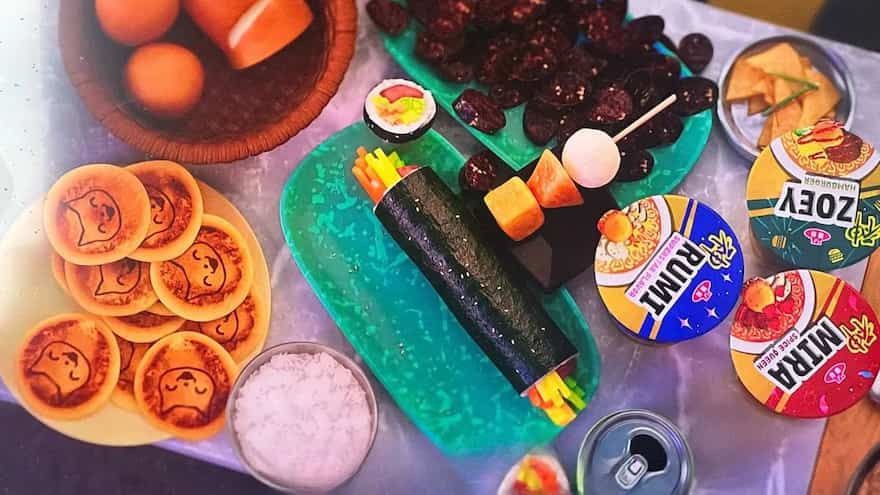
Huntr/x carb-load with instant ramen mid-flight, chopsticks flying and slurps unapologetic. Whether it’s Shin Ramyun or a lesser-known brand, cup ramyeon is a beloved late-night staple in Korea — available at every convenience store, usually eaten hunched over a paper bowl, steam fogging up your glasses.

Daikon (무)
The unassuming root that does all the heavy lifting.
Pickled and julienned, daikon features inside the kimbap and also infuses the broth of the fish cake soup. Korean pickled radish (danmuji) adds crunch and a sweet-vinegary kick. In soups, the unpickled version imparts earthy sweetness — subtle, but essential. It’s the kind of background actor who quietly wins an award.
Eggs (계란)
Boiled, scrambled, rolled, sliced — this protein stays booked and busy.
There’s the four-egg pseudo-omelette sliced into strips for kimbap, hard-boiled eggs served with naengmyeon and seolleongtang, and even a rogue egg snack offered to a cat during prep. In Korea, rolled omelettes (gyeran mari) are a lunchbox classic, while soft-boiled halves crown noodle dishes with creamy drama.
Fish Cake Soup – Odeng-guk (오뎅국 / 어묵탕)
Street food turned soul food.
A skewered delight, odeng-guk is a broth-based soup loaded with fish cakes, daikon, and seaweed. Some versions up the ante with dumplings (guoza) and vinegar-soy seasoning. This soup is a wintertime hero — steaming, slightly briny, and a staple of pojangmacha (street carts) across Korea.
Hotteok (호떡)
Sweet on the outside, molten in the middle.
The girls’ feast includes this street snack. Traditional hotteok features a cinnamon-sugar-nut mix inside yeasted dough, pan-fried until golden and gooey. These are winter treats par excellence, sold piping hot on Seoul’s sidewalks. The savoury cheese version? Chaotic good.
Kimbap (김밥)
The Beyoncé of the bento box.
No food gets more screen time than kimbap in KPop Demon Hunters. Rumi inhales a full roll like a corndog, defying polite norms, and we love her for it. With glistening sesame oil, it’s the jewel of the feast: seaweed-wrapped rice packed with carrots, cucumber, omelette, beef, and pickled daikon. Often mistaken for sushi, kimbap is its own thing — cooked ingredients, no raw fish, and a distinctly Korean soul.
Naengmyeon (냉면)
Colder than your ex’s replies, and way more satisfying.
A nod to director Maggie Kang’s North Korean roots, this dish is a quiet powerhouse in the film. Served in stainless-steel bowls, the chewy noodles float in icy beef broth and come topped with cucumber and egg. It's summer's ultimate survival dish — tangy, chilly, and bracing. Symbolically, naengmyeon represents resilience and memory in Korean culture.
Seolleongtang (설렁탕)
Milk-white broth, tender beef slices, emotional healing.
In one scene, the girls slurp this soup from stone bowls after a hard rehearsal. It’s comfort incarnate: a milky, collagen-rich broth simmered for hours from ox bones, filled with rice, noodles (somyeon), and often brisket. Known as a go-to hangover cure, it’s warming, gentle, and deeply nostalgic — much like the film’s emotional core.
Shrimp Crackers (새우깡)
The loudest crunch in K-snack history.
Zoe’s fave snack makes a cameo in the in-flight feast. These puffy, briny crackers are as Korean as idol photocards and mandatory aegyo. Produced by Nongshim since 1971, they’ve become synonymous with midnight munchies and school lunchboxes.

Somyeon (소면)
Thread-thin, but never forgettable.
Used in both naengmyeon and seolleongtang, these delicate wheat noodles absorb broth like gossip in a group chat. Quick-cooking and silky, they’re a pantry essential in many Korean homes.
No kimchi, no problem.
By sidestepping the obvious and doubling down on the comforting, the indulgent, and the everyday, KPop Demon Hunters gives us a cinematic meal that feels both fantastical and familiar. It’s K-cuisine through a lived-in lens — not just glossy beauty shots of bibimbap, but food with fingerprints on it. Sticky, steamy, soul-nourishing stuff that you crave after a heartbreak, a rehearsal, or a surprise demon ambush.
We’ll have what they’re having.
(And yes, we’ll take seconds.)




