For decades, the success of an Indian wedding menu was measured by sheer abundance. Couples and families took immense pride in sprawling banquets where hundreds of dishes stretched across vast halls, offering everything from regional heirloom recipes to crowd-pleasing continental staples. While generosity remains the beating heart of Indian hospitality, the architecture of how guests dine has undergone a dramatic transformation. Today, the endless buffet line is steadily giving way to curated, interactive gastronomy that prioritizes provenance, freshness, and personal connection over volume.
Live stations were the first major catalyst in this shift. Initially introduced to ensure that chaats stayed crisp and breads arrived piping hot from the tandoor, these counters quickly proved that guests loved watching their food come together in real time. Over the past few years, however, the live station has matured from a practical catering solution into a centrepiece of event design and entertainment. Modern couples, many of whom are well-travelled and deeply invested in culinary culture, view their wedding menus as an extension of their personal aesthetic. They are no longer interested in passive dining; they want moments of discovery, artisanal craftsmanship, and dishes plated to order right before their eyes.
Why Japanese Gastronomy Fits The Indian Celebration
Indian weddings are magnificent symphonies of colour, sound, and movement. Between the pulsating dhol beats of the baraat, the emotional intensity of the pheras, and the high-octane glamour of the sangeet, these celebrations operate at an exhilarating, almost non-stop tempo. Amidst this joyful sensory overload, Japanese culinary traditions offer something remarkably restorative: a pocket of intentional stillness and unhurried grace.
Japanese food philosophy is built upon mindfulness, seasonal respect, and visual harmony. When introduced into a bustling wedding venue, a Japanese counter naturally alters the rhythm of the room. Guests slow down to watch the deliberate flick of a bamboo whisk or the razor-sharp precision of a chef slicing yellowtail. Furthermore, the lightness of Japanese cuisine provides a welcome palate cleanser between richer, spice-forward celebratory meals. It requires no heavy sauces or overwhelming heat to command attention; instead, its clean flavours and sculptural presentation create a grounded, tranquil counterpoint to the exuberant energy surrounding it.
The Intimate Theatre Of The Omakase Counter
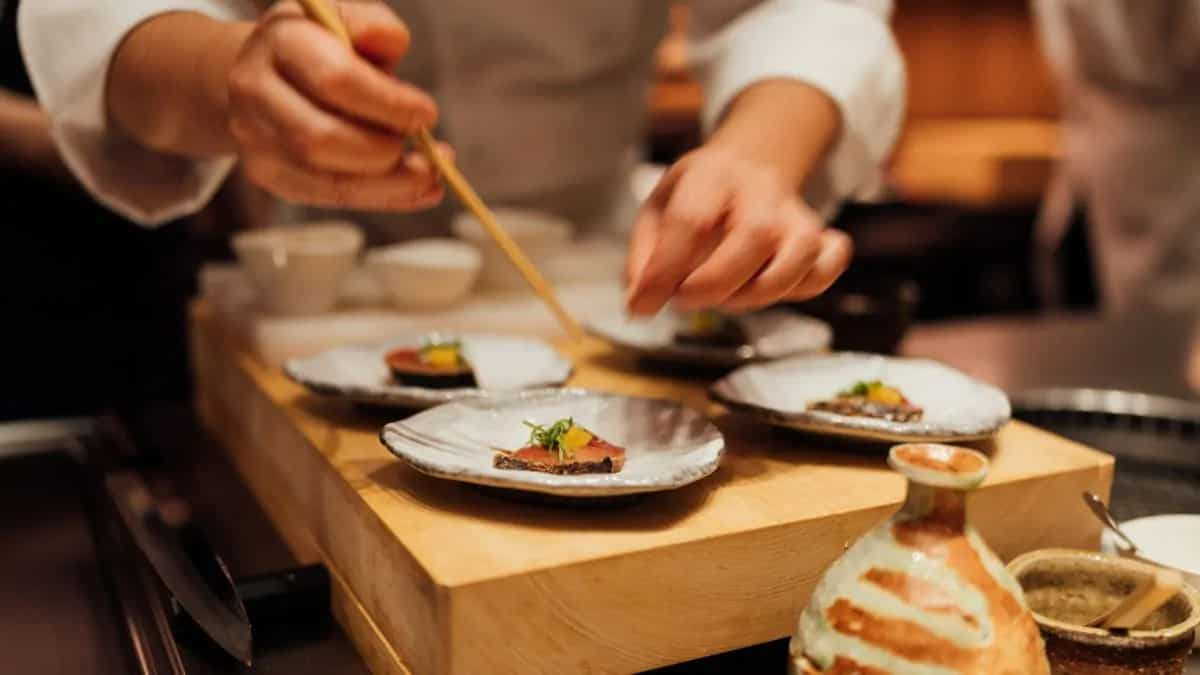
Perhaps the most exclusive evolution in luxury wedding catering is the rise of the bespoke omakase experience. Translating to I leave it up to you, omakase strips away menu fatigue entirely, placing complete trust in the chef to curate a sequence of bite-sized courses based on the finest ingredients available that day. At high-end celebrations, planners are carving out intimate, twelve-to-twenty-seat wooden counters tucked away from the main reception floor, often reserved for close family, the bridal party, or cocktail hour VIPs.
Unlike a standard pass-around appetiser service, an omakase counter demands presence. Guests sit shoulder-to-shoulder as the itamae seasons warm sushi rice, brushes aged soy onto nigiri, and hands each piece directly across the counter to be eaten within seconds. For vegetarian guests, chefs craft extraordinary plant-forward progressions featuring torched enoki mushrooms, heirloom tomato nigiri cured to mimic tuna, and pickled mountain vegetables. It transforms wedding dining from a background activity into an unforgettable, shared memory.
Ceremonial Matcha Bars As The New Daytime Ritual
As daytime functions such as the mehendi, haldi, and welcome brunches lean toward lighter, wellness-conscious hospitality, ceremonial-grade matcha bars have emerged as a runaway favourite. Rather than defaulting solely to sugary mocktails or heavy espresso drinks, couples are partnering with specialist tea purveyors to bring the ritual of Japanese tea preparation to sunlit lawns and courtyard gatherings. 
The visual theatre of a live matcha bar is effortlessly captivating. Baristas sift vibrant, shade-grown green tea powder from Uji or Kagoshima into ceramic chawan bowls, whisking it briskly with hot water using a traditional bamboo chasen until a delicate jade microfoam forms. From there, guests customize their pours—choosing between ceremonial straight shots over crystal-clear ice, oat milk lattes infused with house-made vanilla bean, or refreshing yuzu-matcha spritzers topped with sparkling water. The emerald hue looks striking in photographs, while the combination of gentle caffeine and L-theanine offers guests a calm, sustained lift that carries them comfortably through hours of daytime festivities.
Artisanal Sushi And Hand-Roll Stations
While sushi has appeared on Indian banquet menus for over a decade, the days of pre-rolled platters sitting under heat lamps are firmly behind us. Today's wedding sushi stations operate like sleek, contemporary temaki bars, focusing on crisp nori, impeccably seasoned shari rice, and made-to-order hand rolls.
Because nori loses its signature crunch within minutes of touching warm rice, serving hand rolls live is the ultimate mark of quality. Chefs stand behind minimalist timber or stone counters, assembling open-style rolls packed with truffle avocado, crispy tempura asparagus, spicy salmon, or charred sweet corn, handing them directly to guests for immediate enjoyment. This approach eliminates waste, accommodates diverse dietary preferences effortlessly, and elevates a familiar favourite into something genuinely refined.
Late-Night Ramen And Izakaya Counters
When the formal reception winds down and the after-party hits its stride, heavy curries and fried snacks often feel overly taxing. Enter the late-night ramen and izakaya station, a trend rapidly replacing traditional midnight buffets at contemporary weddings.
Steaming bowls of deeply savoury broth—ranging from rich, slow-simmered chicken paitan to umami-packed roasted mushroom and kombu dashi—offer instant comfort after hours of dancing. Guests step up to choose their noodle texture, tare seasoning, and toppings such as jammy soy-marinated eggs, charred scallions, bamboo shoots, and crispy garlic oil. Alongside the ramen, robatayaki grills sizzle with bite-sized skewers of miso-glazed aubergine, shiitake mushrooms, and chicken tsukune glazed in sweet tare sauce, bringing the convivial, smoky charm of a Tokyo alleyway tavern straight to the dance floor edge.
Image credit: Pexels
Artisanal Kakigori And Mochi Dessert Bars
Japanese influence has also reshaped the final course, offering an antidote to overly sweet traditional desserts. Kakigori, the art of Japanese shaved ice, has become a sensation at outdoor afternoon events and summer celebrations. Using blocks of pure, crystal-clear ice shaved into gossamer-thin ribbons that melt instantaneously on the tongue, dessert artisans layer the snow with Alphonso mango reductions, roasted kinako soybean powder, condensed milk, and ceremonial matcha syrup.
Complementing the shaved ice are live mochi and dorayaki counters, where soft, pillowy rice cakes are dusted with matcha or filled to order with black sesame paste, yuzu curd, and fresh strawberries. Delicate, sculptural, and balanced in sweetness, these confections leave guests feeling refreshed rather than weighed down—proof that the most memorable indulgences at an Indian wedding are often the ones crafted with restraint.
Finding The Right Balance For Your Celebration
While these culinary experiences bring undeniable grace to any menu, the secret to making them truly shine lies in restraint rather than reinvention. Organising a wedding inevitably comes down to practical realities, and keeping a clear eye on your budget is essential, so there is no need to overextend your finances, overwhelm your guests, or plan a strictly Japanese-themed event just to chase every passing trend. Instead, weaving just one or two thoughtfully chosen stations into your existing festivities adds a layer of unexpected nuance, allowing Japanese minimalism to converse naturally with the vibrant traditions already on your table. For any 2026 bride or groom looking to elevate their hospitality without losing the soulful essence of an Indian celebration, choosing what feels sensible and genuinely joyful—such as a single ceremonial matcha bar at a sunlit mehendi or a late-night ramen counter after the sangeet—is an effortless, meaningful way to explore.