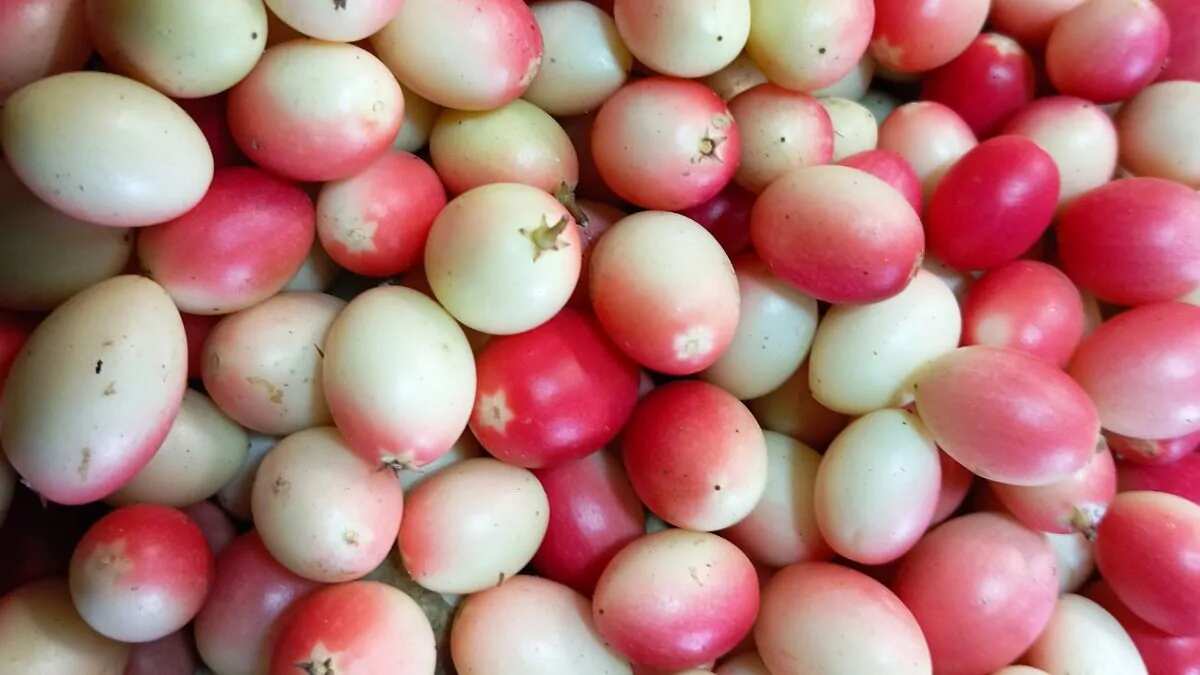
With the arrival of the monsoon season, markets get flooded with seasonal produce. Among such seasonal ingredients is karonda (Carissa carandas), a small pinkish-white berry that slowly turns deep red and almost turns black as it ripens. While its intense, tangy flavour may not appeal if eaten raw, karonda has long been cherished in Indian kitchens for the delectable change it undergoes once cooked. During the rainy season, freshly harvested karonda starts appearing in markets across North, West and Central India, that are turned into pickles, chutneys or curries.
Its tart taste is elevated further when paired with spices, jaggery and mustard oil. From Rajasthani kitchens to Maharashtrian homes, every region lends karonda its own culinary identity. Beyond its bold flavour, the fruit is also valued for its nutritional profile, making it one of the most distinctive ingredients that arrives with the monsoon.
Karonda is usually available in the market between July and September. As its availability is limited to just a few months, many people often preserve it by turning it into pickles or sweet preserves that can be enjoyed even after the season comes to an end.
Health Benefits Of Karonda
Karonda is loved not only for its unique taste but also for the nutrients it has.
- Karonda has vitamin C, an important nutrient that supports immune function and also safeguards cells from oxidative stress. The ICMR-National Institute of Nutrition's Indian Food Composition Tables list the fruit among seasonal produce containing vitamin C, making it a worthwhile addition to monsoon meals.
- It has dietary fibre that plays an important role in maintaining digestive health and the overall functioning of the gut. The Dietary Guidelines for Indians 2024, published by ICMR-NIN, promote including a variety of seasonal fruits in the diet to enhance fibre intake.
- The latest ICMR-NIN Dietary Guidelines recommend eating various locally available, seasonal fruits and vegetables to improve overall nutrient intake. Adding seasonal fruits such as karonda to home-cooked meals is one useful way of following these suggestions.
Here are ways in which karonda is cooked in various parts of India, to get its maximum goodness:
Rajasthani Karonda Ki Sabzi
In Rajasthan, raw karonda is changed into a semi-dry sabzi that has a perfect balance of tanginess and spice. The berries are sautéed lightly in mustard oil and then cooked with cumin, fennel, hing, turmeric, coriander powder and red chilli. Sometimes, jaggery or sugar is also added to balance the tartness.
The sanzi has a sweet-sour taste as the berries soak the aromatic masala. Traditionally, it is paired with bajra roti, missi roti or even with everyday dal-rice.
Maharashtrian Karvanda Loncha
Locally known as karvanda, the fruit is turned into pickles in Maharashtra. Fresh karonda is mixed with mustard seeds, fenugreek, turmeric, chilli powder and lots of mustard oil before being left to mature for many days. As the pickle is left to develop, the fruit turns soft a bit while being firm enough.
The flavour evolves into a lively balance of sour, spicy and a bitter taste that perfectly pairs with everything from varan bhaat to bhakri, curd rice and even simple everyday lunches.
Gujarati Sweet-Spicy Karonda Chutney
Gujarati kitchens turn karonda into an irresistible chutney where its tartness perfectly complements the sweetness of jaggery. The berries are gently simmered with jaggery, roasted cumin, ginger, green chillies and some black salt to make a thick, glossy preserve.
Unlike the pickles that have a sharp taste, this chutney has multiple flavours that feel sweet, tangy, and a bit spicy, all at once. It is commonly paired with thepla, khakhra, fafda or festive farsan platters.
(Image credit: Freepik)
Bundelkhand-Style Karonda Curry
Across parts of Bundelkhand, karonda is cooked to make a curry that feels deeply flavourful. The fruit is lightly sautéed and then cooked with onions, tomatoes, garlic, cumin and coriander in a thick gravy.
Some homes also add potatoes or split lentils to make it more fulfilling. This karonda curry lets the naturally sharp flavour of the berries shine, which accompanies perfectly with steamed rice or phulkas.
Uttar Pradesh's Karonda Murabba
When karonda turns ripe and gets a bit of gentle sweetness, it is preserved as murabba. The fruit is pricked, blanched and then slowly simmered in sugar syrup that is flavoured with cardamom and cloves.
The outcome is a preserve that feels sweet pleasantly with a lingering tang. It is enjoyed with parathas, pooris or also as a digestive meal.