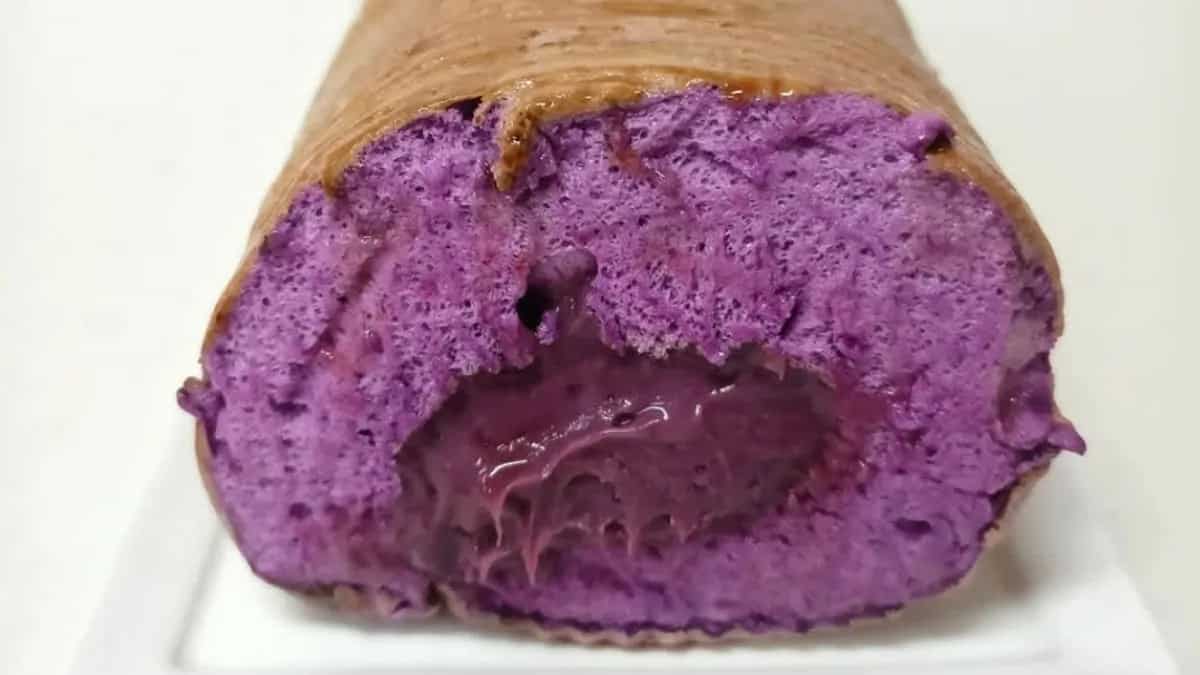
Manila Picture this: a sweltering colonial kitchen in 17th-century Pampanga, where the air hums with the scent of lime mortar and crushed coral. Nuns in starched habits, their hands dusted with plaster, stare at mountains of discarded egg yolks. Outside, an earthquake-Baroque church rises, its walls fortified by the very whites that once cradled these golden orbs. From this alchemy of waste and worship emerges a dessert so divine, so improbably perfect, it earns the name Brazo de Nuestra Señora de las Mercedes the Arm of Our Lady of Mercy. Add the Philippines' native purple yam, and you have Ube Brazo de Mercedes, the violet temptress that has seduced taste buds from Manila convents to New York bakeries. This is no mere roll cake. This is edible history, wrapped in meringue and mercy.
Colonial Thrift, Cathedral Eggs, And A Mother's Embrace
The story begins in the Spanish Philippines (1565–1898), when galleons groaned with silver from Acapulco and friars built stone monuments to the Virgin. Egg whites were the secret weapon of colonial architecture. Mixed with lime, they formed a flexible mortar perfect for bahay na bato homes and seismic-resistant churches like Ilocos's Paoay (1694) or Manila's San Agustin (1607). Thousands of eggs meant thousands of yolks discarded by builders, redeemed by nuns.
These cloistered cooks were culinary alchemists. From surplus yolks sprang leche flan, yema candies, and the heart of Brazo de Mercedes: a stovetop custard of egg yolks, condensed milk, sugar, and vanilla, thick as sin. The exterior? A feather-light meringue of those same whites, whipped with sugar and cornstarch, baked briefly into a pliable sheet. Spread custard inside, roll tightly, dust with powdered sugar. The result: crisp shell yielding to molten cream, a textural rapture that melts on the tongue.
But the name? Ah, that's poetry. Brazo de Mercedes evokes the Virgin Mary's merciful arm Nuestra Señora de las Mercedes, patroness of September 24 feasts. Legend whispers of nuns shaping the log like her protective embrace, an offering from convent kitchens to the heavens. Others see echoes of Spain's brazo de gitano (gypsy's arm), a guava sponge roll. Filipino genius stripped the flour, amplified the air, and baptized it in Marian devotion. It's fiesta food: baptisms, weddings, town fiestas abundance from austerity, mercy in every bite.
Enter The Purple Yam: Ube's Indigenous Insurrection
Traditional Brazo gleams snowy white. Then came ube (Dioscorea alata), the purple yam that rewrote Filipino sweets. Pre-colonial and wild in Luzon's forests, ube's violet flesh nutty, earthy, mildly sweet absorbs flavors like a canvas craving paint. Spaniards overlooked it; Filipinos crowned it king.
Post-WWII, amid American pop culture and rising nationalism, ube halaya (jammed ube with coconut milk, sugar, margarine) infiltrated everything: cakes, ice creams, ensaymadas. Bakeries like Red Ribbon (1979) fused it with Brazo custard, birthing Ube Brazo de Mercedes. The meringue might blush purple with extract; the filling marries yema's richness to ube's floral depth. The spiral cross-section? Instagram catnip a violent violet whirl against meringue snow.
Ube's triumph is Filipino diskarte incarnate. Cheap, local, resilient, it sweetened rationed tables. By the 1980s, Goldilocks and Red Ribbon mass-produced it; today, LA food trucks and NYC patisseries hawk purple rolls to ube-mad millennials. From indigenous root to global glow-up, ube proves: the best revolutions are delicious.
The Ritual: Whipping Mercy Into Shape
Crafting Ube Brazo is high-wire pastry precision yielding perfection. Meringue: 8–10 whites, cream of tartar, whipped to soft peaks. Sugar rains in gradually (1 cup), plus cornstarch (1–2 tbsp) for structure, ube extract for hue. Spread ½-inch thick on parchment; bake 15 minutes at 325°F till set, pliable. Invert onto sugared towel, peel paper, cool.
Ube Custard: Simmer 8 yolks, condensed milk (1 can), evaporated milk (½ cup), ube halaya (1 cup), butter, vanilla. Stir till pudding-thick (10 minutes). Cool.
Assembly: Slather custard, roll from short end like a yoga mat. Chill, slice, sugar-dust. Serves 8–10; fridge life: 2–3 days. Pro tips: underbake meringue (crack-proof), stovetop custard (no oven scorch), tight roll (spiral glory).
Variations dazzle: frozen ube mousse layers; mango swaps; vegan aquafaba meringue. Purists? Classic custard, no shortcuts. Red Ribbon's proprietary halaya sets the gold standard consistent, craveable.
Feast, Faith, And Filipino Soul
Brazo transcends dessert. It's fiesta fuel: unwrapped at christenings like Mary's arm cradling new life. Weddings? Sliced into spirals of union. Its humility eggs, sugar, milk, yam belies grandeur. No rare imports, just thrift turned treasure.
In a nation of 7,000 islands, it unites: Ilocanos bake it street-side; Kapampangans claim custard supremacy; Manileños pair it with tsokolate eh. Post-colonial, it symbolized resilience ube sustaining sweetness when imports failed. Today, diaspora bakers export Pinoy pride, TikTok tutorials going viral (The purple roll you NEED).
Yet challenges linger: meringue cracks if rushed; custard curdles without vigilance. Like colonial nuns amid construction dust, success demands devotion.
A Slice of Empire's Sweet Mercy
Ube Brazo de Mercedes is the Philippines distilled: Spanish form (pianono log), Catholic soul (merciful arm), indigenous heart (ube rebellion). From yolk-waste cathedrals to Red Ribbon shelves, it whispers diskarte creativity from constraint. Its name invokes protection; flavors console. Slice the violet spiral: layers of history, piety, genius.
Next gathering, bake it. Feel the arm extend merciful, embracing, eternally purple. In kitchens worldwide, Our Lady's sweetness endures.