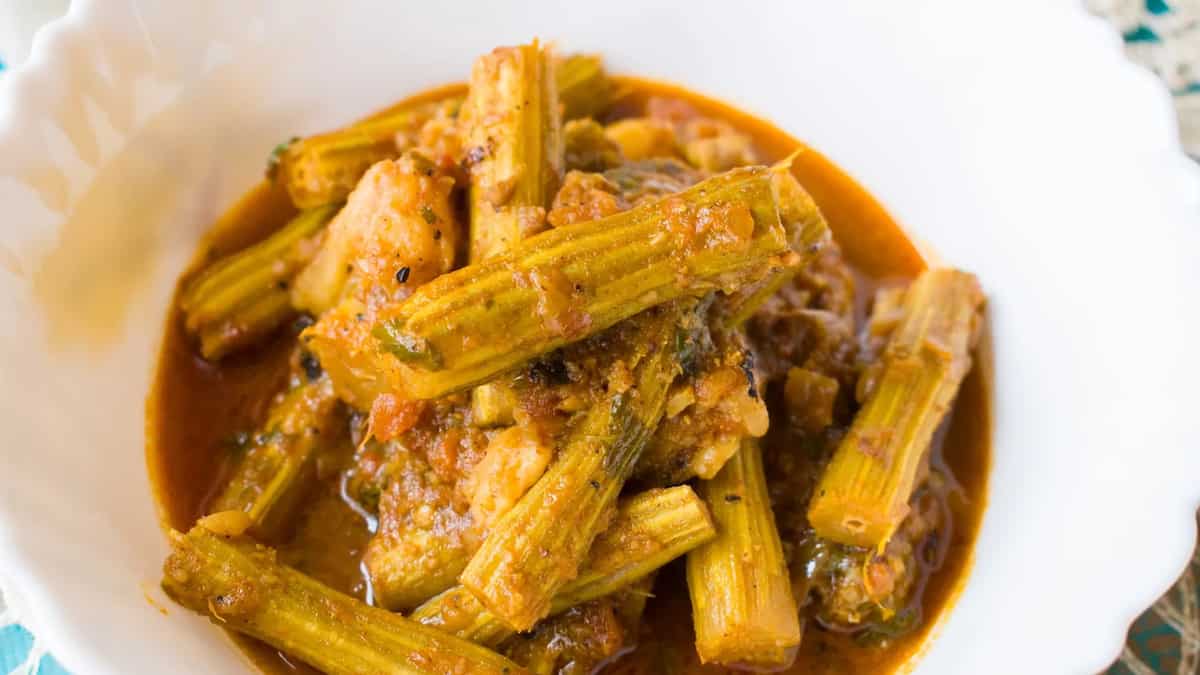
In many households, thick vegetable greens stems are often trimmed and discarded without a second thought. Their fibrous texture and firm exterior can make them seem unsuitable for everyday cooking. However, in tribal kitchens of Jharkhand, these stems are viewed differently. With careful chopping and patient cooking, they soften into tender pieces that absorb flavour beautifully. What appears tough at first transforms into something earthy and satisfying when simmered properly.
Slow cooking allows the natural character of the stems to become prominent, creating depth without heaviness. Using stems thoughtfully not only reduces kitchen waste but also introduces texture that leafy vegetables alone cannot provide. When cooked with attention and balance, these overlooked parts become hearty, flavourful curries that deserve a place on the table rather than in the discard pile.
Seasonal Data Curries Rooted In Local Cooking
Moringa Drumsticks (Sehjana Data)
Moringa drumsticks are long, fibrous pods that are often overlooked because of their firm exterior. When cut into pieces and simmered slowly, they soften and release a mild, earthy flavour into the curry. Many people discard drumsticks because they seem tough to chew, but proper cooking changes their character completely. Slow simmering allows the natural taste to develop without heavy spices.
The pods absorb flavours from simple tempering, making them suitable for light gravies. Instead of treating them as an optional addition, moringa drumsticks can become the central ingredient of a satisfying meal.
Poi Data (Malabar Spinach Stems)
Poi data refers to the thick stems of Malabar spinach, which are often trimmed away while the leaves are used. These stems have a slightly crisp texture when raw but turn soft and mildly slippery when cooked. Instead of discarding them, slicing them finely allows even cooking and better flavour absorption. Poi data blends well into simple curries because it releases gentle moisture as it simmers. This natural moisture helps create light gravies without adding excess water.
The stems provide a subtle vegetal sweetness that balances spices. Their firm texture also prevents them from disintegrating quickly, which makes the dish feel substantial. Cooking poi data separately from the leaves brings out a different depth of flavour.
Laal Saag Data (Red Amaranth Stems)
These stems also release a faint reddish tint into the curry, enhancing its appearance naturally. Rather than treating them as scraps, tribal cooking traditions make deliberate use of laal saag data for their nutritional value. They contribute thickness and balance without overpowering other ingredients. Proper preparation transforms what might seem coarse into something satisfying and nourishing.
Mooli Data (Radish Stems)
Mooli data refers to the green stems attached to radish plants. These stems have a sharper, slightly peppery taste compared to the root itself. When cooked carefully, the sharpness softens into a balanced flavour that complements simple curries. Chopping them finely reduces fibrous texture and ensures even cooking.
They pair well with mild seasonings that allow their natural character to remain noticeable. Cooking mooli data prevents waste and introduces variety into everyday meals. The stems also absorb flavour from tempered spices effectively, creating depth without heaviness. Instead of being discarded, they become a practical and flavourful component of traditional stem-based curries.
Kaumbra Data (Pumpkin Stems)
Kaumbra data, or pumpkin stems, are thick and slightly rough in texture, which leads many people to remove them. With proper peeling and cutting, however, they soften beautifully when cooked. The stems carry a mild sweetness that becomes more pronounced during slow simmering. They add density to curries without making them heavy. Because of their firmness, they hold shape well even after extended cooking.
Preparing kaumbra data requires patience, as the outer layer may need trimming. Once cleaned properly, they absorb flavour evenly and contribute to a well-rounded dish. Using pumpkin stems reflects a practical kitchen approach where texture and nourishment are valued as much as taste.