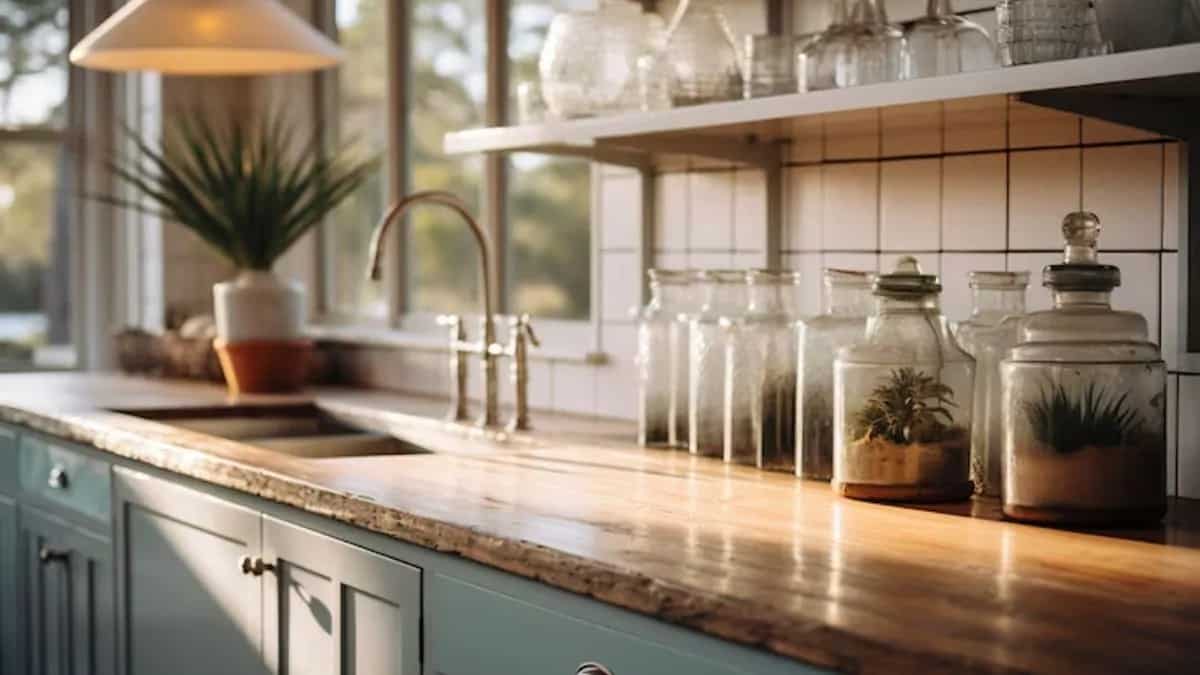
A small kitchen often feels small due to its actual size, but it feels small because everything appears to compete with each other for the same space. When counters are filled, cabinets feel overstuffed, and the movement becomes limited; even a functioning kitchen can begin to feel overwhelming and hard to cook in without turning cranky.
Instead of attempting to “fit more,” the much more appropriate strategy is to rethink how your kitchen works. Instead of just cleaning and decluttering, divide it into zones, like prep, cooking, storage, and cleaning, which will help in organising space depending on how you actually use it every day. This shift is not about buying more organisers or just adding shelves randomly. But it is about making the kitchen flow better, so that each area has a clear purpose.
Dividing the space into zones makes it simplified, the kitchen begins to feel much lighter, more open, making it easy to move around in, without you fussing about its size at all.
Prep Zone: Keep It Clear, Not Empty
The prep area is where clutter gets built up the fastest, as cutting boards, jars, knives, and random items are often piled up here. Instead of just clearing everything out, concentrate on keeping only what you use every day within arm’s reach. A slim wall-mounted rack for knives or a magnetic strip can easily free up the drawer opening. Store frequently used ingredients such as salt or oil on a small tray rather than keeping them across the counter.
This will also make it look tidy. The idea is not minimalism here, but it’s clarity. When your prep zone is visually arranged, it automatically feels bigger and easier to work in.
(Image credit: Freepik)
Cooking Zone: Reduce Movement, Not Tools
The area around your stove should feel efficient and not crowded at all. Instead of herding everything nearby, keep only basic tools, such as a spatula stand or a small container for the ladles; that's it. Move the seldom-used utensils into the drawers. If feasible, use a single multi-purpose pan rather than piling multiple vessels near the stove.
This will reduce the visual mess and excessive movement, which is not required while cooking. A packed cooking zone does not feel restrictive when everything you require is within your reach, and nothing additional is competing for space.
Storage Zone: Use Cabinets Extensively
In small kitchens, the storage is not just about having more cabinets, but it’s about how well you can use them. Inside your cabinets, add simple shelf risers or stackable organisers to make additional layers. This will prevent items from getting misplaced at the back and also double your usable space. Store items depending on how frequently they are being used, like daily essentials at eye level and occasional items on the shelves.
Even shifting from round containers to stackable square ones can make a noticeable difference. When storage is structured internally, the necessity to keep things on the countertop reduces, making the kitchen instantly feel less congested.
Cleaning Zone: Hide The Bulk
The sink area is usually the most visually messy spot, having dish soaps, scrubbers, drying racks, and bins all fighting for attention. Switch to small, uniform boxes for cleaning supplies and put them under the sink or in a small, dedicated place. If possible, use a foldable or wall-mounted drying rack in place of a bulky one.
Even relocating the dustbin slightly out of direct view can make a huge difference you wouldn't have thought of. A cleaner, tighter sink area not only looks better, but it also frees up mental space while you work.
(Image credit: Freepik)
Visual Flow: Let The Eye Breathe
Sometimes, the kitchen appears to be small just because the eye does not get a break. Too many colours, mismatched boxes, or just open clutter can immediately make the space feel busy. Try using matching jars or a uniform colour palette for visible items.
Keep one or two sections purposely empty, like a clear space of the counter or a clean shelf. These visual pauses make the illusion of space. It’s not about being smaller, but about putting things in a way that gives a feeling of relaxation.