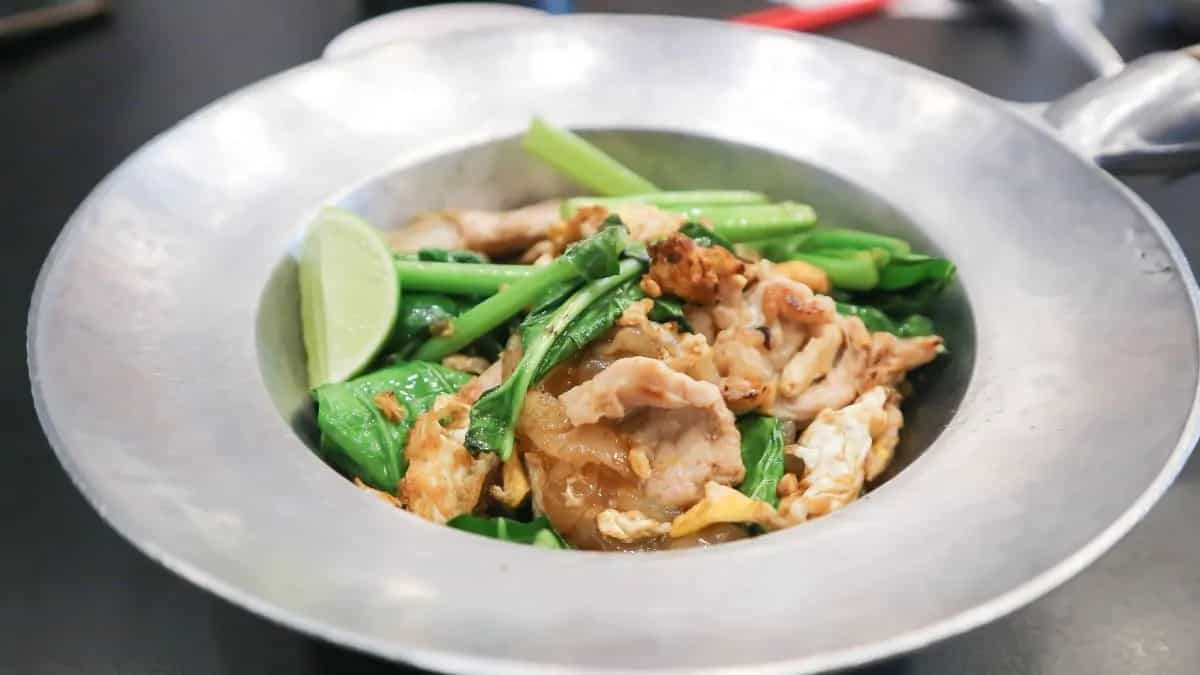
In the Chinese populated Tangra area of Kolkata, the singara chow dominates breakfast tables given that they are most associated with comfort, familiar flavours and make for a complete meal to kickstart the day. Essentially a combination of wonton mee noodles cooked with chicken or pork wontons as well as Chinese cabbage—the delicacy derives its name from the Bengali word for samosa—singara. Lightly spiced with black pepper, red chilli and soy sauce, the dish is assembled in rendered chicken or pork fat. Usually served alongside a bowl of clear broth topped with spring onions, the thin-skinned wontons are also folded in similar fashion to the Bengali street side snack. What also makes the preparation special is that some restaurants within the locality eliminate the broth altogether and serve the tossed noodles with a side of dry chilli chicken.
History Of The Singara Chow
Image Credits: Adobe Stock
Tracing back to the time when Chinese immigrants set-up a sugar mill in Kolkata during the year 1770, a man named Tong Atchew was responsible for establishing a settlement called Achipur. He then went on to marry a local woman following which the Chinese immigrant population increased considerably by the 1800-1900s. Consisting of a Cantonese majority, the foreigners began settling in and around Bentnick Street followed by the Hubei dentists, the leather working Hakkas and the Chinese laundry owning Shanghainese—all of whom were responsible for creating smaller groups within each community.
Once trade was established enough and Chinese good became popular, the curiosity surrounding what the immigrants ate followed. Taboos associated with their dietary practices were beginning to dispel during the Colonial regime, as a result of which high-standing Bengali officials also began visiting these eateries. The hakka people became one of the first communities to harness this opportunity and opened up eateries in the 1980s that functioned during lunch and dinner. Gradually, the culture shifted towards breakfast by virtue of these restaurants being open into the wee hours of the night. From steamed buns filled with minced meat to wontons served with stir fried greens and sausages cooked with pickled greens and rice—quintessential flavours were transformed to appease to the popular palate.
The need for having a breakfast that was satisfactory as well as easy on the stomach gave birth to the singara chow—which unlike the hakka chow was cooked to order and wrapped in banana leaves. Similar in style to the Cantonese wanton mien or the Hakka yam kyao mien, fresh noodles were boiled along with the wontons and tossed in lard before being mixed with pak choy, chopped chicken, spring onions and a sprinkle of black pepper. The humble meal which was later credited as an Indo-Chinese creation, became a crucial aspect that distinguished Tangra’s Chinese food as well as the culinary heritage of the city it was born in.
Also Read:
While recreating the delicacy at home could be a bit complicated given that hand-pulled noodles are the definitive characteristic of the dish, the singara chow has lesser variations which can be replicated using dry egg noodles and store-bought wontons. Bringing together two of Chinese cuisine’s best offerings—the wontons and noodles—in one preparation, while adapting condiment flavours that suited the Indian customers—the singara chow is one of many underrated examples of how the cuisine trickled its way into the larger street food and restaurant culture celebrated today.