When most domestic and international travellers think of Goa, their minds instantly drift to sun-drenched golden beaches, late-night music festivals, and plates of fresh seafood enjoyed at a breezy beach shack. However, there is a completely different, deeply domestic side to this coastal paradise, one that reveals itself precisely as the peak tourist season winds down towards the end of May. As the scorching tropical summer heat peaks and the air grows heavy with stifling humidity, the local population purposefully shifts its focus away from the coastline and towards the ancient, bustling inland markets. This specific transition period marks the arrival of Purumentachem Fest, a profound cultural phenomenon that is deeply woven into the fabric of Goan identity and communal survival.
This particular festival is not your typical tourist-centric carnival packed with flashing neon lights, commercial music, and temporary amusement rides. Instead, it serves as a sensory explosion of sights, sounds, and ancestral aromas that systematically takes over major towns across the state, including the historic hubs of Margao, Panaji, Mapusa, and Sanguem. It represents a collective, deeply calculated breath taken by the local populace before the massive, unrelenting Indian monsoon hits the western coast with full force. For generations, this event has served as the final public celebration and grand social gathering before families retreat into the safety of their homes to endure months of torrential downpours. It offers an authentic, unvarnished glimpse into the resilient spirit of the Goan people, beautifully showcasing how the mundane necessity of survival can be transformed into a joyful art form.
What Is Purumentachem Fest? The Art of the Monsoon Stockpile
To truly understand the essence of this event, one must look closely at the linguistics and the sheer practical utility that underpins every single transaction. The term Purumentachem is derived from the Konkani word purument, which itself traces its linguistic ancestry back to the old Portuguese word provisao, meaning provision or supply. Quite literally, it translates directly to the festival of provisions or the grand feast of stockpiling. It is an organised societal response to a geographical reality that has governed coastal life for millennia.
Historically, the arrival of the monsoon meant complete physical and economic isolation for coastal villages and rural hinterland communities. Rivers would overflow their banks, primitive roads would turn into impassable muddy tracks, and navigating the rough, storm-tossed seas became entirely impossible for local fishermen. To successfully prepare for these challenging, sunless months, every single household needed to build a secure, self-sustaining food fortress within their own four walls. The festival is essentially a massive, highly organised pop-up market where vendors from all corners of the region gather to sell non-perishable food items, unique spices, and durable household tools. It is a dedicated time when the entire kitchen pantry is radically reimagined to withstand high humidity and prolonged rainfall without spoiling.
Image credit: Pexels
The Roots Of The Ritual: History And Origins
The historical origins of Purumentachem Fest are deeply intertwined with the Catholic liturgical calendar, representing a beautiful, organic synthesis of religious devotion and practical coastal agriculture. The fair traditionally kicks off in late May or early June, closely aligned with major religious milestones such as the Feast of the Ascension of Our Lord and the Feast of the Holy Spirit. This alignment allowed people from distant villages to fulfill their spiritual obligations and their material shopping needs in a single journey.
In the bustling town of Margao, the magnificent Church of the Holy Spirit serves as both the geographic and spiritual epicentre of this grand, sprawling fair. Following the solemn religious services and the conclusion of the traditional novenas, the sacred church grounds and surrounding avenues transform almost overnight into a vibrant marketplace. Historically, this week-long fair was the primary economic engine for rural traders, farmers, and artisans who had spent the year preparing goods. Goa relies heavily on its seasonal cycles, and before the era of modern refrigeration and global supply chains, this pre-monsoon window was the absolute last opportunity for citizens to safeguard their food security. The fair became an essential life-support system masquerading as a joyful street festival, perfectly blending the ringing of church bells with the loud, rhythmic bartering of market traders.
Image credit: ItsGoa
Cultural Significance: Community Bonding And Food Security
While the primary, immediate objective of Purumentachem Fest is highly utilitarian, its socio-cultural impact runs much deeper into the collective psyche of the state. It acts as a powerful, democratic social equaliser, bringing together individuals from every distinct strata of Goan society into a shared physical space. Whether wealthy landowners from ancestral mansions or humble agricultural labourers from the fields, everyone rubs shoulders in the crowded, muddy lanes, driven by the shared human need to prepare for the elements.
A major, non-negotiable driver of this entire tradition is the annual sixty-day marine fishing ban strictly enforced by the authorities during the monsoon months. Because the sea becomes far too hazardous for traditional trawlers and small boats, fresh fish, which is the literal lifeblood of daily Goan cuisine, completely vanishes from the local menu. This seasonal scarcity gave birth to an intricate, highly celebrated culture of food preservation that defines the local palate. Families spent the weeks leading up to the rains meticulously drying fish, curing meats, and preparing highly complex, vinegar-heavy pickles. The exchanging of preservation recipes and the collective sharing of resource knowledge fostered an intense sense of community solidarity. Even today, walking through the market is an exercise in profound nostalgia, where elders can be seen passing down delicate ingredient selection techniques to younger generations, ensuring that ancient ancestral knowledge survives the onslaught of modern convenience.
Image credit: Pexels
Culinary Essentials: What to Buy at the Market
Stepping into the vibrant fairgrounds means navigating a dense, labyrinthine maze of intense aromas, loud bargaining, and vibrant colours. If you find yourself in Goa during this magical transition period, there are several non-negotiable culinary essentials that you must observe, understand, and ideally acquire for your own kitchen.
Traditional Goan Sausages (Choris)
Perhaps the most famous and visually striking culinary item on display across the fairgrounds is the Goan chorizo, locally known simply as choris. These plump pork sausages are heavily spiced with potent local chillies, garlic, ginger, cloves, and cinnamon, and then cured using visual wood smoke and sharp, local toddy vinegar. Strung together with sturdy twine like thick, rustic necklaces, they are hung across temporary wooden stalls in massive, dangling bunches that catch the eye. Because they are deeply preserved through this intense smoking process, they can last for many months without refrigeration. They provide an instant, incredibly rich burst of spicy, tangy flavour to hot rice dishes, pulaos, or local bread during dark, rainy afternoons when fresh meat is entirely unavailable.
Image credit: Pexels
The Dried Fish Baskets
Since fresh seafood is completely non-existent during the monsoon downpours, various forms of dried fish take absolute centre stage at the festival. Vendors display huge, wide-mouthed woven bamboo baskets overflowing with salted mackerel, dried prawns, shark meat, ribbon fish, and tiny sardines. The preparation of these dried seafood items is a meticulous, time-consuming art form that takes weeks. The fresh fish is gutted, packed heavily with coarse salt, and sun-dried on the open beaches during the peak heat of summer. This process concentrates the natural umami flavours into a powerful, intensely savoury ingredient that forms the deep flavour base of comforting monsoon curries and side dishes.
Image credit: ItsGoa
Local Onions and Rock Salt
As you wander deeper into the market stalls, you will inevitably notice large, heavy strings of small, reddish-brown onions tied together using dry grass straws. These are prized local Goan onions, celebrated by home cooks for their remarkably low water content and incredibly long shelf life compared to commercial varieties. Alongside these onion braids, vendors sell massive, gleaming mounds of unrefined, coarse white rock salt. This specific type of salt is not merely used for everyday tabletop seasoning; it is the primary, essential preservative used to pack raw mangoes, wild jackfruit, and various local root vegetables.
Kokum, Tamarind, and Spices
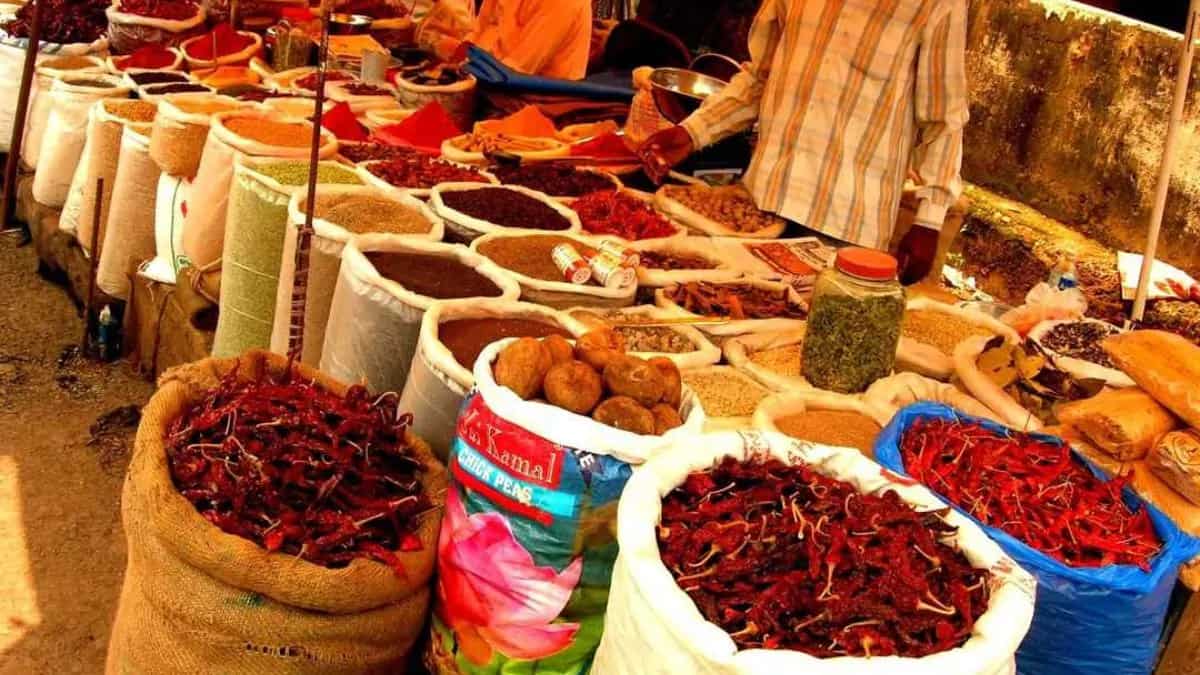
No authentic Goan kitchen can function properly without its signature, mouth-puckering souring agents to balance out the intense heat of the chillies. The festival features massive gunny bags filled with dark purple, sun-dried bhindam or kokum skins, alongside dense, sticky cakes of dark, aged tamarind. Spices are exclusively sold in bulk quantities here, particularly the famous, fiery red Canacona and Aldona chillies. These wrinkled red pods are sought after because they give traditional Goan curries their distinctive, slow-building heat and deep, rich crimson colour.
Image credit: Pexels
Ceramic Storage Jars and Kitchen Tools
Successful long-term food preservation requires the use of the absolute right vessels to keep moisture and mold at bay. The fair features dedicated rows of beautiful, heavy, glazed ceramic jars known locally as barni, which are absolutely perfect for storing acidic pickles and heavily salted items away from damp monsoon air. You will also find traditional, rustic earthenware like the budkulo, a unique clay pot explicitly favoured for boiling local red unpolished rice. Alongside the pottery are rows of the adoli, a clever, traditional wooden seating stool fitted with a sharp curved metal blade and a round coconut grater at the tip.
Image credit: Wikimedia Commons
The Art of Accompaniments: Para and Molho
Beyond the raw ingredients, the festival is a goldmine for complex, ready-to-eat preserves that represent the pinnacle of Goan culinary ingenuity. Two items that seasoned shoppers look for are Para and Molho, which are intense, vinegar-based fish pickles designed to bring life to a simple bowl of rice kanji during heavy storms. Para typically uses dried mackerel that is rehydrated and thoroughly caked in a thick, fiery paste of red chillies, turmeric, garlic, and potent palm vinegar. The fish matures in ceramic jars, developing a sharp, pungent, and deeply satisfying flavour profile over time.
On the other hand, Molho is a slightly more refined, cooked preparation that often features fresh prawns or fish fried to a crisp and then submerged in a sweet, spicy, and tangy gravy. The use of authentic Goa toddy vinegar is critical here, as its natural acidity acts as a powerful preservative while imparting a distinct depth that commercial synthetic vinegars can never replicate. These accompaniments are treated with immense respect in a Goan home, served in tiny portions as a potent flavour enhancer when fresh vegetables and meats are scarce. Purchasing these from the traditional elderly women at the fest guarantees that you are getting recipes that have been perfected over centuries.
Image credit: MariasMenu
The Sweet Side of the Fair: Traditional Monsoon Treats
While savoury provisions dominate the landscape of the festival, those with a sweet tooth will find a delightful array of traditional Goan sweets specifically crafted to provide comfort during chilly, rainy evenings. A major highlight across the dry sweet stalls is Pinagr, which are cylindrical, dark-amber treats crafted from local red rice, grated coconut, and dark palm jaggery, offering a deeply earthy flavour. Visitors will also find massive stacks of Khaje, a popular ginger-infused, chickpea flour sweet stick coated in rich jaggery syrup and sprinkled with sesame seeds, which provides an instant burst of energy.
Another essential sweet treat to look out for is Ghas Mando, a unique type of dried sweet pancake made with local red rice flour and jaggery, designed to be stored for weeks without losing its delicate, layered texture. These sweets are intentionally calorie-dense and infused with warming spices like ginger and cardamom, which help combat the damp chill of the coastal monsoon. Buying these items at the fair supports local cottage industries and home bakers who rely on this seasonal market to sustain their livelihoods throughout the year.
The Modern Challenge: Tradition In The Age Of Convenience
In recent years, the rapid, unstoppable rise of modern supermarkets, air-conditioned department stores, and ultra-fast quick-commerce delivery apps has presented a significant existential challenge to the survival of Purumentachem Fest. The sheer convenience of buying a mass-produced jar of pickle or a neatly vacuum-sealed packet of dried fish at the single click of a smartphone button has naturally caused a noticeable decline in overall market footfall among the younger urban population.
However, the beating heart of this ancient coastal festival completely refuses to stop, showing incredible resilience in the face of modernization. Many traditional Goan households still fiercely and proudly reject modern store-bought alternatives, stating with absolute conviction that mass-produced items completely lack the authentic, sun-dried flavour profiles carefully crafted by local rural artisans. Recent proactive initiatives by the state government and various local cultural groups, such as special exhibitions organised by the Entertainment Society of Goa and the Goa State Rural Livelihood Mission, have successfully breathed new life into the old tradition. By providing dedicated, highly visible platforms for women-led self-help groups and remote rural craftsmen, these modern, well-organised iterations successfully bridge the wide gap between ancient culinary heritage and contemporary urban consumers. It proves beyond a doubt that the festival is far more than a simple seasonal shopping excursion; it remains a vital, living archive of Goan resilience, ancestral flavour, and profound cultural pride.