


 Share
Share

Before the first monsoon clouds gather, Goa belongs to the cashew apple and its primary distillate, Urrak. To understand this spirit is to understand the rhythm of a Goan village, where the arrival of the cashew season is less an industry and more a communal heartbeat. To help navigate this aromatic landscape, we speak with Hansel Vaz, the founder of Cazulo Feni and a dedicated archivist of Goan liquid heritage. Hansel has spent years elevating the perception of indigenous spirits, ensuring that the ancient methods of the bhatti or local distillery are not lost to time.
The First Distillate Of Summer
While many outsiders are familiar with the potent kick of double-distilled Feni, Urrak is the gentle, unhurried introduction to the world of cashew spirits. It is the result of the first distillation of fermented cashew juice. With an alcohol content that usually hovers between 14 percent and 25 percent, it is far more approachable than its elder sibling, though its shelf life is famously short. Hansel Vaz explains the essence of the drink with a sense of wonder: "I usually say it is the most playful expression of the cashew apple. It is the first distillate, light, fruity, slightly wild around the edges. There’s a brightness to it, sometimes cloudy, often aromatic, almost like cashew juice, only better because it carries alcohol. It is less a finished spirit and more a moment of summer captured in liquid."
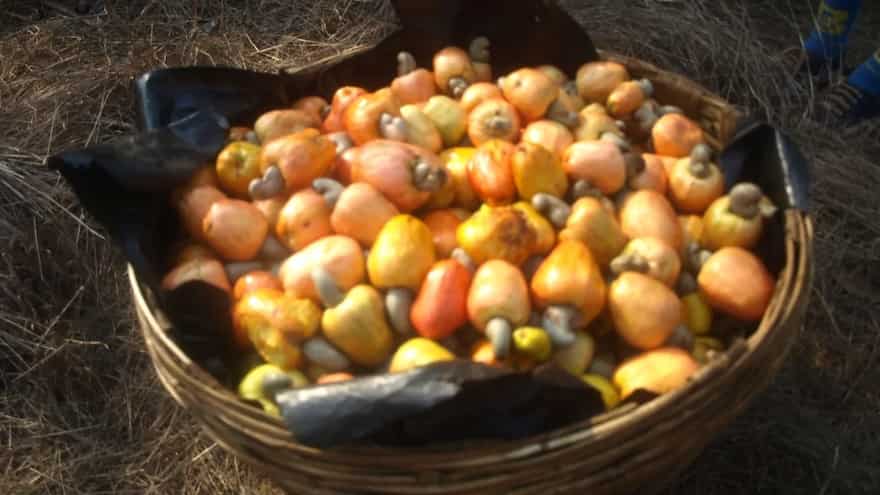
Image credit: Wikimedia Commons
A Name Rooted In History
The story of Urrak is a lesson in the linguistic and colonial history of the Konkan coast. While the Portuguese brought the cashew tree from Brazil to check soil erosion, the practice of distillation in Goa was already well established. The term itself points to an era that precedes the cashew's dominance. "Urraca is the spirit of the season in Goa, the distillate of summer, the first sign that Goa’s hills are alive again. But more than that, it carries a deeper inheritance. The word itself predates cashew in Goa; it belongs to an older world of palm sap, toddy, and early distillation. What we drink today as Urraca is therefore not just seasonal, it is historical. Culturally, it is deeply social. Urraca is not a drink you hoard or age in a cellar; it is one you share with friends, best enjoyed in the heat of a sultry Goan summer," Hansel notes.
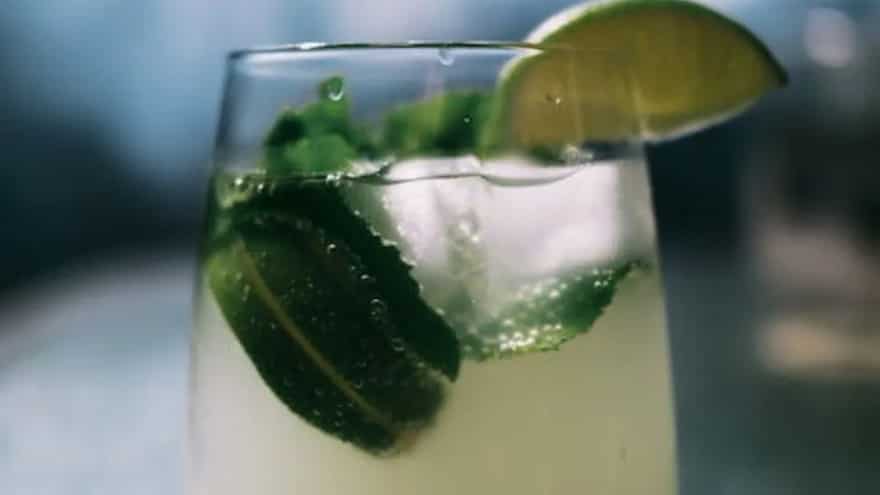
Image credit: Pexels
The Urgency Of The Season
One of the most fascinating aspects of Urrak is its perishability. Because it contains more fruit solids and a lower alcohol volume than Feni, it does not travel well. It is a spirit of the "here and now," forcing the consumer to be present in the orchard or the village where it was made. Hansel emphasises how this biological constraint dictates the culture: "It changes everything. Because Urraca sits roughly between 14 to 25 percent ABV, it lacks the structural stability of feni. It cannot travel far, and it cannot sit for long. Production becomes immediate, distill, move, consume. Storage is short-term, often in simple containers. Consumption becomes almost ritualistic in its urgency. In many ways, this perishability is not a limitation, it is the point. Urraca demands presence. It forces you into the cashew season."
Also read: Urak Vs. Feni; Know The Key Differences
The Traditional Craft
The production of Urrak is an exercise in patience and manual labour. It starts with the tree-ripened fruit, which must be collected by hand. In Goa, the cashew apple is never plucked; it is allowed to fall when the tree decides it is ready. "It begins with tree-ripened, naturally fallen fruit, cashew apples are never plucked. They are gathered and crushed, sometimes by foot, sometimes in a press, and the sweet, tannic juice is allowed to ferment naturally with wild yeast into a cashew wine. This mildly alcoholic liquid is then distilled in a traditional pot still over a wood fire. The first distillate that comes off the still, that is Urraca," Hansel explains.
From a distiller’s perspective, the margin for error is slim. Without the high alcohol content of a second distillation to mask imperfections, the quality of the fruit and the cleanliness of the fermentation are laid bare. Hansel observes: "A good Urraca carries clarity in its chaos. Because it is low in alcohol and minimally handled, it reveals everything, there is nowhere to hide. The aroma should be clean, carrying fresh fruit, not rot or stress. The palate should be light but not hollow, with a gentle sweetness and a soft finish. A subpar Urraca shows strain, poor fruit, rushed fermentation, or careless distillation. It may get you high, but it won’t give you pleasure."
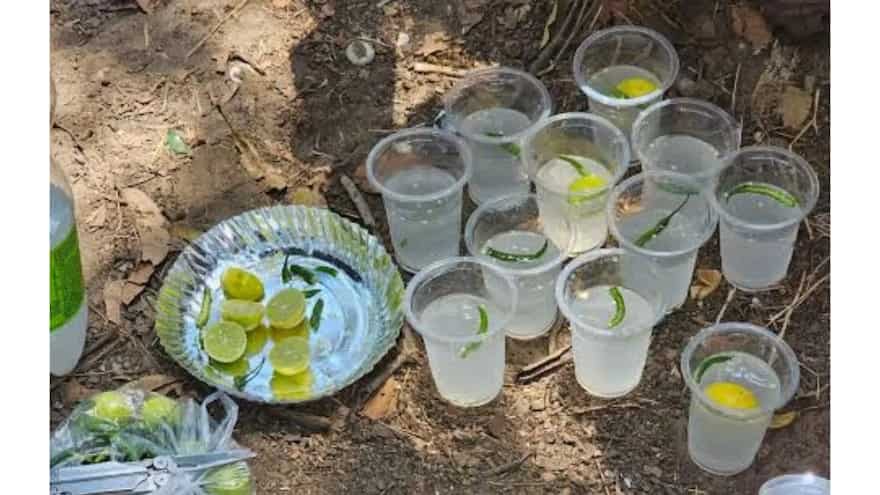
Image credit: u/jackrabbit-199 on Reddit
The Ritual Of Consumption
For locals, drinking Urrak is a communal activity that usually happens in the late afternoon, as the shadows lengthen and the sea breeze begins to cool the air. It is a drink found through networks of trust and word of mouth rather than on the shelves of supermarkets. "Urraca lives in the in-between spaces, late afternoons, unplanned gatherings, conversations that begin without intent. People don’t just buy Urraca; they find it. Word of mouth, small quantities, trusted sources, that’s how it moves. You taste before you buy. Anything less would be careless," Hansel says.
As for the perfect serve, simplicity is paramount. The traditional Goan method involves a glass of Urrak, a splash of lime, a pinch of salt, and a slit green chilli, topped with Limonada or soda. Hansel notes: "Urraca has always been unpretentious, and that is why it has endured. The simplest way remains the best: Urraca with lime and soda, a slice of chilli, maybe a touch of salt. There is no fixed recipe, only a response to heat, to taste, to mood."
For those looking to innovate, he offers a word of caution: "Start by respecting its fragility. Urrak is not a base spirit in the conventional sense, it is already expressive. Citrus can sharpen it, salt can open it, coconut water can soften it. Herbs like mint can lift it. A touch of sweetness can round it. But the principle remains: don’t build over it, build around it. Overzealous bartenders often forget that."
A Global Conversation
As the culinary world moves toward hyper-localism and heritage ingredients, Urrak is finally getting the recognition it deserves as a world-class indigenous spirit. It represents a different way of thinking about luxury, one defined by seasonality rather than price. "If the world has learned to appreciate the immediacy of Beaujolais Nouveau, it is ready for Urraca. In the global conversation, Urraca stands apart. It is not aged, not standardised, not scalable in the usual sense. It represents something rarer, a drink that exists only when its ecosystem allows it. It tells the world that heritage is not just about preserving what is, but understanding how it came to be. And in that sense, Urraca is not just a drink, it is evidence of Goa’s layered past, still alive, still seasonal, and still unfinished," Hansel concludes.
In a world of mass-produced, identical spirits, Urrak remains a beautifully messy, aromatic reminder that some things are best enjoyed exactly where they are grown. It is the taste of a Goan summer, captured in a glass for just a few short months before the rain arrives to wash the season away.




