Across Indian kitchens, root and tuber vegetables have always held a special place in daily cooking. They are versatile, nourishing, and suited to every region’s cuisine. Ingredients like yam, sweet potato, tapioca, and colocasia were once used mainly for fasting meals or savoury dishes, but in recent years, they have been reimagined for festive desserts. Their natural starch, mild sweetness, and dense texture make them perfect substitutes for flour or refined sugar bases. These vegetables also blend beautifully with jaggery, coconut, ghee, and milk, which are staples in Indian sweets.
During the festive season, the use of such ingredients brings an interesting balance between indulgence and nourishment. While these recipes draw inspiration from regional traditions, they also embrace a sense of modern experimentation. Each dessert shows how Indian kitchens continue to evolve while keeping their core ingredients close to the soil.
1. Yam Halwa (Suran Or Elephant Foot Yam Halwa)
Yam halwa is a traditional dessert found in parts of Tamil Nadu and Maharashtra, prepared during festive occasions and temple feasts. The yam is first boiled until tender, then mashed and slowly cooked with ghee, milk, and jaggery. The mixture thickens into a smooth halwa, which carries a deep caramelised flavour and a slightly earthy note. The ghee balances the natural heaviness of yam, while a touch of cardamom and saffron enhances the aroma.
A good yam halwa relies on patient stirring to reach the right consistency. Garnishing with roasted cashews and raisins gives a pleasant texture. This halwa suits those who enjoy old-style sweets that are rich yet balanced in sweetness. Yam’s subtle flavour absorbs the richness of milk and ghee beautifully, making it an ideal choice for winter celebrations.
2. Sweet Potato Cheesecake With Jaggery Glaze
Sweet potato lends a creamy texture and natural sweetness to modern desserts, especially cheesecakes. In this recipe, mashed sweet potatoes are blended with cream cheese, curd, and jaggery syrup to form a smooth filling. The crust can be made using crushed digestive biscuits or ragi flour mixed with melted butter for a wholesome base.
The cheesecake is baked until just set, then topped with a thin jaggery glaze that adds sheen and depth. The flavour is distinct, with hints of caramel from the jaggery and warmth from the sweet potatoes. A few strands of saffron or grated coconut on top make it festive without being heavy. This dessert bridges Indian flavours with global presentation, making it an elegant choice for gatherings and festive meals.
3. Tapioca (Sabudana) Kheer With Coconut Milk
Tapioca pearls, or sabudana, are well known in fasting foods, but they also make a light and satisfying kheer. The pearls are soaked and cooked slowly in coconut milk and a little whole milk until translucent and tender. Palm jaggery or brown sugar adds sweetness, giving the kheer a golden tone.
The gentle aroma of cardamom and a few roasted cashews bring warmth to this dessert. Some cooks in Kerala add grated coconut or a few drops of rose water at the end for aroma. Tapioca kheer has a delicate texture and a pleasing chewiness that pairs well with the creaminess of coconut milk. It can be served warm or chilled, and it feels festive without being overwhelming.
4. Colocasia (Arbi) Payasam With Jaggery And Coconut
Colocasia, known as arbi, is rarely used in sweets, though it holds potential for smooth, velvety desserts. In some traditional kitchens, boiled arbi is mashed and cooked with jaggery, coconut milk, and ghee to make a thick payasam. The preparation resembles moong dal payasam in texture but carries an earthy undertone that feels unique.
The payasam is slow-cooked until it reaches a glossy finish, and a pinch of dry ginger powder helps balance the richness. The flavour of colocasia transforms completely during cooking, losing its sharpness and taking on a creamy quality. It pairs beautifully with freshly grated coconut and toasted nuts. This dessert suits festive meals where traditional sweets are served in small portions with a variety of flavours.
5. Purple Yam Pudding (Kand Pudding)
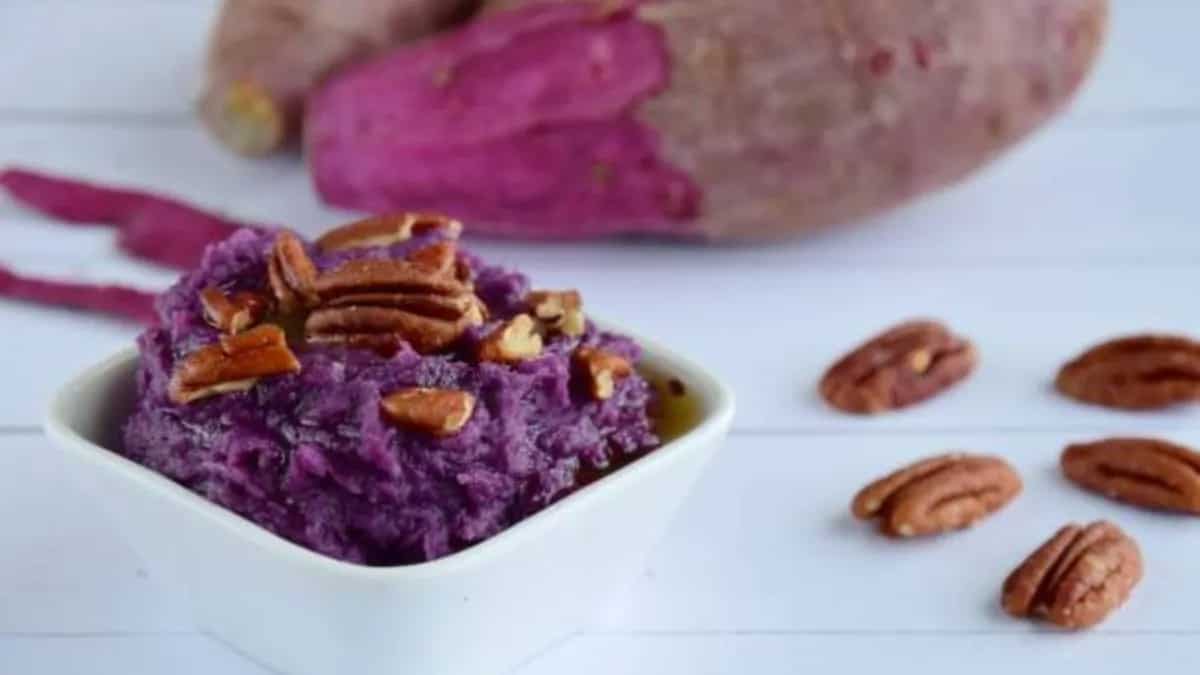
Purple yam, or kand, is recognised for its striking violet hue and subtle sweetness. It is used in both Maharashtrian and Goan cuisine, and it works wonderfully in puddings that are rich yet light on the palate. The yam is boiled, mashed, and combined with condensed milk, coconut milk, and ghee. The mixture is baked or steamed until it sets into a soft pudding with a faint nutty flavour.
The natural colour of purple yam gives this dessert its visual appeal, while the coconut milk lends smoothness. A drizzle of honey or a dusting of grated nutmeg complements the flavour well. This pudding feels celebratory but has a homely comfort to it, suitable for serving after a heavy festive meal. The use of purple yam also highlights how regional produce can be transformed into desserts that look refined and taste familiar.