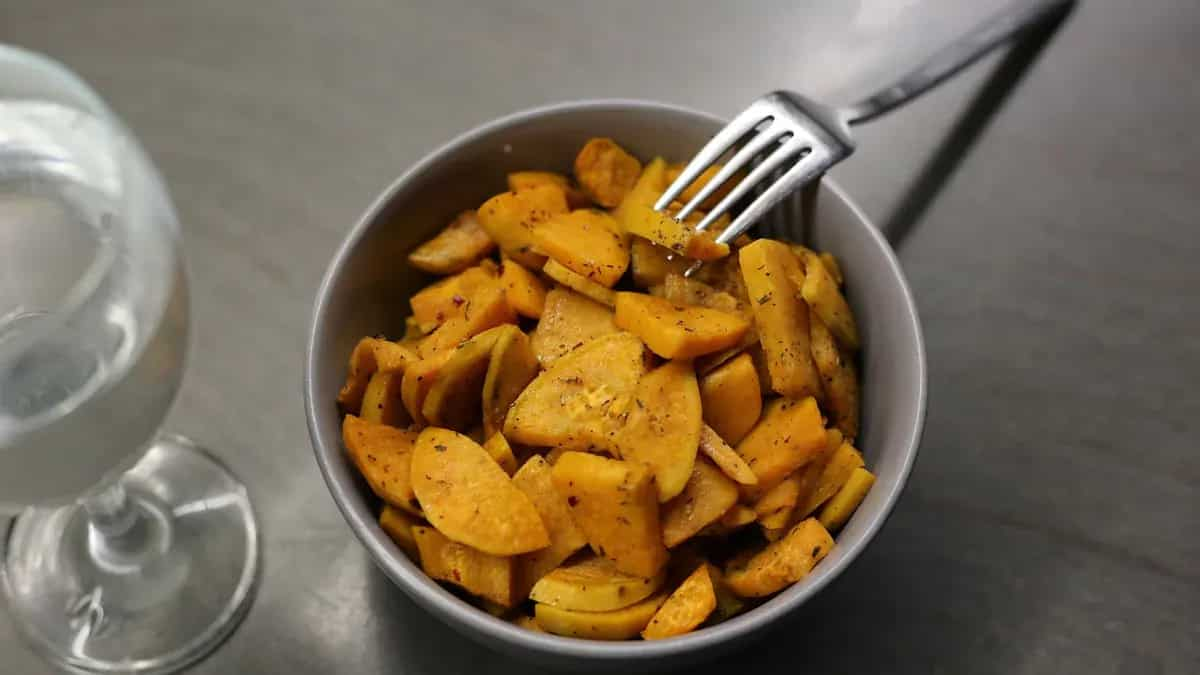
A tray slides out of the oven and the kitchen changes temperature. Sweet potato—shakarkandi—has turned bronze at the edges, sticky where sugars met heat, and softly puffed at the centre. When you press a cube with a spoon it gives, then springs back instead of collapsing. That’s the chaat trick: build indulgence from caramelisation, not a deep-fry.
Roasted Sweet Potato Chaat: What Makes It Taste Like Chaat
Chaat tastes like chaat when it hits sweet–sour–spicy–salty + aromatics in one bite—tang that wakes up sweetness, salt that sharpens, and spice that keeps the finish lively.
Roasting is what makes this version feel rich without dunking anything in oil. Dry heat concentrates the sweet potato’s sugars into browned edges and keeps the centre warm and plush. Boiling, by contrast, invites water into the flesh—fine for mash, but it turns chaat into a slippery, diluted puddle once chutneys arrive.
You’re looking at 20–30 minutes start to finish. It’s built for a winter evening snack, a budget dinner side that behaves like a main, and low-effort entertaining where you can roast a double batch and assemble quickly while it’s still hot.
Ingredients You Actually Need
This is a short-list snack. The “chaat-y” effect comes from balance and sequencing, not from shopping for every garnish on the street cart.
Core base (non-negotiables)
- Sweet potatoes (shakarkandi): 2 medium (about 400–500 g), cubed.
- Chaat masala: 1–2 tsp (start with 1; brands vary).
- Salt: to taste. Kala namak (black salt) is optional but gives that faint sulphuric, street-chaat edge.
- Lemon: 1–2 tsp juice to start.
- Bhuna jeera (roasted cumin powder): optional but high impact—1/2 tsp. (Toast cumin in a dry pan until fragrant, cool, grind.)
Chutneys (store-bought or emergency pantry versions)
- Store-bought: imli/date-tamarind chutney and/or green chutney; plan 1–2 tsp each per bowl.
- Emergency imli-style (2–3 ingredients): tamarind paste (or lemon if that’s all you have) + jaggery/sugar + pinch salt (+ optional chilli). Add a spoon of water only if it’s too thick to drizzle.
- Emergency green-style (2–3 ingredients): coriander + green chilli + lemon + pinch salt. Blend, or chop very finely if you’re avoiding the mixer.
Crunch + fresh (cheap, effective)
- Onion: 2–3 tbsp, finely chopped.
- Coriander: a small handful.
- Sev/namkeen: optional, sprinkled at the very end.
Minimal add-ons for satiety (pick one)
- Yoghurt (dahi): 2–3 tbsp per serving; makes it more filling and softens sharp edges.
- Boiled kala chana: about 1/4 cup per serving; adds chew and turns it into a snack-meal.
Cost-control: what to skip without breaking the dish
Skip sev, pomegranate, nuts, and “extra chutney” buying if budget is tight. If you keep chaat masala + salt + lemon/tamarind + onion/coriander, it will still read as roasted sweet potato chaat.
Estimate the satiety trade-offs (dahi vs chana, sev vs none) with Slurrp Nutrimeter.
Roast The Sweet Potatoes For Chaat Texture
Pick based on your kitchen reality: oven for bigger batches and even colour, air fryer for fast crisp edges, pan-roast for small portions and no preheat.
Prep rules (all methods)
- Cut even cubes: 1.5–2 cm is the sweet spot.
- Use 1–2 tsp oil for ~2 medium sweet potatoes. The point is no deep-frying—just enough fat to help browning and carry spice.
- Peel or not: skin-on saves time and adds a faint earthy bitterness that plays well with chutney. Peel if the skin is thick or you prefer a cleaner bite.
Oven method (best for a crowd)
- Heat to 220°C (425°F).
- Toss cubes with 1–2 tsp oil and a pinch of salt.
- Spread on a tray with space; crowded cubes steam.
- Roast 18–25 minutes, turning once halfway.
Crisp-edge tip: for the last 2–3 minutes, move the tray higher or briefly use grill/broil. Watch closely—sweet potato sugars brown quickly.
Air fryer method (fastest crisp edges)
- Set to 200°C.
- Cook 12–16 minutes, shaking/turning once or twice.
- Keep a single layer; do two batches if needed.
If they’re tender but pale, add 2 more minutes at the same temperature rather than cranking heat (high heat can scorch before colour catches up).
Pan-roast method (no oven, no waiting)
- Heat 1–2 tsp oil in a wide pan.
- Add cubes, salt lightly.
- Splash 1–2 tbsp water, cover, cook 6–8 minutes on medium to steam the centres.
- Uncover and brown 6–10 minutes on medium-high, stirring occasionally.
Important: don’t add chaat masala to the pan while browning. It contains amchur and fine spices that can scorch; season off the heat.
Doneness cues (so your base stays sturdy)
- Knife test: slides in easily, but the cube still holds shape when lifted.
- Edges: deep golden to light brown, not pale.
- Underdone: chalky centre, pale sides. Fix: roast 4–6 minutes more (oven/air fryer) or cover-steam 2–3 minutes (pan).
- Overdone: collapsing cubes, overly dark edges. Fix: cool 2 minutes, then handle gently; go light on wet chutneys and lean on onion/namkeen for structure.
Assembly Order That Keeps It Punchy
The rule is simple and non-negotiable: warm base + dry spices first; wet chutneys last. You’re making a glossy coating, not a watery mix.
Step-by-step (single bowl, serves 2)
- Start warm: Tip hot roasted sweet potato into a mixing bowl.
- Bloom dry spices: Add chaat masala, bhuna jeera (if using), and salt/kala namak. Toss gently. Warmth releases aroma, and the powder clings better before liquids show up.
- Add acid carefully: Squeeze lemon and/or add a little tamarind. Do it in small additions—taste after each. Acid should lift the sweet potato, not dominate it.
- Fold in fresh: Add onion and coriander. Mix minimally so onion stays crisp and the cubes don’t break.
- Chutneys last: Drizzle green and/or imli chutney over the top. Give one or two folds—stop before it turns into a mash.
- Serve now: Sprinkle sev/namkeen only on top, right before eating.
Assembly example (one bowl): warm roasted sweet potato → chaat masala + roasted cumin + salt → lemon/tamarind → onions + coriander → chutneys drizzle → sev on top.
Crunch insurance (especially if you’re serving guests): keep sev in a separate bowl; drizzle chutney lightly so it doesn’t pool at the bottom.
4 Tight Flavour Variations
Use the same roast and the same dry-first, wet-last assembly. Only change the finish.
- Classic street-style: extra kala namak, go imli-forward, plus an optional pinch of red chilli powder right after the dry spices.
- Dahi twist: fold in 2–3 tbsp dahi after the acid step, plus bhuna jeera. It’s more filling and slightly mellower; sev stays optional.
- Heat-lovers: add finely chopped green chilli with the onion, plus a restrained pinch of chilli powder. Too much heat can drown the chaat masala’s sour-salty character.
- Tangy-sweet: lean on date–tamarind. Add a pinch of sugar/jaggery only if it tastes sharp—sweet potato already brings plenty.
Share your own topping ratio or namkeen swap in the Slurrp Community.
Make-ahead, storage, and lunchbox packing rules
- Make-ahead: Roast sweet potato up to 3 days ahead. Cool fully; refrigerate airtight. Store chopped onion/coriander separately.
- Reheat rule: Reheat the sweet potato until hot to revive edges—oven/air fryer 4–6 minutes or pan 3–5 minutes—then season.
- Lunchbox packing: carry chutneys and sev in separate containers. Assemble at eating time, or at least add chutney right before you start eating.
- Leftovers: once mixed with chutney/yogurt, it will soften. If texture matters, dress only what you’ll eat.
Conclusion
Roast until the cubes are tender but still hold their corners, then follow the same order every time: spice warm → add acid → fold in fresh → chutney last → sev last. If you’re keeping it strict on budget, skip the garnish aisle and spend your attention on two things that actually change the result: getting real colour on the sweet potato and tasting as you add lemon/tamarind.
Browse more quick, chaat-style snacks in Slurrp Recipes.
Optional detour: explore the culture behind India’s snack cravings on Slurrp Food Trails.
Some parts of this article were created with AI assistance.