The magnificent Jagannath Rath Yatra of 2026 is set to commence in July, bringing an unparalleled ocean of spiritual devotion to the historic coastal city of Puri in Odisha. Millions of eager pilgrims from every corner of the globe will gather along the expansive Grand Road, known locally as the Bada Danda, to collectively pull the massive, brilliantly decorated wooden chariots of Lord Jagannath, Lord Balabhadra and Goddess Subhadra. The collective atmosphere will be entirely electric, filled with deep spiritual fervour, rhythmic vedic chanting and the resounding echo of traditional percussion instruments reverberating through the salty sea air. Yet, far beyond the visual spectacle of the towering chariots and the grand public procession lies a deeply mystical, hidden dimension of this ancient pilgrimage. This sacred dimension is centred entirely around temple food. The legendary Mahaprasad prepared within the towering stone walls of the Sri Mandir is considered a divine feast capable of liberating the soul, and it is cooked daily to feed tens of thousands of hungry pilgrims without a single day of interruption.
The Banned Staples Of The Modern Kitchen
However, any modern epicurean or curious home cook who takes the time to closely examine the ingredients of this highly revered temple food will immediately notice something completely extraordinary. The most common, deeply loved staples of the modern Indian kitchen are completely and systematically missing from every single plate. The historical regulations of the temple kitchen strictly prohibit the entry and utilisation of potatoes, tomatoes, green chillies, cauliflowers and various other everyday items. To truly comprehend why these highly nutritious and ubiquitous vegetables are entirely excluded from the world famous Chappan Bhog, one must look deep into the complex history of global trade, the evolution of Indian temple cuisine and the strict metaphysical concepts of spiritual purity. For a modern householder, cooking a celebratory meal without a base of tomatoes or potatoes is nearly unimaginable, making the survival of this ancient culinary system a fascinating subject of study.
Image credit: Wikimedia Commons
The Grand Scale Of The Rosaghara
The magnificent cooking space situated inside the south-east zone of the Jagannath Temple complex is recognised globally as the largest functioning kitchen in existence today. Known traditionally as the Rosaghara, this massive stone structure contains around two hundred and fifty massive clay hearths and employs hundreds of hereditary cooks who belong to the specialised Suara and Mahasuara lineages. Every single day, these highly trained, ritually pure individuals prepare fifty six distinct varieties of cooked food and dry sweets as a daily offering to the presiding deities. They follow a highly synchronised, ancient method of steam cooking where nine unglazed earthen pots are stacked directly on top of each other over a single roaring wood fire. The fire itself is considered holy, lit using a sacred flame maintained by temple priests according to precise Vedic injunctions. Local legends dictate that Goddess Mahalakshmi herself secretly supervises the entire cooking process every day, and if any flaw occurs in the preparation, a mysterious dog appears on the premises, signalling that the entire batch must be buried and restarted from scratch. Because the food is viewed as a direct, literal offering to the supreme master of the universe, the highest conceivable standards of material and spiritual purity are enforced at all times.
Image credit: Wikimedia Commons
Defining Purity Through Historical Origins
Purity within this deeply sacred context extends far beyond the basic concepts of physical cleanliness, sterilisation or the washing of hands. It encompasses the exact geographic, historical and cultural origin of each botanical ingredient brought into the temple gates. The ancient recipes of the Sri Mandir function as a fiercely protective shield for indigenous Indian flora and fauna, refusing to adapt to changing global trends. The temple administration and the governing council of priests strictly categorise all vegetables based on whether they are completely native to the fertile soil of the Indian subcontinent or whether they were introduced by foreign colonial powers and merchants in the subsequent centuries. Any plant species that cannot trace its ancestry back to the ancient Vedic landscape of India is deemed fundamentally alien and is permanently barred from crossing the threshold of the sacred kitchen.
Image credit: Wikimedia Commons
The Impact Of The Columbian Exchange: How Portuguese Traders Changed Indian Agriculture
From a historical and botanical perspective, vegetables like potatoes, tomatoes and green chillies did not exist anywhere in the Indian subcontinent before the early sixteenth century. These incredibly popular crops originally evolved in the microclimates of Central and South America and were slowly distributed across the globe during the massive agricultural migration known to historians as the Columbian Exchange. Portuguese maritime traders and colonisers first brought these exotic plants to their trading outposts along the western coast of India, from where they gradually spread into inland farms and altered the daily diet of the population. Before this monumental shift in global trade, classical Indian cuisine relied on an entirely different palette of roots, pods and spices to achieve heat, sourness, thickness and texture. Because the core rituals and culinary guidelines of the Jagannath Temple were codified many centuries before European ships ever arrived in Asia, the traditional temple recipes effectively froze a specific botanical era in time, preserving the culinary habits of ancient India.
Image credit: Shreekhetra
The Label Of Foreign Produce
The conservative priests and hereditary temple cooks firmly consider these later agricultural introductions to be completely foreign and spiritually unsuited for divine consumption. In the local Odia language, tomatoes are still colloquially referred to as Bilati Baigana, a descriptive term that translates directly to foreign aubergine, highlighting its historical status as an outsider. Because these vegetables are non native, they are deemed conceptually inappropriate for the ancient, eternal deities who have resided in Puri for millennia. Consequently, the unyielding rules of the kitchen banish them completely along with American sweetcorn, European cabbage, carrots, beetroot, green peas, runner beans and bell peppers. Even certain varieties of local pumpkins, papayas and gourds that show signs of foreign hybridisation or origin are kept strictly outside the temple precincts to maintain an unbroken chain of historical authenticity.
Image credit: Shreekhetra
The Ayurvedic And Sattvic Dietary Code: Balancing Tridoshas Through Sacred Ingredients
It is also highly crucial to analyse the deep Ayurvedic and metaphysical logic that underpins these rigorous dietary exclusions. The entire menu of the Mahaprasad strictly adheres to a classical Sattvic dietary framework, which completely forbids the use of onions, garlic and other pungent roots. According to ancient Ayurvedic texts, food is not merely fuel, it directly influences the psychological and spiritual state of the consumer by modifying the subtle energies of the mind. Sattvic food is formulated to be intrinsically calming, physically revitalising, easy to digest and spiritually elevating, helping the devotee cultivate clarity and inner peace. Many traditional scholars and temple theologians maintain that foreign nightshade vegetables introduce a restless, unsettling energy into the body, which can disturb meditation and spiritual focus. While onions and garlic are indigenous to the broader Asian landmass, their intensely sharp, heating nature makes them rajasic and tamasic, qualities that promote worldly passion or ignorance, rendering them entirely unfit for a peaceful temple atmosphere.
Image credit: Shreekhetra
Ancient Substitutes And Indigenous Flavours
Faced with these intense restrictions, one might naturally wonder how the master cooks of the Chappan Bhog manage to achieve such incredible depths of flavour, rich colouration and satisfying thickness without using modern culinary short-cuts. The fascinating answer lies in their brilliant, highly sophisticated utilisation of native Indian spices and alternative texturizing agents. Instead of relying on foreign green or red chillies for heat, the temple cooks use massive quantities of native black pepper, which provides a deep, warming, woody spice profile that does not irritate the digestive tract. Black pepper is completely indigenous to the tropical forests of the Western Ghats and has been hailed as black gold in Indian trade for thousands of years. To introduce a pleasant, sour tang to their complex lentil stews and gravies without ever touching a tomato, the ancient kitchen formulations rely on dried mango slices, native tamarind pods, fresh yoghurt and specific indigenous citrus fruits that grow wild in the region.
Image credit: Shreekhetra
Reclaiming The Plentiful Indian Tuber: The Rich Harvest Of Native Odia Crops
To replicate the starchy, satisfying density that potatoes usually provide in modern Indian cooking, the traditional kitchen utilises a wide variety of ancient indigenous tubers and root vegetables. Massive chunks of elephant foot yam, taro root, arrowroot and specific varieties of pale sweet potatoes feature prominently in the rich, slow-cooked vegetable stews served to the gods. The iconic Odia dish known as Dalma, which is a glorious, highly nutritious combination of split lentils and hearty vegetables, is prepared within the temple using strict combinations of raw green bananas, native yams, ash gourd, pointed gourd and indigenous country beans. The Suara cooks rely exclusively on traditional, unadulterated fats like pure cow ghee to enrich the gravies, giving them a luxurious mouthfeel and a distinct aroma. Furthermore, they completely reject modern, industrially processed sea salt in favour of unrefined rock salt mined from the earth, thereby maintaining a flawless, prehistoric link with ancient human dietary practices.
Image credit: Shreekhetra
The Living Time Capsule Of Indian Heritage
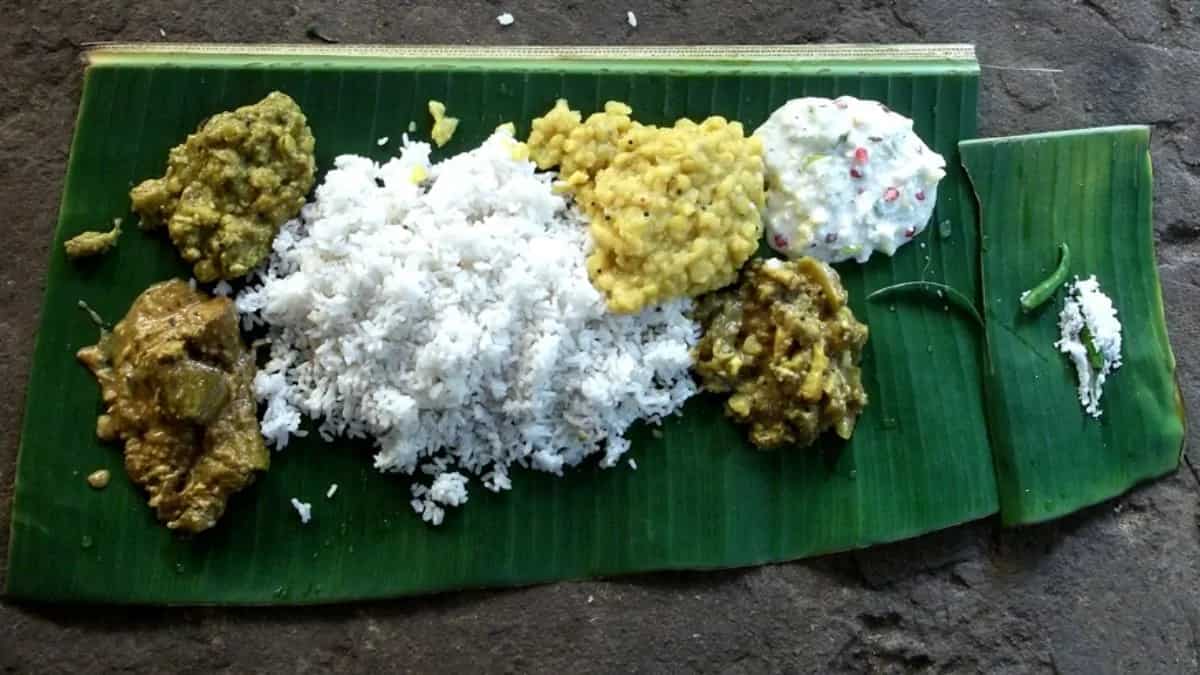
Within the sacred boundary of the Sri Mandir, the cooked food is ultimately treated with the absolute highest level of reverence as Anna Brahma, which translates to the supreme consciousness manifested as life-giving food. Every single step of its intricate preparation is meticulously governed by sacred geometry and ritual law, ranging from the extraction of pure water from ancient, protected temple wells to the selection of specific types of dried jungle firewood. The fragile clay pots are used exactly once for a single meal and are immediately shattered and discarded after the offering, guaranteeing an absolute standard of spiritual hygiene that prevents any contamination. Once the steaming hot food is formally presented before Lord Jagannath and his siblings, it undergoes a profound metaphysical transformation, becoming the holy Mahaprasad. It is a beautiful, deeply moving sight to witness all societal, economic and caste distinctions dissolve into nothingness within the grand courtyard of the Ananda Bazar, where kings, scholars and humble labourers sit side by side on the floor to share this sacred food from the very same banana leaf.
Image credit: Shreekhetra
Cultural Preservation In A Globalised World: A Legacy Untouched By Time
As the grand festival of Rath Yatra 2026 rapidly approaches, the tireless staff of the temple kitchen prepares to scale up production to feed an absolute sea of humanity. The total, uncompromising exclusion of modern foreign vegetables might initially appear to be a rigid, old-fashioned culinary restriction to a casual observer raised on global fast food. However, when viewed through a cultural lens, it reveals itself as an incredibly powerful, deliberate act of historical preservation and civilisational resilience. By firmly keeping potatoes, tomatoes and chillies out of the sacred cauldrons, the guardians of the Sri Mandir have successfully protected a living, breathing culinary time capsule across many centuries of foreign invasion and political change. This unbroken tradition allows modern people to experience the exact tastes, textures and aromas that their ancestors experienced over a thousand years ago, long before the forces of globalisation standardised the human diet.