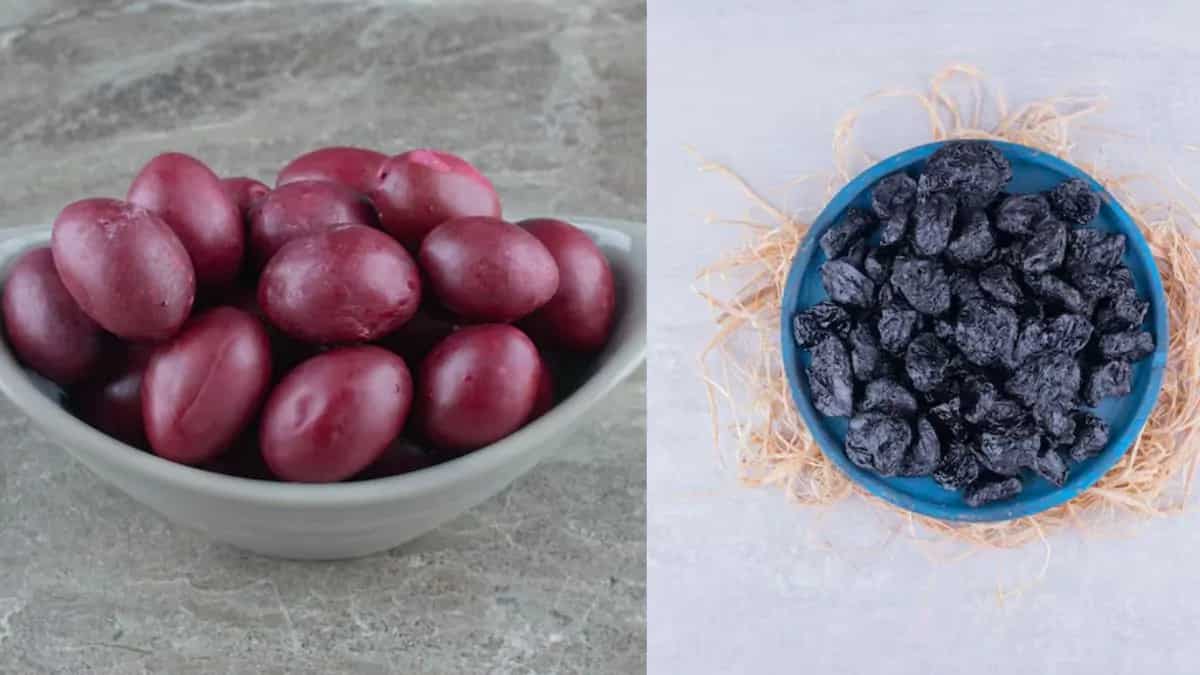
If you have ever stood in front of a dried fruit shelf thinking whether prunes and aloo bukhara are actually the same thing, you are not the only one. The confusion partially comes from the way the names are used. Aloo bukhara typically refers to plum, whereas a prune is a type of plum that is appropriate for drying. But there is another thing to note: dried aloo bukhara sold in the markets can refer to various dried plum varieties, so not every pack will look or taste exactly like the soft, dark prunes typically sold in supermarkets.
That difference becomes more evident when you are cooking with them. A prune is generally soft, dark, chewy and naturally sweet, making it a popular choice in baking, to add to breakfast bowls and in sweet-savoury dishes. Aloo bukhara, on the other hand, may be eaten fresh, soaked when dried, or used to add a sharper, fruity note to chutneys and other cooked dishes.
Here are five things that can help you tell them how they are apart, so you do not end up getting confused:
Fresh Aloo Bukhara Is A Plum; A Prune Is A Drying-Friendly Plum
The first difference is about the form of the fruit and, more notably, the type of plum involved. Fresh aloo bukhara is just a plum, usually juicy and eaten fresh when in season. Prunes, on the other hand, come from plum types chosen for their ability to dry successfully.
Prunes are varieties of European plum that can be dried whole because they have the suitable sugar and flesh characteristics for the baking process. So saying “a prune is just any dried plum” is an oversimplification. All prunes are plums, but not every plum is appropriate for becoming a traditional prune.
(Credit: Freepik)
Their Taste Is Where You Notice The Difference
A fresh aloo bukhara is juicy, tart and sweet, having the refreshing acidity that you can anticipate from a fresh plum. Once dried, the flavour becomes much more potent. Conventional prunes are soft, extremely fruity and a bit sweet, sometimes with a caramel-like quality.
Dried aloo bukhara that are available in Indian shops can vary greatly, as the term is used for different dried plum products; some are noticeably more tart or tangy than the packaged prunes. This is why swapping one for the other to use in a savoury recipe can alter the entire dish. If the recipe needs sharpness, a tart dried plum may perform better than a very sweet prune.
The Texture And Moisture Are Not Always The Same
Look at the fruit rather than depending only on the label. A traditional prune is generally dark, wrinkled, soft and also chewy, with enough moisture to bend it easily. It may be sold whole with its seed or as a pitted fruit.
Dried aloo bukhara can be firmer, smaller in size or noticeably more chewy, depending on the variety and the drying method used. Some Indian-market varieties also have the seed, so they need to be looked for before eating or adding to any recipe. If the dried fruit is very firm, soak it for a while; this softens the flesh and makes it easier to cook.
Prunes Work Well In Sweet Recipes; Aloo Bukhara Can Bring Tang
This is where the difference becomes more useful. Prunes generally suit dishes where you want to get the sweetness and body, such as oatmeal, cakes, compotes, energy bites or a slow-cooked sauce. Their soft flesh can also be blended to make a paste. Dried Aloo Bukhara, especially a tarter type, can be more helpful when a dish needs a sweet as well as a sour edge.
It can be added to chutney, to certain rice preparations or cooked in savoury gravies where fruit is used for the contrast. They can sometimes be used as a replacement for each other, but it's better to taste it first: a sweet prune may make a savoury dish much sweeter than required.
(Credit: Freepik)
Drying Changes More Than Just The Water Content
One of the biggest distinctions appears after the fruit is dried. Removing most of the water makes the natural sugars, flavour and texture much fuller, which is why a prune tastes much sweeter and richer than a fresh plum. Proper prune varieties are particularly suited to drying as they have enough sugar and a suitable flesh structure to dry without the need for fermenting around the pit.
This also explains why dried prunes are soft and chewy instead of simply resembling a shrivelled fresh plum. So, when a recipe calls for prunes, it is referring to a fruit that has been picked and processed for this precise dried form.