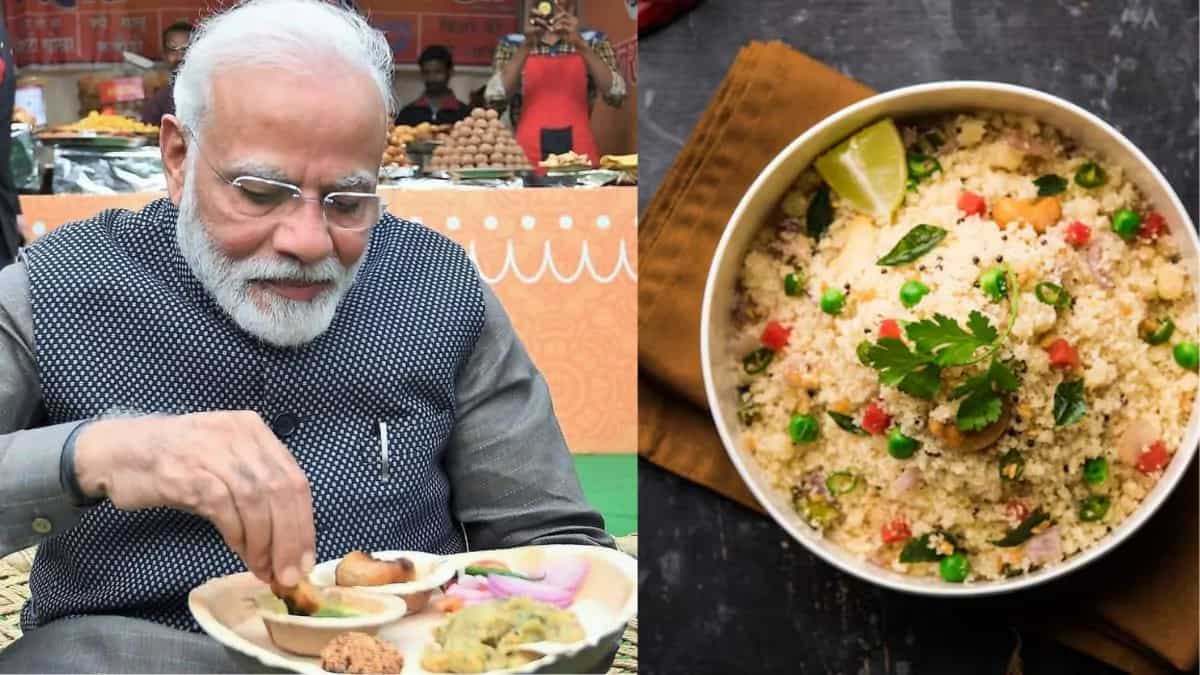
Today, September 17, marks the birthday of Prime Minister Narendra Modi. He turns 76 this year and has been the Prime Minister of India since 2014. While his public life greatly revolves around politics, governance and travel, food has sometimes offered a more personal sneak peek into his life. Over the years, PM Modi has spoken about everything from the simple khichdi he cooked during his travelling days to dishes he encountered across the country during his campaigning and travels.
He has also talked about mangoes from his childhood, moringa paratha and South Indian favourites like upma and Pongal. His statements do not point to one elaborate list of favourite foods. According to some interviews, he has mentioned having no fixed diet and, during his years of travelling, he often ate whatever vegetarian food was available. That makes his food references impressive because they are knitted as much to memories, regional cuisines and simple home-style cooking as to personal choice. On his birthday, take a look at five foods PM Modi has talked about over the years, from familiar Indian favourites to regional dishes and ingredients that have a story of their own.
Khichdi
Khichdi is possibly the food Modi has spoken about most directly. In 2012, during a media interaction, he said, “I like Khichdi very much,” while also explaining that years of public life meant eating whatever food was available rather than asking somebody to make something special for him. He has also spoken about cooking khichdi himself sometimes.
There is a practical reason the dish has such wide appeal. Rice and dal are easily cooked into a soft, one-pot meal that is gentle in consistency and does not need a detailed spread around it. Its taste can be elevated with a simple tempering of cumin and ghee, or with vegetables and basic spices. Unlike richer rice dishes, khichdi generally does not have a heavy masala base, which is part of what gives it its familiar, satisfying character. Not only that, but it is also light on the stomach and does not weigh you down.
(Credit: Freepik)
Litti Chokha
In February 2020, Prime Minister Modi visited Delhi’s Hunar Haat and took a stop for lunch, where he ate litti chokha. He later posted that he had eaten 'tasty Litti Chokha' with a hot cup of tea on his social media account, giving a new boost to this regional delicacy. A Bihar staple, litti chokha has roasted wheat-flour litti, which are round dough balls stuffed with sattu, herbs and basic spices, paired with chokha that is made from roasted vegetables such as eggplant, potato, tomato and onion.
What makes the combination unique is the way roasting shapes both parts of the meal, and no deep frying is involved. The litti gets a smoky, a bit crisp exterior while the sattu filling remains crumbly and fragrant, with mustard oil often giving it the classic sharpness. Chokha, on the other hand, gets its depth from vegetables that are roasted until their skins char and their flesh turns soft enough to mash. Eaten together, the dry, roasted litti gets soft accompaniment from chokha, while the smoky vegetables keep the sattu-filled dbaatiough from feeling too heavy.
Moringa Paratha
Moringa paratha is another food PM Modi has particularly talked about in many interviews. During a conversation in 2020, marking the first anniversary of the Fit India Movement, he discussed his own way of making drumstick, or moringa, paratha and said he still has it once or twice a week.
What makes this paratha more tempting is that the moringa leaves are mixed directly into the dough rather than being cooked as a separate sabzi. The leaves are usually cleaned, finely chopped and then mixed with wheat flour along with basic spices before the dough is rolled out and then cooked on a tawa. The leaves give the paratha a lightly earthy, green taste and small flecks of leaves in every bite. Unlike a heavily stuffed paratha, there is no separate filling to dominate the greens; the moringa becomes part of the paratha itself.
Mangoes
Mangoes connect PM Modi’s food memories with his childhood that he spent in Gujarat. In a 2019 interview with actor Akshay Kumar, he spoke about eating mangoes and recalled plucking them straight from trees on farms when he was young. That special memory gives the fruit a more personal place in his food remembrances than simply calling him a mango lover.
What stands out in his tale is the way the mango was eaten in early times, or even today in some rural places - picked straight from the tree rather than bought, cut and served at home. In Gujarat and across western India, mangoes are also closely linked to the summer season, when varieties like Kesar are well known and become part of everything from sliced fruit to aamras, a special beverage dessert that many Gujjus drool over.
(Credit: Freepik)
Upma And Pongal
South Indian food has also been mentioned in PM Modi’s favourites. In 2024, during an interview, when asked about his favourite Tamil food, he mentioned that he normally likes to have upma. He also mentioned Pongal, defining it as a dish that is “khichdi-like” and also light in texture. The comparison is useful as both dishes are soft, warm and grain-based, but their tastes differ depending on the preparation.
Upma is generally prepared with roasted semolina or sooji and then tempered with ingredients like mustard seeds, curry leaves and lentils, whereas savoury Pongal has a blend of rice and dal with ghee, pepper, cumin and ginger. For someone who has described khichdi as a favourite, the resemblance in texture makes this South Indian choice especially interesting.
PM Modi’s Push For Millets
Millets have been a frequent element of PM Modi’s conversations around Indian food, agriculture and the better use of traditional grains. He has promoted them under the name 'Shree Anna', and India’s proposal was pursued by the United Nations declaring 2023 the International Year of Millets.
Millets have also moved beyond just being discussed as traditional grains and have increasingly appeared in many contemporary Indian foods. From millet-based snacks and bakery products to familiar Indian preparations like khichdi, dosa, idli, roti and pulao, the grains are increasingly being used in types that fit current menus while maintaining their place in Indian cooking.
The grain also found a spot on the table during the BRICS Summit 2026, hosted by India this September. The gala dinner for BRICS leaders had millet pulao, while millet-based dishes and ingredients also featured across menus designed for visiting delegates. This gives the millet story a recent food connection: the grain that PM Modi has frequently promoted as Shree Anna was also presented as part of the Indian culinary spread at a major global gathering.