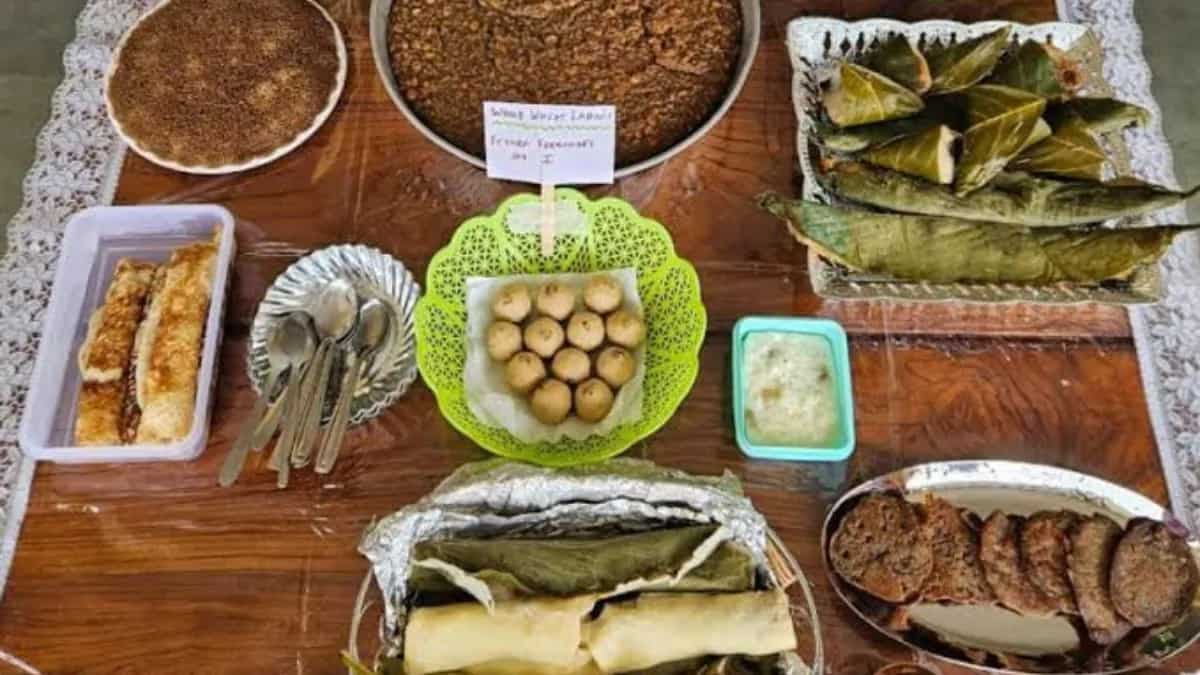
Every year on 24 June, Goa erupts in one of its most exuberant festivals. Young men leap into water-filled wells shouting "Viva São João!" Villagers wear kopels, those magnificent crowns woven from seasonal flowers, leaves, and fruit. Boats decorated as floating altars drift down rivers to the sound of the ghumot drum. Feni flows freely. And then everyone sits down to eat. The culinary side of Sao Joao is as rich and layered as the festival itself. The sweets that appear at this time of year are not an afterthought. They are woven into ritual, into gifting traditions, into the very architecture of how Goan families celebrate faith, rain, and new beginnings. Understanding these sweets means understanding what Sao Joao is really about.
The Festival And Its Flavours
Sao Joao is closely tied to marriage and new families. A new son-in-law is traditionally invited to his bride's family home, jumps into the nearest well, and is rewarded with sweets, fruits, and feni. The gift basket at the centre of this tradition tells you everything you need to know about Goan festive generosity. This basket, called the ojem, is a large bamboo container gifted by a mother-in-law to her newly married son-in-law. It is filled with seasonal fruits including pineapples, jackfruit, and mangoes, along with traditional Goan sweets and feni. More specifically, the ojem contains sweets such as patolleo, muttleo, filos, and mandos. On returning home, the ojem is placed at the house oratory, a short prayer is recited, and the contents are distributed among neighbours. It is community-making through sweetness.
Patoleo: The Sweet That Belongs To The Season
Goan Patoleos are prepared for special festive occasions including Sao Joao on 24 June. These are among the most recognisable sweets of the Goan Catholic calendar, and their appeal is inseparable from the sensory experience of making them. Ground rice is laid out on turmeric leaves, which serve as the canvas for a luscious blend of coconut and jaggery. The mixture is carefully enveloped in the rice and steamed, allowing the aromatic turmeric leaves to infuse their fragrance into the grains. As the parcels steam, the leaf imparts a haunting, spicy fragrance to the rice cake. When you peel back the leaf, the white or pinkish rice cake is imprinted with the veins of the leaf, revealing the dark, syrupy filling inside. This is a clean, relatively light sweet by Goan standards. No heavy cream, no eggs, no elaborate technique requiring hours at the stove. Just rice, jaggery, coconut, and a leaf. Its simplicity is its strength. During Sao Joao, when the first turmeric leaves of the monsoon season appear, making patoleo is as much a seasonal act as stepping out into the rain.
Image credit: Wikimedia Commons
Bebinca: The Queen Makes Her Appearance
No discussion of traditional Goan desserts can begin without acknowledging the Queen. Bebinca is not merely a cake; it is an architectural feat of patience and precision. Traditionally consisting of seven to twelve layers, a proper Bebinca is a labour of love that can take an entire day to prepare. It is a multi-layered pudding made with coconut milk, eggs, sugar, and ghee in every layer. The essence of a good Bebinca lies in the smoky notes of its caramelised outer layer. Each layer must be cooked individually before the next is added, and the result is something between a pudding and a cake, golden, rich, and unmistakably Goan. Bebinca and Doce are among the oldest Goan sweet recipes available, relished by people for generations. Bebinca was recently bestowed with a GI tag, applied by the All Goa Bakers and Confectioners Association. That geographical indication is a recognition of what Goans have always known: this is a sweet that belongs to a specific place, a specific history, and a specific way of life.
Image credit: Wikimedia Commons
Dodol: Dark, Dense, And Deeply Satisfying
If Bebinca is the Queen, Dodol is the earthy, grounded King of Goan sweets. While Bebinca leans toward the creamy and the golden, Dodol is dark, fudgy, and intensely flavoured by Goa's pyramid palm jaggery. Making Dodol is a test of physical endurance. Coconut milk and rice flour are mixed with melted jaggery and stirred continuously in a large copper vessel over a slow fire. The stirring can last for hours, requiring the strength of multiple family members. The result is a dessert that tastes of the earth itself. It has a deep, smoky sweetness with an oily richness from fresh coconut milk, and is often studded with cashews for a contrasting crunch. Dodol appears at major Goan celebrations and Sao Joao is no exception. It travels well, keeps for days, and slices cleanly, which makes it ideal for the ojem basket and for sharing with neighbours.
Image credit: Wikimedia Commons
Muttleo, Filos, And The Lesser-Known Gems
Not every Sao Joao sweet is famous. Some of the most interesting are the ones that rarely make it onto menus outside Goan homes. Among the sweets specifically prepared for Sao Joao are muttleos, filos, jackfruit mandos, banana filos, pineapple and papaya halwa, jacada, chunvllyo chunn, and mango doce. Many of these are monsoon specials, only possible because jackfruit, pineapple, and mango are at the height of their season in late June. The festival's timing is not incidental. It falls exactly when Goa's most abundant fruits are ready to eat. Among the delightful offerings distributed after church prayers is Ponnsa hole, a pancake crafted from rice flour, delicately wrapped in a fragrant jackfruit leaf and filled with grated coconut and jaggery. A rice cake prepared by combining mashed jackfruit with rice also graces the gathering. These are not sweets you will find in a shop. They exist in kitchens, prepared by women who learned from their mothers, passed along in the specific proportions of a specific family, adjusted by taste and by memory.
Image credit: Gomantak Times
Alle Belle And The Portuguese Thread
Alle Belle is a Goan sweet that consists of thin, lacy rice crepes filled with freshly grated coconut and jaggery. The batter is made from rice flour, coconut milk, and a hint of cardamom for fragrance. Once cooked to a delicate crisp, they are folded into pockets of sugary coconut goodness. This sweet reflects the layered cultural history of Goa itself. Goan cuisine is the result of a merger of cultures including the Portuguese, Arab, Konkani, and Malabari, which makes up the entirety of what Goa is today. The crepe form in Alle Belle has clear echoes of Portuguese confectionery tradition, while the filling is unmistakably Konkan. That combination, native ingredients shaped by outside technique, is the story of Goan food in a single sweet.
Image credit: Aromatic Essence
Why These Sweets Matter
In a world of mass-produced, globalised flavours, a piece of hand-stirred Dodol or a leaf-steamed Patoleo is a reminder of a slower, more intentional way of life. At Sao Joao, that reminder arrives in a bamboo basket carried across a threshold, accompanied by prayers, music, and the smell of first rain on hot earth. Families come together and share seasonal fruits and traditional sweets as a sign of sharing in each other's joy. The tradition of the newly married girl's parents sending a basket of fruits and sweets to be distributed among neighbours and family members speaks to this generosity. The sweets of Sao Joao are not separate from the festival. They are part of how the festival means something. When a mother-in-law packs an ojem basket with patoleo wrapped in turmeric leaves and muttleos alongside a bottle of feni, she is not merely sending food. She is sending belonging.