Paryushan is observed every year in the holy month of Bhadrapada according to the Jain calendar. The festival usually falls in August or September depending on the lunar cycle. For followers of both the Shwetambar and Digambar traditions, these eight days are seen as a period of spiritual reflection and repentance. Devotees focus on self-purification through fasting, prayer, and adherence to Jain principles of non-violence and restraint.
Food is kept very simple during this festival. Grains, green vegetables, onions, garlic, and root vegetables are commonly avoided. Many Jains also refrain from eating after sunset. The meals that are prepared are meant to be light, sattvic, and easy to digest. The choice of ingredients reflects the Jain philosophy of causing the least harm to living beings, which is why underground vegetables are avoided since harvesting them is believed to harm small organisms in the soil.
While many Jains take on complete fasting or eat only one meal a day, others follow partial fasts. For those who continue to prepare light meals, there are a number of recipes that align with the spiritual and dietary rules of the festival. These dishes are made with simple ingredients such as millets, pulses, dairy products, and fresh fruits.
1. Sabudana Khichdi
Sabudana khichdi is one of the most popular dishes during fasting periods across India, including Paryushan. The dish is prepared using soaked tapioca pearls, lightly roasted peanuts, and mild spices. Curry leaves, chillies, and coriander can be added for flavour, though some families prefer to keep spices to a minimum during this period. The dish is cooked in ghee, which gives it a rich taste while still keeping it sattvic. Since sabudana is light and easy to digest, it is suitable for those who are fasting and need an energy-rich yet gentle meal.
2. Rajgira Puri With Curd
Rajgira, also known as amaranth flour, is another ingredient allowed during fasts. Rajgira puris are made by kneading the flour into a soft dough, rolling it out, and frying in ghee or oil. The puris are often served with plain curd or a light potato curry without onions and garlic. During Paryushan, potatoes may be avoided by stricter followers, in which case rajgira puris are taken with plain yoghurt or fruit. This combination provides both energy and satiety, making it a sustaining meal option during the fast.
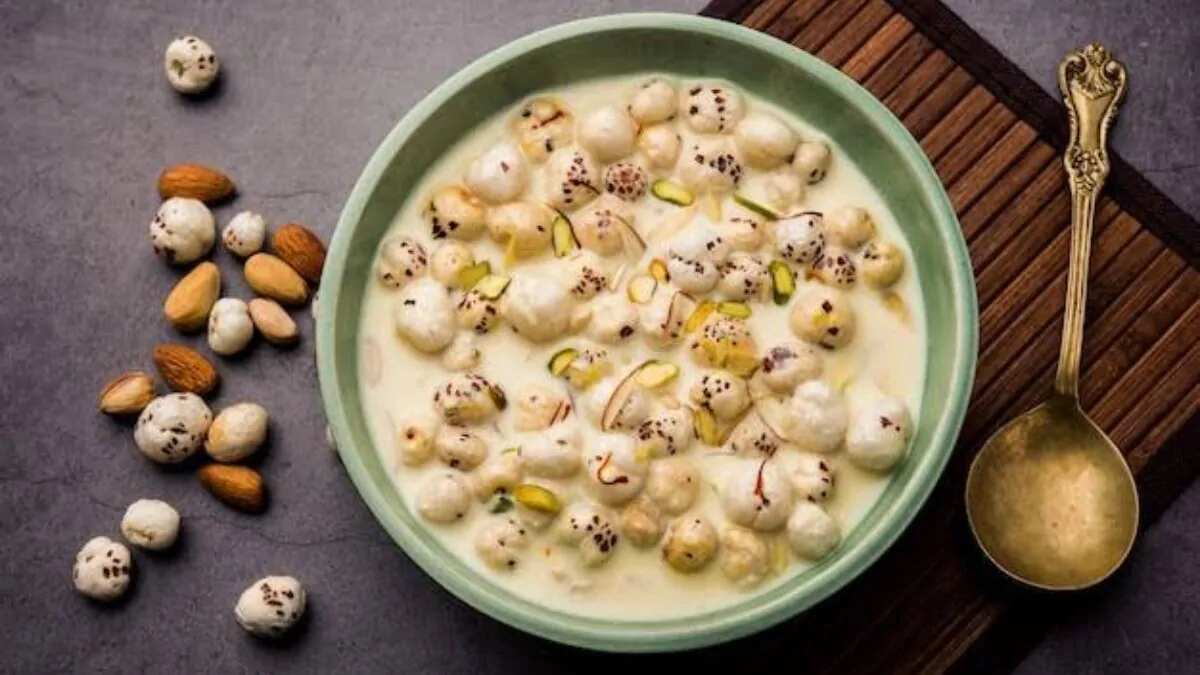
3. Makhana Kheer
Makhana, or fox nuts, are commonly used in fasting recipes. A popular dish during Paryushan is makhana kheer, made by roasting fox nuts in ghee and simmering them in milk with sugar or jaggery. The kheer can be flavoured with cardamom or saffron for added aroma. Since makhana is rich in protein and minerals, this sweet dish not only satisfies cravings but also provides nourishment during restricted eating. It is often prepared in small quantities and consumed as prasad after prayers.
4. Samak Rice Khichdi
Samak rice, also known as barnyard millet, is often used as a grain substitute during fasts. It resembles rice in texture but is considered suitable for fasting since it is technically a millet. Samak rice khichdi is cooked with ghee and minimal spices, sometimes paired with curd for a complete meal. This dish is filling while still being easy on the stomach. It is one of the most common dishes prepared during Jain fasts, as it follows the restrictions of Paryushan and provides comfort during the eight days.
5. Fruit And Nut Bowl
Fresh fruits are always considered appropriate during Paryushan. A fruit and nut bowl made with seasonal fruits such as bananas, apples, pomegranates, and papayas can be combined with almonds, raisins, and cashews. This dish requires no cooking and provides natural sweetness and energy. Many Jains rely on fruit-based meals when they are observing a stricter version of the fast, as fruits are pure and sattvic in nature. Adding soaked almonds or dates to the fruit bowl ensures that the meal is both nourishing and suitable for the restrictions of the festival.