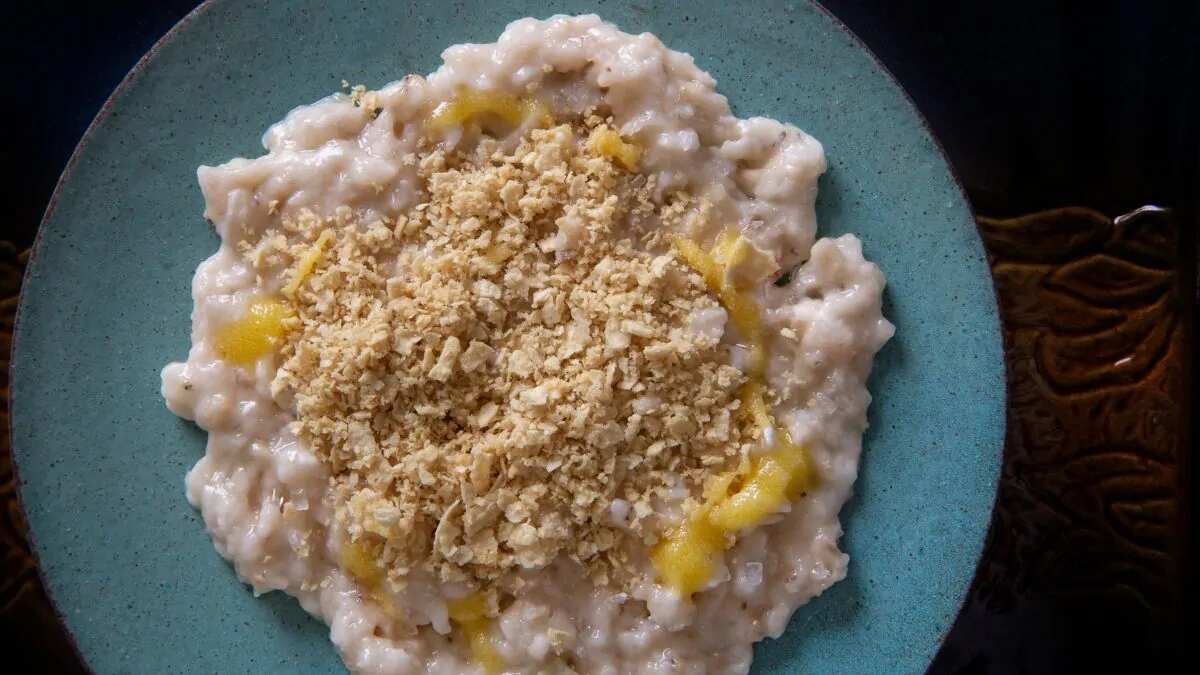
Back when India was still ruled by the British, officials stationed in the cantonment city of Kannur in north Kerala sought respite from the goings of everyday by letting their hair down at the European Choyi’s Seaside Hotel. The now-defunct establishment was known to be a popular meeting place for the foreigners, who would have gather to have a good time at the banquets. Cut to the present day, Mumbai-based Nitin Sumitran - whose great grandfather Kotieth Choyi owned the hotel reminisces about an unusual delicacy by the name of pappadam-pazham which he recollects eating at wedding oonus as a child.
He zeroes in on two specific regions - Century and Cannanore - where the delicacy was most popular. Best described as a mish-mash of a ripe, Poovam banana or Mysore banana along with deep-fried, crushed Kerala pappadam, ghee and sugar, it was meant to be eaten at the beginning of a meal, as a precursor to a grand banana leaf feast. When quizzed about Sumitran’s emotional association with the Malabar pudding, he says, “Being from Bombay, whenever I visited my cousins back in Kerala, we looked forward to eating this during weddings and other festivals. In the north of Malabar, which is predominantly occupied by a large Muslim population, the concept of a sadhya wasn’t as popular when compared to eating biryani or chicken and fish preparations at the time.”
Also Read:
Although the exact time period of the pappadam-pazham’s origins are unknown, it is said that the dish merely stemmed from a quick-fix solution that the Choyi Butler came up with due to running out of dessert options. As a result, the dish was also christened Choyi’s pudding or Malabar pudding due to its place of origin - becoming a crucial element in meals served across Kannur and north Kerala. Nitin points out that due to the simplicity of the dish, evolution in terms of ingredients was not really given too much of a thought. At best, the local Poovam banana was replaced with another small variety like elakki - also known as elaichi bananas. During feasts, each diner is provided with a single banana which is mashed roughly, while still retaining some chunkiness, following which a drizzle of ghee and sprinkle of sugar is done. A black urad pappadam is then crushed into shards over the mixture and then relished in morsels for a sweet-savoury combination.