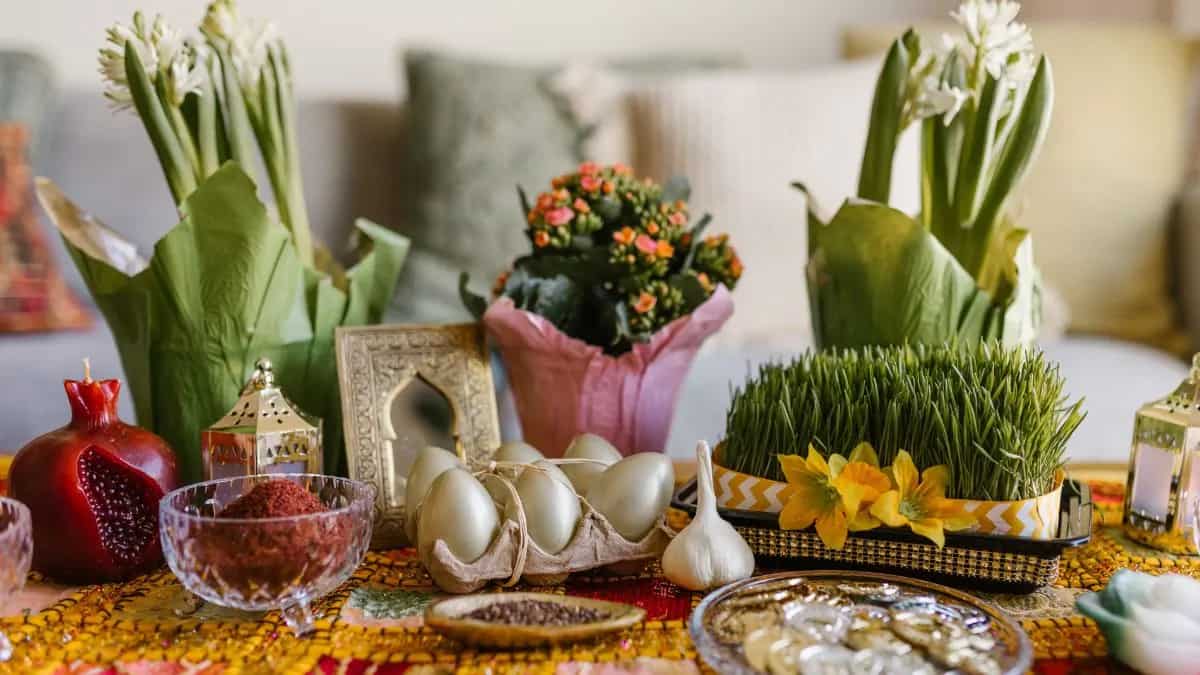
The Persian New Year, Nowruz, is just around the corner and will be celebrated by the Indian Parsi community on August 15, 2026. The celebration means much more than just turning the pages of the calendar. The festival welcomes spring, regeneration and the prospect of a fresh beginning. Nowruz connects families around food, traditions and the Haft-Seen table as well.
The Haft-Seen gets its name from haft, which means seven, and seen, which refers to the letter S, in Persian terms. Seven symbolic things starting with this letter are traditionally arranged on the festive spread for Nowruz.
They are not just another decorative ingredient, but each expresses a hope for the year that lies ahead, from health and love to patience, prosperity and renewal. While arrangements may differ between families, seven foods are particularly associated with the tradition which are as given below:
Sabzeh - Renewal And Rebirth
Sabzeh refers to wheat, barley or lentil sprouts that are grown specifically for Nowruz and is possibly the most visually appealing element of the Haft-Seen. The fresh green shoots represent rebirth, renewal and the arrival of the spring season. Families often begin growing them days or weeks before the arrival of Nowruz, letting the greenery grow by the time the New Year comes.
Its symbolism goes far beyond the decoration: a dormant seed turning into vibrant green showcases the idea of leaving behind and starting again fresh. At the end of Nowruz time, traditionally on Sizdah Bedar, the greenery is taken outdoors and flown into the river.
(Image credit: Freepik)
Samanu - Prosperity And Abundance
Samanu, also known as samanak in some cultures, is a thick, pudding-like sweet that is prepared from germinated wheat. Its sweetness is also important, as it is produced without adding refined sugar: the germination process transforms starches in the wheat to sugars.
On the Haft-Seen table, samanu represents fortune, mass and strength. It is also one of the labour-intensive items that traditionally need long cooking time and constant stirring. This makes the dish especially fitted for a New Year table. Its preparation links food with patience, effort and the hope that the forthcoming year will produce abundance and joy.
Senjed - Love And Affection
Senjed is the dried fruit of the oleaster tree, which is also known as the Russian olive. It has a sweet, a bit tart taste and a firm, dry texture. Senjed is classically linked with love and affection. Its inclusion on the festive spread gives the display a fruit component that is not as familiar to many diners at present as apples or other dried fruits.
Instead of being picked only because its name starts with S, senjed also has a cultural meaning linked to emotional bonds and affectionate relationships. It is a reminder that the New Year is not only about material wealth but also about the people with whom life is shared.
Seeb - Health And Beauty
Seeb, the Persian term for apple, symbolises health and beauty. Apples are a particularly familiar symbol, but their position here is more intentional than just defining it as a seasonal fruit. Their fresh appearance fits naturally into the festive spread that is centred on renewal and good hopes.
Some traditions link the apple especially with beauty and health, making it a wish for well-being for the year ahead. The fruit also has a bright, fresh element to the display that is otherwise filled with seeds, sprouts, spices and other ingredients.
Seer - Health And Protection
Seer, or garlic, is another everyday ingredient that is used for its symbolic significance during Nowruz. It traditionally symbolises health and is often linked with protection and well-being. Its inclusion is especially impressive as garlic is not offered as an elaborate dish here, but the whole bulb itself becomes part of the display.
That changes an ordinary pantry ingredient to a reminder of something families adore deeply. Alongside the apple, seer mirrors a recurring theme in Haft-Seen: hopes for good health are described through simple foods rather than grand objects.
Somāq - Sunrise And The Warmth Of A New Day
Sumac is a deep red, tangy spice that is made from dried and ground berries. Its colour and link with the rising sun give it a unique place on the Haft-Seen spread, where it typically represents sunrise, the appearance of a new day and the victory of sunshine. This makes sumac one of the more provocative ingredients in the arrangement.
Unlike the apple or garlic bulb, it is a spice, something that is used to change the taste of food. Its presence thus connects the symbolism of Nowruz with the sensorial experience of eating, while its crimson shade adds another striking note to the overall display.
(Image credit: Freepik)
Serkeh - Patience And The Wisdom Of Time
Serkeh, or vinegar, symbolises patience and the wisdom that comes with years. It is possibly the most unpredictable item on the table, as vinegar is linked with sharpness instead of sweetness or celebration.
Vinegar takes time to develop its distinctive acidity, giving it a natural link with ageing as well as patience. Its presence recognises that a good life cannot be only full of sweetness and easy starts. Some traditions decode it as a wish for forbearance and acceptance of life's hardships as the new year unfolds.