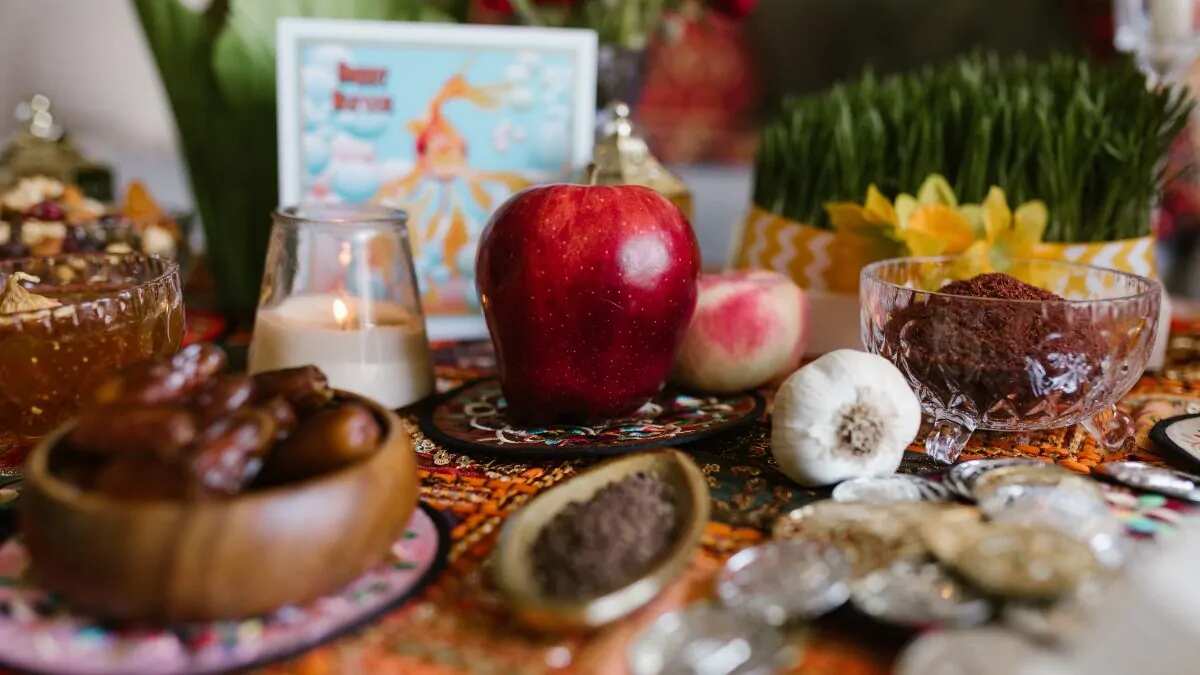
Nowruz, which refers to “new day,” marks the beginning of the Persian New Year. This time it will be celebrated on August 15, 2026. The day is celebrated across Iran and by residents in Afghanistan, Central Asia, the Caucasus, the Balkans and other parts of the world that have Persian cultural connections.
Food is deeply knitted to the festivities of the day, but the Nowruz table is not just about a festive food spread. At its core is the Haft-Seen, a carefully set table that features seven symbolic items whose Persian terms start with the letter “S”. Surrounding them are placed flowers, candles, fruit, sweets and festive things, making the table where ingredients hold special meanings beyond just their flavours.
Sabzeh: The Green Shoots Grown For Nowruz
One of the most recognisable components of the Haft-Seen is sabzeh, which are young green shoots that are traditionally grown from wheat, barley or lentils.
Unlike many other ingredients that are just purchased before any celebration, sabzeh starts its journey days or even weeks before. Seeds are soaked, watered and let to sprout, slowly growing a heap of fresh green shoots for the New Year.
The growing method is part of the tradition in itself, and sabzeh symbolises renewal and growth, making it especially fitted to a festival that coincides with the start of the spring season.
At the end of the festivities, the sprouts are traditionally taken outdoors and then returned to flowing water in many cultures, symbolically which means to release the troubles of the passing year.
(Image credit: Freepik)
Herbs Are More Than A Garnish
Fresh herbs also play an essential role in Nowruz meals, especially in Persian dishes where they are considered a main ingredient instead of just a finishing touch.
One classic example is sabzi polo ba mahi, which is herb-filled rice and is traditionally served with fish with it. Rice is layered with herbs like dill, parsley, fresh coriander and green onions and then cooked until aromatic. The result is fragrant pulao that does not feel heavy, with herbs giving the rice its distinctive green flecks and fresh taste.
Fresh herb platters may also accompany the pulao, letting diners mix herbs with bread, cheese and other dishes as well.
This focus on herbs gives Nowruz cooking a distinctly fresh character and reveals how seasonal produce is integrated into the actual meal and not just displayed on the table.
Samanu: A Dessert That Starts With Wheat
Among these foods, samanu has one of the most mesmerising preparations. It starts with wheat that is first soaked and then left to sprout. The sprouts are then processed and cooked slowly, typically for several hours, until they turn into a thick, dark and sweet paste.
No regular dessert shortcut can fully capture what makes samanu meaningful. The shift from grain to sprout to sweet pudding reflects the agricultural cycle that sits at the core of the celebrations.
Samanu is hence not just about serving something sweet on the table. Its preparation blends the festival with wheat, cultivation and the idea of wellspring.
Fruit, Nuts And Sweets Turn The Table Into A Feast
The Haft-Seen is generally surrounded by foods that are meant for sharing. Fresh fruit, dried fruit, nuts, seeds and sweets all find their place around the ceremonial arrangement.
One of the popular snacks is ajil, a Persian-style mixture made of nuts, seeds, raisins and other dried fruits. It is easy to serve along with other heavy dishes.
Persian sweets also an important part of Nowruz hospitality. Their variety differs across the regions and households, but the idea remains straightforward: guests should have something to nibble on along with a sweet to enjoy.
Food thus moves inherently between ceremony and hospitality during the Nowruz celebrations. Some ingredients are displayed for their symbolism, whereas others are cooked, shared and enjoyed throughout the day.
(Image credit: Freepik)
Why Food Sits At The Heart Of Nowruz
The beauty of Nowruz food lies in how naturally it connects the everyday with the festivities.
A handful of seeds turns green sabzeh, wheat sprouts are changed to samanu, fresh herbs evolve the defining flavour of festive rice and apples, garlic, dried fruits and nuts change into symbols as well as foods.
That is perhaps what makes the Nowruz table so charming: it does not just mark the arrival of a new year, but it gives that new year something to grow, cook, and share with loved ones.