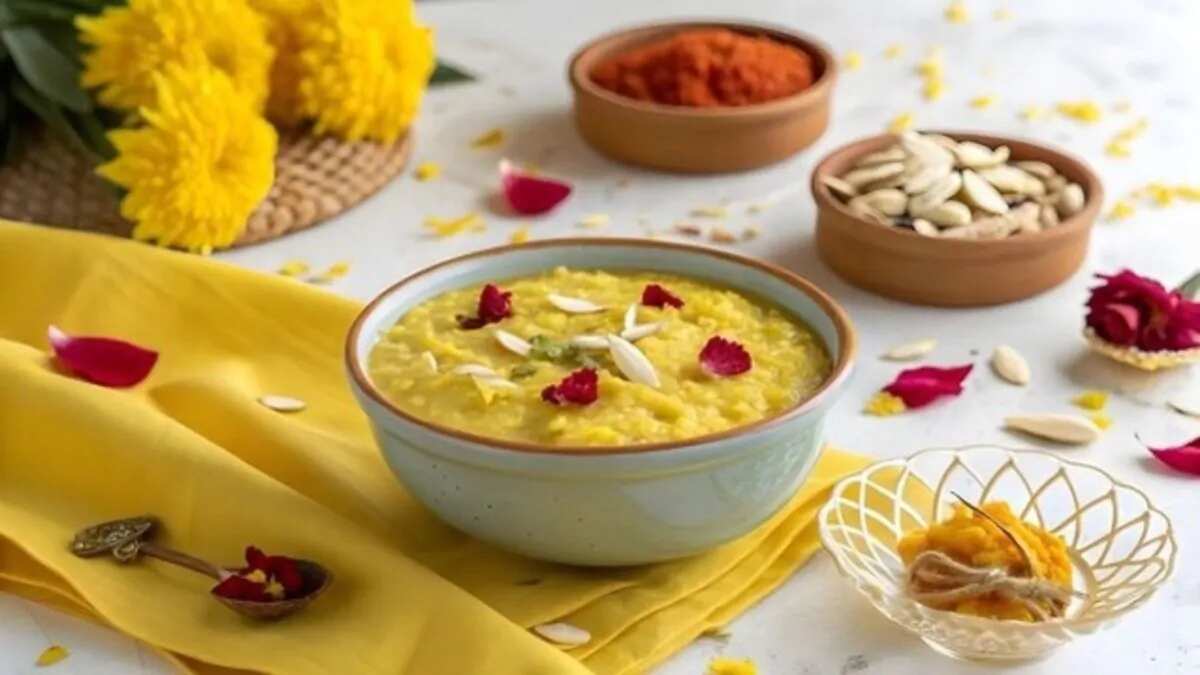
Navratri is a festival observed with devotion across India, and each of the nine days is dedicated to a particular form of Goddess Durga. The third day is reserved for Goddess Chandraghanta, whose name refers to the crescent moon on her forehead shaped like a bell. She is revered as a goddess who removes obstacles and blesses her devotees with fearlessness and strength. Devotees believe that she embodies both serenity and readiness for battle, protecting worshippers while also granting inner peace.
Yellow is the colour associated with this day, symbolising warmth, energy, and positivity. Preparing food in this shade is considered auspicious and is offered to the goddess as bhog. After the offering, the dishes are shared among family members and devotees as prasad. Food cooked for bhog is kept satvik, which means it does not include onion, garlic, or any non-vegetarian ingredients. The recipes are usually light, nourishing, and made with ingredients like ghee, milk, fruits, and grains. On this day, devotees choose yellow-coloured preparations that can be made easily at home and align with traditional fasting rules.
1. Kesari Halwa
Kesari halwa is one of the most popular offerings during Navratri. It is prepared with semolina roasted in ghee until fragrant, then simmered with water, sugar, and saffron strands. The saffron lends a golden-yellow colour that aligns with the day’s theme. For added richness, chopped nuts like cashews and almonds can be included, along with cardamom for flavour. As a prasad, it is distributed warm and enjoyed for its comforting taste and symbolic significance.
2. Rajgira Poori With Aloo Sabzi
Rajgira, also called amaranth flour, is commonly used during fasting. Pooris made from this flour are golden in colour and pair beautifully with a lightly spiced potato sabzi cooked with turmeric, which adds the required yellow hue. The sabzi is prepared in a simple satvik style with rock salt and minimal spices, making it suitable for bhog. This combination is filling yet easy to digest, and it reflects the balance of nourishment and devotion that characterises Navratri cooking.
3. Chana Sundal
Chana sundal is made with soaked and boiled chickpeas or Bengal gram, lightly tempered with ghee, cumin, curry leaves, and a sprinkle of turmeric to bring out the yellow shade. It is a nutritious dish that is rich in protein, making it an ideal fasting recipe. Often offered as bhog in temples and homes, it carries a sense of simplicity and purity. Fresh coconut can be added for garnish, and the preparation is dry, which allows it to be served easily as prasad.
4. Sweet Boondi
Sweet boondi is a festive classic and fits perfectly into the yellow bhog offerings for Goddess Chandraghanta. Small pearl-like drops are made from chickpea flour batter and fried until golden, then soaked briefly in sugar syrup flavoured with cardamom and saffron. When prepared in the traditional manner, the boondi has a bright yellow shade that is visually appealing and auspicious. It is offered in temples as well and is known to be a favourite during festive rituals.
5. Turmeric-Flavoured Kheer
Rice kheer holds a special place in ritual offerings. For the third day of Navratri, kheer can be infused with a mild amount of turmeric along with saffron to give it a natural golden colour. The rice is simmered slowly in milk until creamy, then sweetened with sugar or jaggery. Chopped nuts and raisins may be added, and the use of turmeric gives the dish both colour and a sense of purity. The kheer symbolises abundance and devotion, making it an ideal bhog recipe for this day.