For 11 days this October, one of Bengal’s most familiar kitchen ingredients is being given an unusually expansive role at 6 Ballygunge Place. In Bengali as well as Bangladeshi cuisine, apart from Chingrir Malaikari, narkel baata, or Narkel er Pithe, coconut does play a bigger role than one can imagine. Narkel Gurum, or Coconut Festival, is running till October 11, 2026, across the restaurant’s Ballygunge, Salt Lake Sector 1, New Town outlets, and Chowringhee and Ecosuites, for both lunch and dinner.
Image Courtesy: Saborni Saha
Curated by Kolkata-born Bangladeshi cuisine specialist Chef Nayana Afroz, the festival looks at coconut not as a supporting ingredient but as the wholesome idea around which an entire Bengali meal can be built. The focus of the menu takes an undivided approach beyond traditional preparations such as Chingri Malaikari, naru and pithe, and instead draws attention to regional dishes, family recipes and lesser-known culinary traditions from Bengal and Bangladesh.
Image Courtesy: Saborni Saha
Throughout the menu, Coconut is the only constant that is present in all possible forms, like coconut milk, roasted coconut, grated coconut, coconut paste, and sliced into pieces. From vegetarian items to meat preparations, even the desserts leave you wondering how a customised menu can feel more like a study of one ingredient that tastes so different and versatile with different culinary techniques, geographical locations and changing contexts.
Narkel Gurum At 6 Ballygunge Place Explores Coconut As The Soul Of Every Traditional Dish
Image Courtesy: 6 Ballygunge Place
Though not mentioned or hugely celebrated, in Bengali cooking, coconut is rarely absent for long. It appears in vegetable preparations, lentils, spice pastes, fish curries and sweets, yet it is often remembered through only a handful of iconic dishes, and here, at this Coconut Festival, it deliberately widens that frame.
That range is visible from the first few courses. Narkel Badam Bhorta is rustic and direct, combining freshly grated coconut with roasted peanuts. It is nutty, textured and recognisably home-style, with the character of a household mash rather than a polished restaurant appetiser.
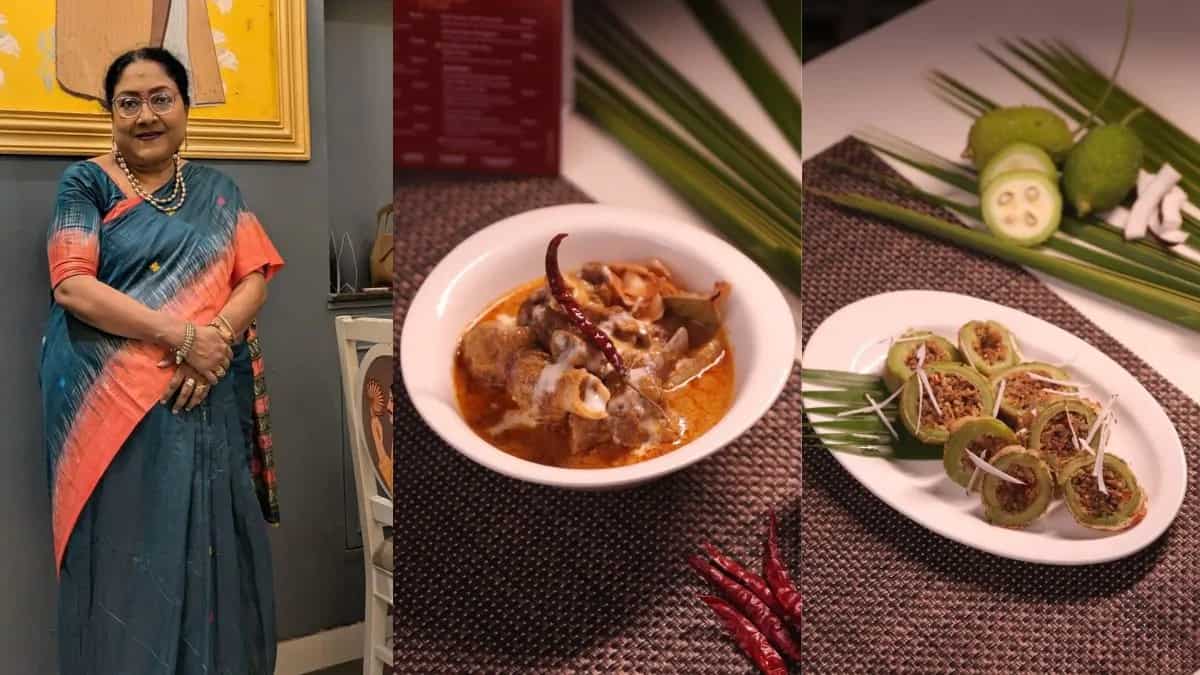
Narkeler Pur Bhora Kakrol Bhaja takes coconut in a different direction. Teasel gourd is stuffed with a fragrant coconut filling and fried until crisp and golden. The exterior offers crunch while the inside stays softer and savoury, turning a familiar vegetable into one of the more snack-like dishes on the menu.
Chef Nayana Afroz Brings Regional Coconut Recipes From Barishal, Khulna And Kushtia To Kolkata
Image Courtesy: 6 Ballygunge Place
The festival also works as a regional map of sorts. Several dishes are connected to specific parts of Bangladesh, where coconut has long been used as part of everyday cooking rather than reserved only for celebratory dishes. The lunch menu started with Aam Panna and Gondhoraj ghol to beat the heat in the city.
Chingrir Jhol Doba comes from Barishal. Peper Malaikari has roots in Khulna. Mashkalai Bata is associated with Kushtia, while Narkel Bata Mangsho belongs to the culinary traditions of Khulna, Bagerhat and Satkhira.
Image Courtesy: Saborni Saha
Slurrp got the opportunity to speak with Chef Nayana Afroz about the origin of the festival, how the menu was selected, and why the dessert section departs from the structure of a conventional Bengali spread.
How did this idea of this coconut festival come to your mind?
“Chef Susanta and I were discussing the next event, and he said he was thinking of doing ingredient wise. I proposed coconut as I was thinking about a coconut journey already, as it would be something new in Kolkata. I know it will soon be copied but I wanted to introduce these dishes for the first time in Kolkata.”
Here, the concept of a "coconut journey" is crucial. The ingredient is not forced into a single, monotonous flavour profile by the menu. Rather, the role of coconut varies according to the dish; it can add texture, richness, a subtle sweetness, or just give a smooth gravy.
From Bhorta To Malaikari: How Coconut Changes Form Across The Narkel Utsav Menu
Image Courtesy: 6 Ballygunge Place
Narkel Chingri Diye Mashkalaier Dal combines urad dal, coconut and prawns. The prawns lend sweetness and depth, while the coconut adds body without making the preparation heavy. It remains comforting and familiar, but gains enough texture and richness to stand apart from a standard dal.
Peper Malaikari is one of the more unexpected dishes. Described as a grandmother’s recipe, it replaces the prawns usually associated with malaikari with thin slices of raw papaya. Cooked with spices and coconut cream, the papaya absorbs the gravy while retaining enough structure to remain distinct.
Image Courtesy: 6 Ballygunge Place
Upon being asked how Chef Nayana Afroz finalised the dishes that were presented at the table, she took her time to explain the speciality of the iconic dishes served in this festival.
She mentioned,
“Basically I wanted to showcase one item from each of the coastal districts and also present one from each section as in bhorta, dal, meat, fish, vegetables etc. The dishes have coconut in one form or other and are very light yet flavourful. In fact some dishes like the chingri joldoba or peper malaikari are healthy too as very little oil is used.”
That emphasis on variety becomes especially clear as the meal moves from vegetable and dal preparations into fish and meat.
Chingrir Jhol Doba And Narkel Bata Mangsho Highlight Lesser-Known Bengali Coconut Traditions
Image Courtesy: 6 Ballygunge Place
Chingrir Jhol Doba is among the menu's more delicate items. It comes from Barishal and is served with prawn dumplings in a flowing, mildly flavored coconut jus. The seafood is not overtaken by the coconut. Rather, it keeps the prawns in the center while giving the broth body and softness.
Unlike the thick, rich gravies that are frequently connected to seafood preparations made with coconut, this dish is delicate and cosy.
Moving in the opposite direction is Narkel Bata Mangsho. It is associated with Khulna, Bagerhat, and Satkhira, and it goes well with succulent chunks of meat and freshly grated coconut.
Image Courtesy: Saborni Saha
Katla Narkeli Korma is a rich, fragrant Mughlai-style korma, fresh carp is cooked with coconut to balance out the gravy. In contrast, Ilish Roast with coconut balances the natural richness of the fish with the nutty taste of the coconut by combining hilsa with a spice mixture infused with coconut.
Barishal's Narkel Doodh Diye Ilish Pulao, consisting of rice, hilsa, and coconut milk, is a complete meal on its own. The unique flavour of the fish is not overshadowed by the coconut milk; rather makes it more delicious.
Coconut And Palmyra Palm Tart Gives The Dessert Menu A Contemporary Turn
Image Courtesy: Saborni Saha
The dessert section could easily have ended with naru, pithe or a familiar coconut sweet. Instead, it deliberately moves into a more contemporary register.
The Coconut and Palmyra Palm Tart with Tender Coconut Ice Cream combines a coconut custard-filled tart shell with palmyra palm reduction and tender coconut ice cream. The presentation is modern, but the ingredients remain closely tied to regional flavour traditions.
The Coconut, Date and Walnut Peraki follows a similar path, combining sweet dates, crunchy walnuts and coconut inside a buttery pastry shell and serving it with roasted coconut ice cream. The nuttiness of the walnut and roasted coconut keeps the dessert balanced rather than overly sweet.
Image Courtesy: Saborni Saha
The dessert section looks so different from a basic Bengali menu. Please explain how these dishes were planned and what are the special features these dishes have.
“Chef Susanta has an oriental background, and so he planned the oriental desserts. I gave the til narkel payesh because of its unique taste and ingredients.”
Til Narkeler Payesh then returns the meal to a more recognisably Bengali register. Sesame and coconut come together in a traditional sweet preparation that feels restrained and rooted after the more contemporary desserts before it.
Why Narkel Utsav Is Much More Than An Ingredient-Led Bengali Food Festival
Image Courtesy: 6 Ballygunge Place
The complete menu includes Narkel Badam Bhorta, Narkel Chingri Diye Mashkalaier Dal, Peper Malaikari, Narkeler Pur Bhora Kakrol Bhaja, Katla Narkeli Korma, Chingrir Jhol Doba, Ilish Roast with Coconut, Narkel Bata Mangsho, Narkel Doodh Diye Ilish Pulao, Coconut and Palmyra Palm Tart with Tender Coconut Ice Cream, Coconut, Date and Walnut Peraki, and Til Narkeler Payesh.
Image Courtesy: Saborni Saha
The lunch was sumptuous without becoming excessive, the hospitality at 6 Ballygunge Place was attentive, and the work of Chef Nayana, Chef Susanta and the wider kitchen team was evident across the meal.
Narkel Utsav ultimately succeeds because it treats coconut as part of Bengal’s culinary memory rather than as a gimmick. It draws on regional recipes, household traditions and familiar techniques, then brings them into a restaurant setting without stripping away their cultural identity.
For 11 days, running from October 1 to October 11, 2026, the coconut festival has played the perfect prelude to Durga Puja in the City of Joy — not by being reinvented, but by being shown in its full range.