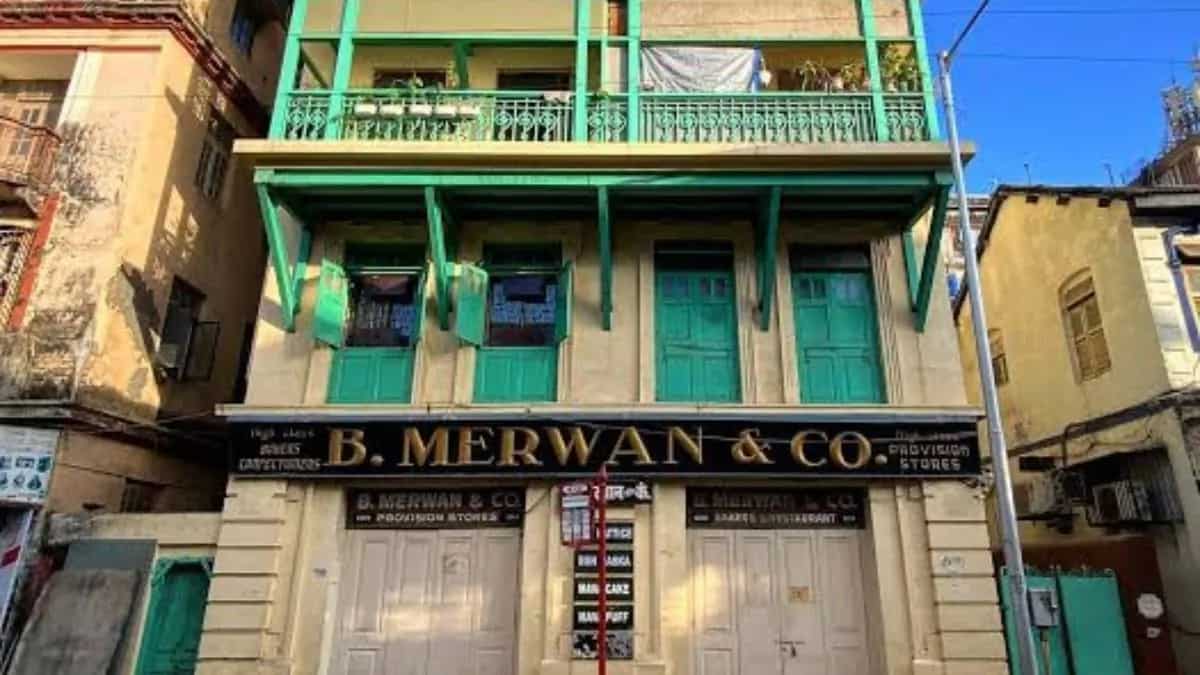
For over a century, the morning sun over Grant Road Station was accompanied by a very specific, intoxicating aroma. It was the scent of fresh cardamom, heavy cream, and slow-baked flour wafting from the chimneys of B. Merwan and Co. This fragrance served as a compass for thousands of commuters stepping off the local trains, leading them directly into a space that felt like a living museum. On January 1, 2026, that century-old routine came to a sudden and heartbreaking halt. A small, handwritten note appeared on the wooden shutters of the establishment. The message was brief, informing the public that the bakery was now closed and expressing gratitude for decades of patronage. With that simple piece of paper, one of Mumbai’s most significant culinary landmarks officially passed into the history books.
A Century Of Flour And Faith
B. Merwan and Co. was established in 1914 by Boman Merwan, an immigrant who arrived in Bombay during the height of the British Raj. The bakery was a product of the second wave of Zoroastrian and Muslim immigrants from Iran who sought a new life in India. Unlike the grand hotels of the era, these Irani cafes were designed to be democratic spaces. Inside the high-ceilinged room, the décor remained unchanged for 112 years. The bentwood chairs, imported from Czechoslovakia a century ago, creaked under the weight of students, office goers, and senior citizens alike. The massive, tarnished mirrors on the walls reflected a city that was changing rapidly outside, even as time seemed to stand still within the bakery walls.
Image credit: B Merwan & Co
The Legend Of The Mawa Cake
The crown jewel of B. Merwan was undoubtedly the mawa cake. These were not the mass-produced, chemically leavened cupcakes found in modern supermarkets. A true Merwan mawa cake was a labor of love, rich with milk solids and wrapped in a modest slip of wax paper.
• The cakes were famous for being sold out by 8:30 or 9:00 in the morning.
• Dedicated patrons would often wait outside the shutters before dawn just to secure a dozen.
• The recipe was a closely guarded family secret, passed down through four generations.
• It was said that the unique texture came from the specific temperature of the antique firewood ovens used in the kitchen.
Image credit: B Merwan & Co
Beyond the cakes, the menu was a checklist of Mumbai comfort food. There was the bun maska, a soft roll slathered in an unapologetic amount of butter, and the brun maska, its crustier, hard-baked counterpart. For many, a cup of their thick, sweet Irani chai was the only way to begin a grueling day in the financial capital.
Why The Shutters Came Down: The Real Reasons
The closure of B. Merwan and Co. was not a sudden decision made in a vacuum. It was the result of several overlapping pressures that have been mounting for years. While the family had successfully navigated a brief closure in 2014 for structural repairs, the situation in 2026 became insurmountable.
1. The Regulatory Hammer: The Firewood Oven Ban
The most immediate cause for the shutdown involves new environmental and safety regulations. The Brihanmumbai Municipal Corporation, or BMC, has been strictly enforcing a ban on traditional wood and charcoal-fired ovens in commercial establishments.
• The authorities mandated that all bakeries must switch to gas or electric industrial ovens to reduce air pollution and fire risks.
• For the owners of B. Merwan, this was more than just a financial hurdle.
• The structure of the heritage building was not easily adaptable to modern gas lines or high-voltage electric grids without massive renovations.
• More importantly, the bakers believed that switching to modern ovens would destroy the signature taste and texture of their products, which relied on the uneven, radiant heat of firewood.
Image credit: B Merwan & Co
2. Succession and the Aging Proprietors
Running an Irani cafe is a grueling, 15 hour a day commitment. The partners at B. Merwan, including family members like Darayas Anklesaria, have spoken about the physical toll of the business.
• The passing of key partners in recent years left a void in the management of the bakery.
• The younger generation of the family has largely moved into different professional fields or migrated abroad, showing little interest in the demanding life of a traditional baker.
• The labour-intensive nature of the business, which involves managing a large staff and maintaining ancient equipment, became too much for the aging family members to handle alone.
Image credit: B Merwan & Co
3. Real Estate Pressure and the Building Sale
The location of B. Merwan is one of the most coveted spots in South Mumbai. Situated directly opposite a major railway station, the land value is astronomical.
• Reports indicate that the ground-plus-four building housing the bakery was the subject of a sale notice.
• In a city where redevelopment is the primary driver of the economy, the pressure to sell a low-rise heritage building to a developer is often impossible to resist.
• The margins on a twenty-rupee cup of tea and a ten-rupee cake simply cannot compete with the potential returns from a multi-story commercial complex or luxury residential project.
Image credit: B Merwan & Co
The Vanishing Map Of Mumbai
The loss of B. Merwan is part of a larger, more tragic trend. At one point, Mumbai was home to over 400 Irani cafes. Today, that number has dwindled to fewer than fifteen. These spaces served as the original social network of the city, where people from all walks of life could sit together without being pressured to leave.
• Irani cafes provided a neutral ground for people of different castes and religions.
• They offered affordable nutrition to the working class.
• They preserved a unique Persian-Indian fusion of culture that exists nowhere else in the world.
When B. Merwan closes, it isn't just a business that is lost. It is a piece of the city's soul. The marble tabletops that have felt the elbows of millions of Mumbaikars will likely be cleared away to make room for a generic glass-and-steel storefront. The clinking of heavy ceramic chai cups will be replaced by the silence of an air-conditioned office or the beep of a modern retail scanner.