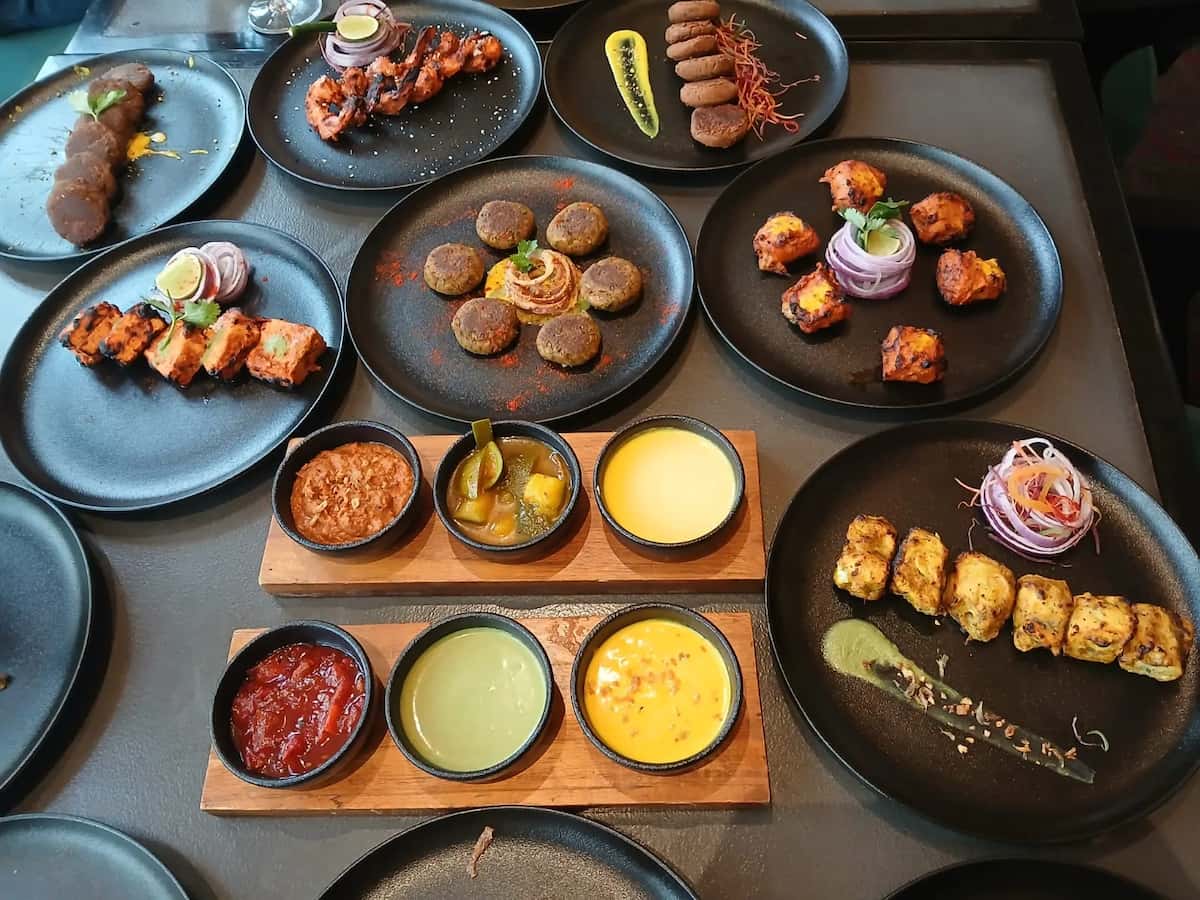
Novotel made the 'dream come true' for food lovers with their newly reimagined menu where every flame tells a story. Taking it from the Awadhi kitchen to a bustling coastal grill, where the air is thick with the sweet, woody perfume of smouldering embers. Novotel Kolkata Hotel & Residences invites you to step into a reimagined world at The Ministry of Kebabs (MOK). The brainchild of Executive Chef Vikram Jaiswal, this new collection is far from a standard menu update; it is a sensory theatre where you are in to witness a pan-Indian fire trail.
This place has a "rooted elegance" vibe, like a high-end grill house mixed with the comfort of your grandmother's hearth. So, geography, talent and patience altogether make the food cherishing without overpowering the taste or spices.
Whether you love the heat of Guntur chillies or the floral, velvety finish of a Lucknowi marinade, MOK provides a curated journey through India’s three sacred flames. To name it, Tawa, Tandoor, and Sigree. These skewers seem a strong protagonist in a larger narrative of smoke and spice. The extra layer of sophistication steps in as the signature moving trolley moves towards your table and turns it into a private stage for culinary mastery.
So, how does fire work as a part of the MOK kitchen? As Chef Jaiswal mentioned, to him, fire is a storyteller. When the flame is fierce, it speaks for bold, robust marinades like Awadhi sheekh or Chettinad prawns. “I rely on the quiet authority of dying embers, allowing smoke and gentle heat to preserve nuance and heritage,” he narrated. So, to cut it short, the choice of flame depends on the regional narrative. No matter if the dish demands drama and char or patience, fire decides to conclude the story with perfection.”
From the Royal Hunting Camps to Coastal Shores, The Ministry of Kebabs Brings In The Kebabs
MOK’s reimagined menu shares a sincere connection to the soil and history of India. The kebabs here may sound like just another appetisers but the twist awaits when you go through the menu. The whole menu walks through all Indian regions, right from the Amritsari kebabs to Guntur Kebabs. Not only that, there are royal kebabs from the neighboring country as well, including Chapli Kebab.
For instance, the Dhaniya aur Pudina ke Seekh have minced mutton. And it is a tribute to the royal hunting camps of yore, where hunters would forage for wild coriander and mint to season their fresh catch over open flames.
Moving from the forests to the palaces, the Rajwada Kalmi Tandoor draws its soul from the regal kitchens of Rajasthan and Madhya Pradesh. These chicken drumsticks are marinated in rich spices that require the vertical heat of the tandoor to lock in moisture for their charred and regal exterior. Now, the spin comes to the South, and the Kundapuri Byadgi Prawns are a revelation. Considering it from the famous Byadgi chilli from Karnataka, which is known for its brilliant red colour and mild heat, these prawns are shallow-fried with fresh curry leaves. The Mangalorean punch in this dish cuts through the smokiness of the grill.
As Chef Jaiswal mentions, “It is the very first step to get a hold of the spice architecture of each region. For instance, Byadgi chilli welcomes a slightly assertive smoke, while Awadhi profiles demand a softer, perfumed ember. I control distance from the heat, charcoal quality, and timing. Fire should frame the spices, not overshadow them — it must whisper in Lucknow and speak boldly on the coast.”
The Menu at Novotel MOK: How Chef Vikram Jaiswal Created The Magic
Chef Vikram Jaiswal planned this menu following his global expertise and his deep-rooted love for Indian heritage. Having spent years working alongside Italian masters and travelling globally, his return to Kolkata marks a full circle. For MOK, his planning centred on the "Fire Instinct." He didn't just design recipes; he trained his team to "read" the fire—listening for the specific sizzle of fat hitting charcoal and watching for the sweet, nutty fragrance of spices as they reach their peak.
“The one tradition I’m most proud to resurrect is the Awadhi dum-style charcoal cooking for dishes like Nihari and Murgh Galouti. It’s a slow, enveloping heat technique where meat simmers gently over smouldering embers for hours, allowing spices and marrow to merge into an unmatched depth of flavour — a method almost forgotten outside royal kitchens,” he mentioned.
MOK has created a haven for vegetarians as well. The chefs put their excellence into the cooking that’s conveyed through dishes like the Guntur Mirchi Tandoori Paneer. For a more delicate experience, the Shahi Palak Chilgoza Tikki brings an Awadhi experience. These spinach and pine nut patties are pan-fried on the tawa, following a delicate crust that protects a melt-in-the-mouth centre. The very royal menu also offers Bharwan Dhingri, where whole mushrooms are stuffed with a rich mixture of paneer and khoya. So, you have the earthy taste, the texture and the playful combination of spices.
Next, it’s the curation process was an exercise in "Spice Architecture." Chef Vikram and his team meticulously planned how the charcoal aroma would interact with regional nuances. They ensured that the smoke gave way to a finishing note—a whisper in a Lucknowi dish and a bold statement in a coastal one. The balance of taste, innovation and spices immediately turned MOK from a restaurant to a sanctuary of culinary craft. While the twenty-first century heavily depends on instant cooking, MOK is giving way to slow-cooked signatures like the Overnight Dal MOK and Subah-e-Awadh Nihari, that need the ultimate patience.
“Overnight simmering allows Dal MOK and Nihari to develop layers of depth, where marrow, spice, and smoke integrate naturally rather than aggressively. True fine dining is not just about premium ingredients, but about honouring time as an ingredient — because flavour that cannot be rushed carries a richness that no shortcut can replicate,” that’s how Chef describes the art.
Doesn't it feel exhilarating when a trolley comes in for the kebebs? It certainly does. You can see the direct presentation and feel the aroma of the food before consuming it. The MOK trolley turns a kitchen secret into a public performance. So, what is the most challenging part of maintaining the precision of a kebab’s texture and temperature while moving the "final touch" from the kitchen to the guest's table? Slurrp had the chance to have a word with the Executive Chef and learn more about how beautifully they have curated the menu.
Chef mentioned, “Precision becomes critical — a few extra seconds on the sigree can tighten a galouti or dry a sheekh, so temperature management and instinct must work together. For me, the key is preparation in the kitchen and discipline at the trolley. It ensures that nothing should compromise the texture, juiciness, or the integrity of the kebab.”
When connecting something fiery like Guntur with the floral subtlety of Awadhi cuisine, the chefs at MOK sometimes introduce a hint of fruitwood smoke, used sparingly. The smoke should wrap around the edges of the heat and improve the aroma, be it a beetroot kebab or a lesser-known take on khus khus kebabs made with poppy seeds. So, that’s more of a Bengal touch MOK is providing.
Using the geometry of the Tawa, Tandoor, and Sigree, diners generally see these as heat sources, but for a chef, they are tools of texture. Chef Jaiswal described the vision with an example from the menu. “Raancha Murgh Tikka — it begins in the tandoor, where intense vertical heat seals the marinade, locks in juices, and imparts that deep clay-oven smokiness,” he mentions. After that, it briefly takes time to get ready on the tawa. The controlled surface contact allows basting with ghee, caramelising the edges, and building a subtle crust without overcooking the centre.
Another interesting discovery from the MOK dishes Slurrp came across is the way they strike the balance between a "rooted" flavour and a "contemporary" presentation.
Connecting to that, Chef Jaiswal stated, “For me, heritage lives in the flavour memory — the spice blend, the slow cooking, the smoke, the technique passed down through regions and generations. I never alter the soul of the dish; the masala, the marinade structure, and the fire treatment remain authentic and respectful.”
The basic idea is that as soon as a guest takes the first bite, it should feel like home and the moment they look at the plate, it’s fine dining.
"Before the first bite, I want the aroma to awaken something deeply familiar — the memory of festive gatherings, winter barbecues, roadside dhabas, or a grandmother’s kitchen where fire meant warmth and togetherness."
To put it in his words, from training the culinary team at MOK to “read” fire begins with slowing them down. Chef Jaiswal takes time to teach them that flame is not controlled by knobs alone but with attention. The finesse you will find in every dish on this newly reimagined menu is the result of watching the colour of the embers, the height of the flame, and the way fat drips and reacts to heat. There is a specific sound they pay attention to that’s a steady, confident sizzle, not an aggressive flare-up. If the fat hits the charcoal and roars too loudly, the fire is overpowering; if it whispers gently, the heat is balanced.
The dessert course at Ministry of Kebabs focuses on cooling the palate through time-honoured simplicity. The Phirni features ground rice slow-cooked with milk and saffron until it reaches a velvety consistency. Served in traditional Mitti Kulhars, the earthenware absorbs excess moisture and imparts a faint, earthy aroma. Complementing this is the Kulfi, a dense, frozen dairy dessert that avoids the aeration of modern ice cream to maintain a rich, creamy texture.
- Address: MOK, Novotel Kolkata Hotels & Residences, CF Block, Action Area-I, Newtown, Kolkata–700156
- Price: 1699++ for veg and 1899++ for non-veg