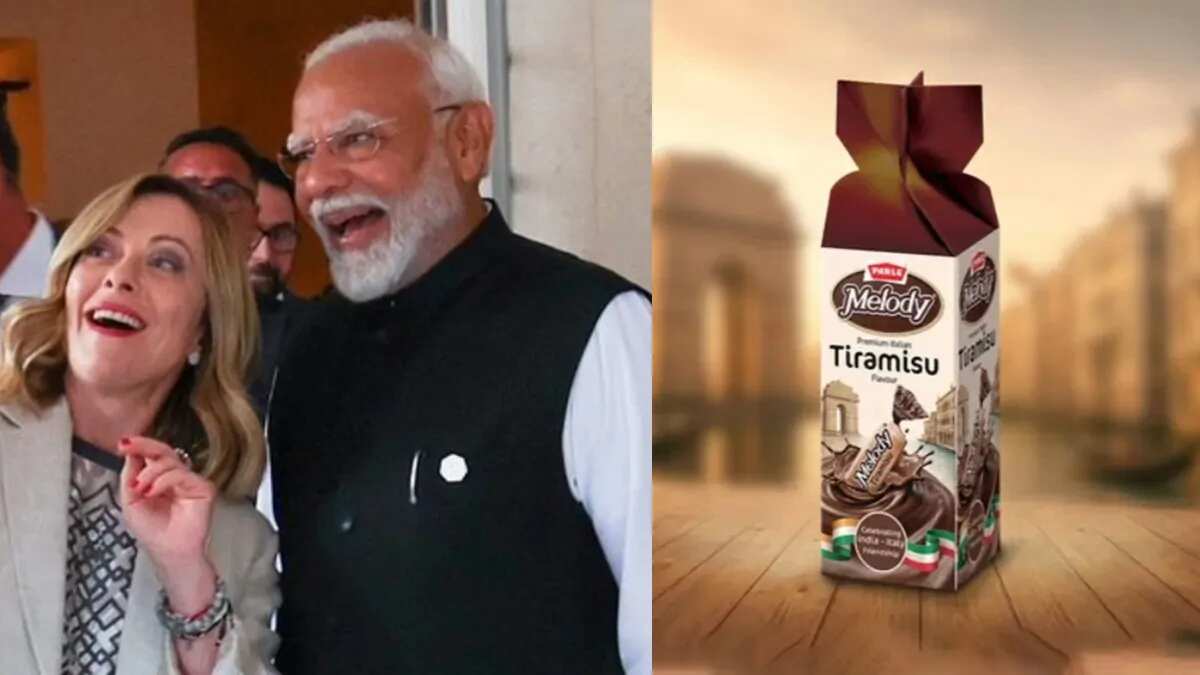
Friends, remember when the biggest mystery in your life was simply "Melody itni chocolatey kyun hai?" Well, prepare to have your childhood innocence violently updated. The answer to that age-old question is no longer a closely guarded trade secret involving extra cocoa powder. Instead, the answer is geopolitics, viral internet culture, and the opportunistic genius of corporate marketing boards. Parle has decided to grace the public with a limited-edition, coffee-flavoured Melody Tiramisu, available exclusively on Blinkit. Because nothing screams peak nostalgia and artificial scarcity quite like ordering a fistful of toffees on a grocery delivery app at three in the afternoon. This frankly absurd product launch is designed to milk the absolute last drop of clout from the viral 'Melodi' moment, a diplomatic crossover episode that occurred when Prime Minister Narendra Modi reportedly gifted a packet of the original candies to Italian Prime Minister Giorgia Meloni. Welcome to the future, where our nostalgia is actively weaponised for diplomatic meme synergy.
Image credit: Hindustan Times
Manufactured Hype In A Candy Jar
There was a time when candy was just candy. You bought it from a dusty glass jar at the local corner shop with spare change, entirely oblivious to international treaties or bilateral trade agreements. Now, Parle has transformed a humble caramel chew into the equivalent of an exclusive streetwear sneaker drop. Launching a restricted-access toffee on a quick commerce platform is a masterclass in manufactured hype. It takes a monumental level of corporate audacity to look at a viral selfie between two world leaders and think about how quickly it can be pivoted into a tiramisu-flavoured cash cow. By mashing up an Indian playground staple with a classic Italian dessert, Parle is not just creating a new flavour profile; they are pandering to the lowest common denominator of internet humour. The sheer velocity with which a harmless childhood favourite was commodified into a digital-age souvenir is genuinely staggering. One can only imagine the breathless boardroom meetings where executives feverishly analysed Twitter engagement metrics to determine the exact ratio of espresso extract needed to guarantee going viral.
Image credit: BestMediaInfo
The Heavy Burden Of A Pocket-Change Toffee
We must also pause to marvel at the bizarre reality of a pocket-change candy ascending to the lofty heights of international diplomacy. When Prime Minister Modi presented Prime Minister Meloni with these treats, it was immediately hailed as a stroke of soft-power brilliance by starry-eyed internet commentators. Suddenly, a sticky, jaw-aching toffee was heavily burdened with representing the geopolitical friendship between the Indian subcontinent and the Italian peninsula. The 'Melodi' hashtag was born, a portmanteau so delightfully cringe-inducing that it practically demanded a physical monument to cement its legacy. Parle, never one to let a free global marketing campaign go to waste, essentially erected a sugary statue in its honour. It is a deeply sardonic twist of fate that a product designed primarily to keep unruly children quiet for five minutes is now an emblem of prime ministerial camaraderie. The simple innocence has been permanently compromised by political optics.
Image credit: Blinkit
A Desperate Cry For Culinary Relevance
As for the toffee itself, the 'tiramisu twist' feels less like a culinary innovation and more like a desperate cry for relevance in an increasingly noisy market. Tiramisu, a delicate and sophisticated dessert, has been aggressively crammed into a mass-produced caramel shell, resulting in an unholy alliance of burnt sugar and artificial coffee essence. It is the perfect metaphor for the entire 'Melodi' phenomenon: an artificial construct designed entirely for rapid public consumption. We are living in an exhausting era where corporations simply refuse to let us enjoy things without immediately attaching a hashtag, a meme, or a geopolitical subplot. The simple joy of unwrapping a Melody has been thoroughly hijacked by the relentless machinery of trend-chasing. If this is the new standard for fast-moving consumer goods, we should probably brace ourselves for a rather bleak future. Until then, we must suffer the indignity of watching our childhood memories being ruthlessly repackaged, flavoured with fake espresso, and peddled to us as a historic diplomatic achievement on a delivery app.