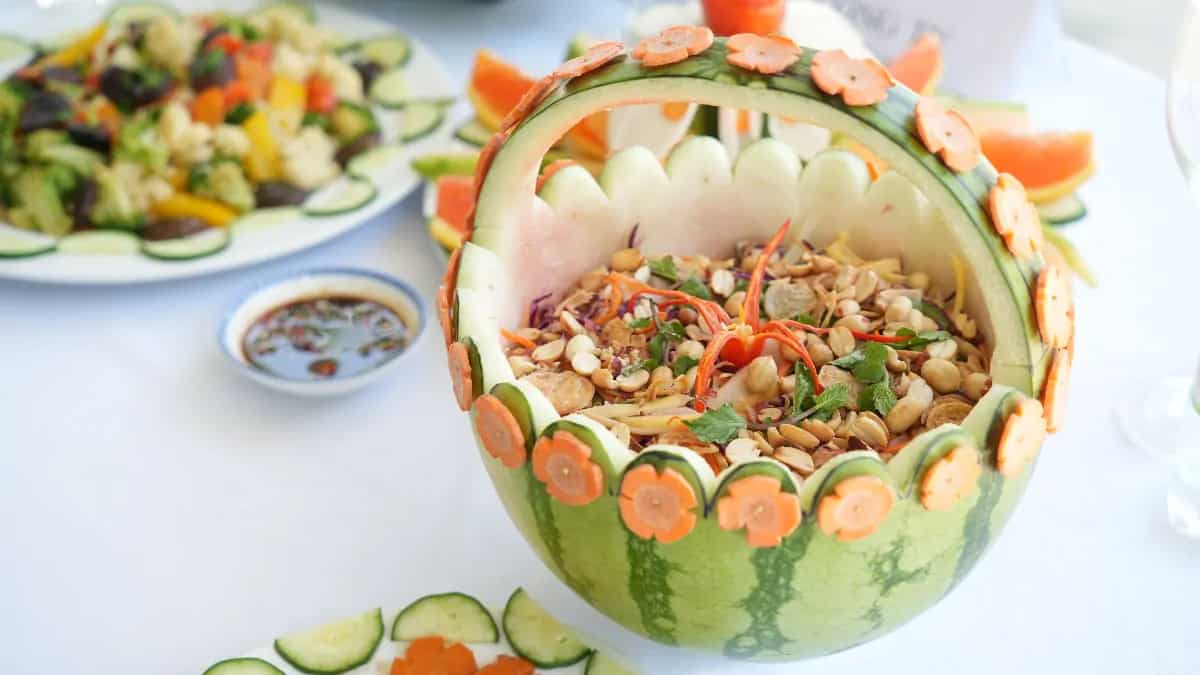
Every Indian household has an artist. The only difference is that instead of paintbrushes and acrylics, their tools are ladles, spice boxes, and chopping boards. A pinch of turmeric can become sunshine, beetroot imbues the colour of a crimson sunset, coriander transforms into tiny green brushstrokes, and a handful of pomegranate seeds can rival the sparkle and hue of rubies.
The recent edible food art trend may have exploded across Instagram and Pinterest, but Indian households have been practising it for generations without giving it a name. Every neatly arranged thali, every intricately garnished bowl of kheer, every Diwali mithai platter and every lovingly packed tiffin tells the same story—food has always been about delighting the eyes and senses before nourishing the body.
There have always been artists and creative minds. What has changed is not the idea but the canvas and the art’s execution. Nowadays, home cooks are slowly discovering that ordinary meals can become conversation starters with just a little creativity. And no, you do not need tweezers, edible gold, or professional plating skills. Sometimes all it takes is looking at your plate differently and letting others have a peek at your perspective.
Realistic Uses Of The Edible Food Art Trend At Home
Image credit: Unsplash
Give Your Everyday Thali A Theme
Who says every meal has to look the same? If you or your kids find yourself bored of the same old presentation of meals and thalis, then it is time to give it a theme.
Rather than serving dishes in whatever and wherever space permits, try building your thali around a story. For example, a monsoon lunch could feature khichdi, fried brinjal slices, tomato chutney and crispy papad arranged in earthy clay bowls. While a summer-inspired platter might celebrate kosambari, aam panna, curd rice and fresh mango slices.
Even colour can become the theme for a change. Think shades of green with saag, coriander rice, cucumber raita and mint chutney, or an orange and yellow feast starring dal tadka, pumpkin sabzi, saffron rice and mango pickle. Any meal instantly feels intentional when every element belongs together and remains united by a single concept or element.
Turn Breakfast Into A Mini Art Project
Breakfast rarely gets the attention it deserves, in terms of creativity and execution. While every day breakfast does not have to be extravagant or time-consuming, it can be engaging and fun when done right.
Image credit: Pexels
Imagine a plate where a dosa becomes the trunk of a coconut tree, grated coconut forms ribbon clouds, coriander chutney becomes rolling hills, while carrot ribbons create the morning sun. Or you can transform poha into a blooming marigold flower, using roasted peanuts, pomegranate seeds and finely chopped herbs for an artistic and tasty finish.
Even toast can become a playful component of creativity. Try spreading hung curd instead of butter, then ‘paint on it’ with kiwi slices, strawberries and figs arranged in the design of a bouquet or a garden.
Your children may have so much fun with their edible food art that they may not even notice or care about the extra fruits and vegetables involved.
Make Mesmerising Fruit Platters
Image credit: Pexels
Who simply places fruit in a bowl anymore? Instead, try arranging your watermelon, guava, papaya, chikoo and dragon fruit like the petals of a lotus. Or, you can even go for a mango ‘surprise’ using the different varieties of the fruit available during summer. Or, you can create a stunning peacock using grapes, blueberries, and kiwi for Janmashtami events. At the end of the day, the fruits remain exactly the same. People and children are simply more excited to eat it when it is beautifully displayed in an aesthetic manner.
Chutneys Deserve The Spotlight
In most Indian meals, chutneys quietly sit in a small bowl beside the main course. And that is truly sad, as they usually possess a lot of flavour potential. Instead of their typical wallflower presence, you can make them a main part of your edible food art presentation.
Image credit: Pexels
For example, you can swirl mint chutney into yoghurt with a skewer for designs. Or pipe coconut chutney into delicate spirals beside dosa for a gourmet look. Even something as simple as dotting tamarind chutney artistically across a chaat platter before scattering sev and coriander can elevate a simple chaat to a classy food art canvas.
These tiny details often require less than a few minutes but dramatically elevate the finished plate.
Get Children Excited About Healthy Food
Children are far more enthusiastic about eating something they helped create. It is in their nature. Also, they are prone to mirroring their parents rather than following their instructions. So it is ideal to set a good example and extend an invitation early for joining you in your edible food art adventures. This will not only get their creative juices flowing, but also teach children to find beauty in the mundane and not waste food, while honing their craft skills. An ideal example of the educational role edible food art can play in real life.
Image credit: Unsplash
You can set out bowls of chopped fruits, boiled vegetables, sprouts and paneer cubes, then challenge them to build butterflies, smiling suns or tiny gardens on their plates. This will slowly broaden their horizons and make their minds visualise food items into something more creative.
One child might build a train using cucumber slices. While another might create a fish by positioning their tomato wedges smartly. Either way, they are handling and eating fresh produce and homemade meals without realising it, so it is a win-win situation.