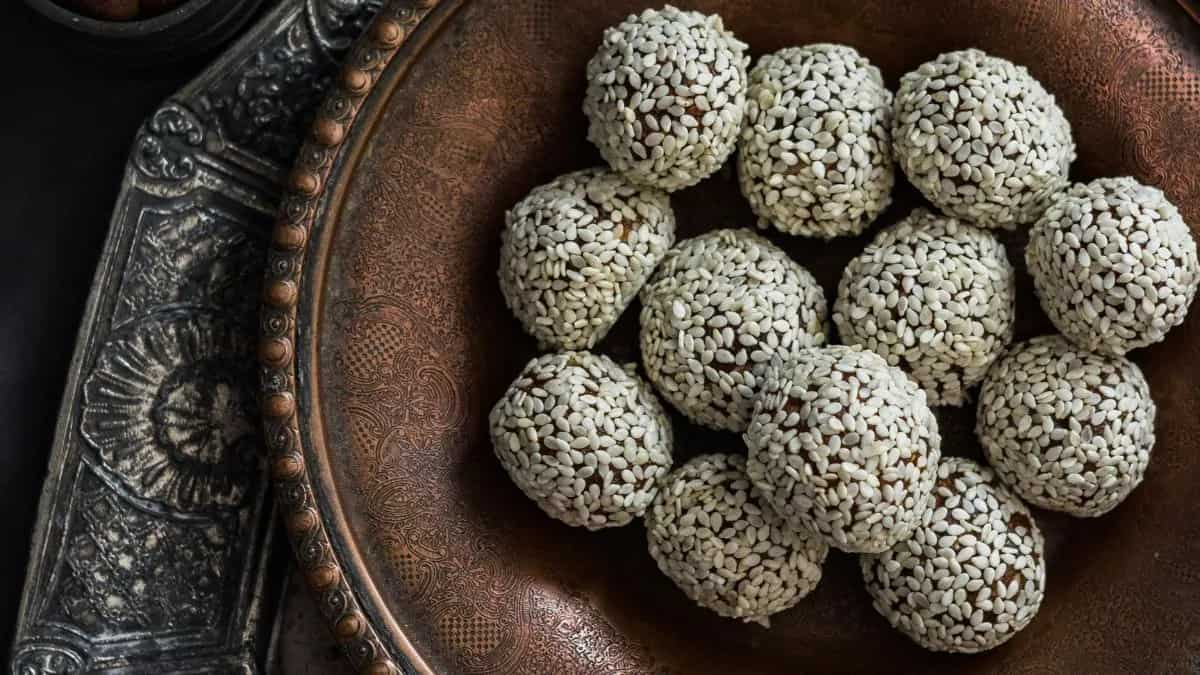
Harvest festivals around the Indian subcontinent arrive with much festive zeal. In every region, this time of the year connotes the end of the cold weather and the beginning of warm spring and summer days. In Maharashtrian regions, these celebrations are marked by the arrival of the Makar Sankranti, a day on which kites soar high in the sky, til-gul ladoos and vadis are exchanged with family and loved ones, and a festive cheer heralds the start of slightly longer days. While sesame and jaggery ladoos form the epicentre of the Makar Sankranti celebrations, there still abound some sweet treats made using these two core ingredients which are just as delicious and can be prepared along with til-gul on this festive day.
Til-Gul Nut Chikki
While til-gul barfi or ladoo are among the more common sweet treats prepared for Makar Sankranti, a slightly nutty spin on the classic comes in the form of a nut chikki that is infused with sesame and jaggery. Mix peanuts, almonds and pistachios with melted jaggery to make a hard chikki. Before the mixture dries, sprinkle some toasted sesame on top for added texture. The crunchy, chewy and earthy chikki will bring a sweet yet nutty note into the festive dessert. Serve this sweet treat in the form of chikki shards for a more rustic effect.
Sesame And Jaggery Halwa
A soft, warm and comforting treat on a pleasant Makar Sankranti morning, the til halwa can accentuate a breakfast platter with its sweet and indulgent notes. Soak sesame seeds in warm water and turn them into a fine paste that is brought together with roasted semolina, jaggery, ghee and milk in the making of a delicious til halwa. Let the semolina roast on a low flame for a prolonged duration so it acquires a blush pink hue. And ensure that ghee is added in generous proportions to balance out the warmth emanated by the sesame and jaggery mixture. This dense, sweet and decadent halwa can be garnished with saffron strands and crushed nuts to lend it a luxe aesthetic.
Til-Gul Modak
Modak or sweet, steamed rice dumplings are generally made with a coconut and jaggery stuffing. On Makar Sankranti day, put a flavourful twist on the classic recipe and fold modaks that are flavoured with the notes of sesame and jaggery instead. Wrap this filling in rice flour shells and steam well. Serve with a large dollop of ghee. This slightly lesser-known reimagination of the traditional dessert will surely make your festive meal stand out for its sheer innovative appeal.
Til-Gul Poli/Flatbread
Makar Sankranti comes with its own set of sweet treats, prepared exclusively to mark the festival. One of these is the gul or jaggery flatbread. What would bring a slightly more interesting twist into this recipe is the addition of toasted white sesame to the flatbread stuffing. Til-gul poli is made in several parts of southern Maharashtra and northern Karnataka in the harvest season. Revive this classic recipe in the modern kitchen by crafting a stuffing out of jaggery, ghee and sesame. Wrap this in wheat dough, before rolling out into flatbreads. Serve the til-gul poli warm, with a tablespoon of ghee for earnestly indulging in the caramelised notes of melted jaggery.
Til-Gul Barfi
Til-gul vadi, or the slightly crunchy sesame and jaggery sweet treat is the most common Maharashtrian dessert prepared for Makar Sankranti. This time around, instead of making a hard vadi, go for a softer barfi. Adding a bit of dried coconut shavings to the barfi lends it a slightly nutty, earthy note that arrives on the palate as an aftertaste. This dense and fudgy barfi is quite easy to slice and can be packed into small boxes for easy gifting. Garnish with desiccated coconut for an elegant, finished look.