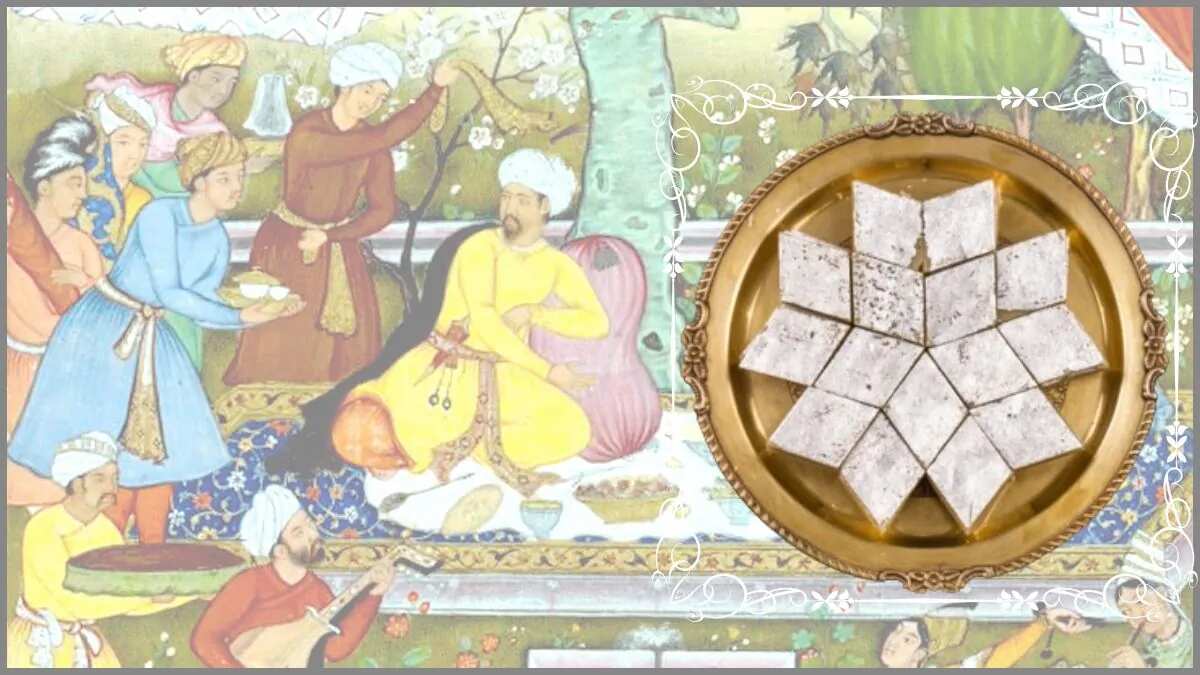
The Silver Lining That’s Wearing Thin
IN THE WEEKS leading up to Diwali, sweet shops across India usually gleam like treasure chests—trays of barfi, kaju katli, and sohan halwa glinting under fluorescent light, each piece wrapped in a whisper of silver. But this year, something is missing. The sheen has dulled.
As the price of silver continues its climb, confectioners from Lucknow to Ludhiana are quietly rationing the precious metal that once lent their sweets a mark of luxury. Reports from traders suggest that vark, or edible silver leaf, has become prohibitively expensive, forcing many to scale back or skip it altogether. Others, squeezed by costs, are turning to dubious substitutes—thin aluminium foils that mimic the glint but none of the grace.
The crisis, playing out in kitchens and bazaars across the country, is more than a story of inflation. It’s the latest chapter in a long, glittering history—a story that began in ancient India, where silver was less about spectacle and more about sanctity.
A Metal with Medicinal Origins
The roots of vark lie deep in India’s medicinal and spiritual traditions. Over two millennia ago, Ayurvedic practitioners and hakims prescribed silver and gold in powdered or foil form, extolling their purifying and restorative powers. Silver was said to build immunity and heal the body, while gold, taken in minute doses with honey, was even thought to cure chickenpox.
Modern science, for once, lends weight to these ancient beliefs: silver is known to possess antimicrobial properties, acting as a natural preservative. Long before refrigeration, a thin sheet of chandi wrapped around food served both faith and function, believed to extend shelf life while warding off impurities.
Some historians trace the Indian fascination with edible metals to Persia, where cooks gilded dishes with silver and gold paint to please their royal patrons. But it was on Indian soil, in the imperial courts of the Mughals, that vark became an art form.
The Mughal Obsession: When Silver Became Poetry
If Ayurveda sanctified silver, the Mughals glorified it. The reign of emperors and nawabs transformed vark from medicinal dust to royal ornament. In palaces from Delhi to Hyderabad, every platter shimmered under its sheen.
At Jahanara Begum’s legendary banquets, silver was more than decor—it was devotion. The Mughal princess, daughter of Shah Jahan, saw silver (warq-e-nuqra) as the most poetic of metals, a luminous counterpoint to the tyranny of gold. Her celebrated Chandi Qaliya, a meat stew dressed in silver leaf, was said to dazzle guests even before it reached their lips.
A century later, Nawab Wajid Ali Shah of Oudh turned vark into livelihood. His chefs coated rice grains in gold and silver to create Moti Pulao, each grain gleaming like a pearl. In his court, the making of warq was not just craft but commerce—a prized trade that supported generations of artisans.
The Artisans Behind the Shine
In the narrow lanes of Lucknow’s Chowk and Jaipur’s Pannigaaron ka Mohallah, the rhythmic clang of hammer on metal once echoed from dawn to dusk. The craft was exacting, the labour endless.
Warq-makers began by melting silver into thin rods, slicing them into inch-wide strips, and sandwiching them between the translucent pages of a special book called an auzaar. The pages—made of deer or goat skin treated with a decoction of 356 herbs—were designed to stretch but not tear under pressure.
Then began the pounding: up to eight hours of relentless hammering inside a leather sheath called a Pushti. Under the heat and pressure, the silver spread into sheets less than a micrometre thick—so delicate that they would cling to a fingertip or disintegrate on touch.
For centuries, this fragile craft flourished quietly in artisan households, handed down through generations. But with the arrival of machines—and a reckoning over how the foil was made—the old rhythm faltered.
From Hide to High-Tech: An Ethical Reckoning
Traditionally, the finest vark was beaten between ox gut or cow hide. The animal tissue, slick and elastic, made separation easier than paper ever could. But as awareness grew, so did discomfort. For Jains and many Hindus, the idea of animal by-products in food—particularly sweets—was unacceptable.
In 2016, the Indian government formally banned the use of animal skin or intestine in vark production, ushering in an era of “vegetarian” silver leaf. The modern process now uses sheets of specially treated paper or polyester coated with food-grade calcium powder, colloquially known as “German plastic”.
Yet purity remains an open question. Studies have shown that nearly half of all Indian foils tested fall short of the 99.9% silver benchmark, with traces of toxic metals like nickel and lead. For every artisan preserving the ancient method, a dozen shortcuts flourish elsewhere—cheap alloys masquerading as luxury.
A Dying Craft, a Changing Taste
The shift to machine-made vark was, in some ways, inevitable. Machines can produce consistent sheets in hours and at a fraction of the cost. For the dwindling number of karigars still practising the old ways, mostly in Lucknow and Hyderabad, survival is a matter of pride as much as pay. Once fifteen shops lined Lucknow’s old quarters; now, only four remain.
And yet, vark endures. It continues to gleam atop trays of barfi, coat paan and betel nuts, and crown platters of saffron rice at weddings. In its most extravagant form—sone ka vark, or gold leaf—it even finds a place in Ayurvedic medicine and fine dining. Globally, too, it has cousins: Japan’s gold flakes in sake, Europe’s gilded liqueurs like Goldwasser.
What was once a marker of status has become, for many, a gesture of nostalgia. The shimmer still stirs memory—of childhood Diwalis, of trays sent to neighbours, of sweets so beautiful you almost didn’t want to bite them.
The Silver Future
This Diwali’s shortage may pass when silver prices stabilise, but the larger question remains: how much of our food heritage can survive the pressures of modern production and cost?
In the marketplace, vark is losing its lustre—its use reduced to a thin veneer of what it once symbolised. But in the collective imagination, it remains India’s most poetic garnish: a trace of the divine in every bite, a reminder that beauty, like silver, is most radiant when it’s paper-thin.