Even if you stay far away from the city, you must have heard about the 'Kolkata Chinese Food' which people crave for. So, where did this love for Chinese food come from? Kolkata’s lifeline is solely connected with a cosmopolitan rhythm. But as February 17, 2026, approaches, that pulse shifts to the thrum of traditional Chinese drums. The Chinese New Year (also known as the Lunar New Year) is dearer to this city than perhaps any other Indian city. It represents the living soul of India’s only surviving Chinatown, situated in the eastern quarters of Tangra (The New Chinatown) and Tiretta Bazaar (the Old Chinatown). The clock strikes 12, the calendar date changes and the city comes to life with music, attire, dance, food, and celebrations.
Image credit: Saborni Saha
The early morning breakfast in Tiretta Bazar on every Sunday is always one of the most cherished experiences for the city folks with the buns, momo, spring roll, meatball soup, pork sausages, and whatnot. However, the New Year vibe hits differently here.
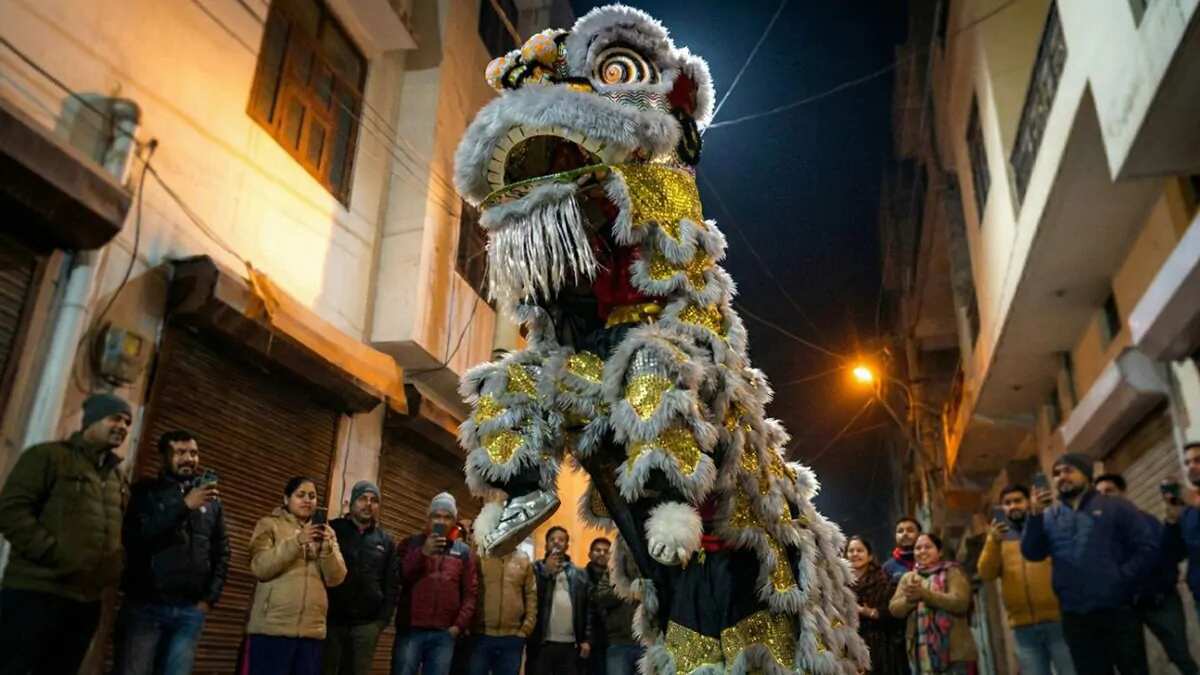
As it's a transition from the Year of the Wood Snake into the Year of the Fire Horse, the city’s historic lanes prepare for a transformation. Apart from the celebrations, this bond is more aptly a celebration of a community that has called Kolkata home for over 250 years. Be it Tangra, Territy Bazar, or Bow Barracks, the city is all lit up with lanterns, firecrackers, colourful lights, dragon dance, lion dance, and people wearing traditional attire, making it a full-fledged celebration of the Lunar New Year.
Image credit: Saborni Saha
The festivities officially kick off at midnight on February 16, 2026, turning the city into a theater of red lanterns and firecrackers. From the atmospheric morning markets of Tiretta Bazaar (Old Chinatown) to the vibrant tannery-turned-culinary hub of Tangra (New Chinatown) and the iconic red-brick lanes of Bow Barracks, the celebration is a mosaic of heritage. The City of Joy validates its title where culture knows no borders, and history is preserved through happiness.
Chinese New Year 2026: The Landmarks Of Heritage At Tangra, Tiretta, And The Culinary Guardians
Tangra is now the world-renowned destination for Indian-Chinese soul food. Tiretta Bazaar, the "Old Chinatown," comes with the spiritual anchor where the morning air smells of steamed baos and ancient incense. From the home kitchens of Tangra to the bustling commercial lines of Popo’s, these culinary experts narrate the story of a diaspora that refused to leave the fire to let out.
Chef Katherine Lim: The Revivalist Spirit Of Hakka Tradition
Chef Katherine Lim began cooking as a home chef in Kolkata's Chinatown, Tangra, in 2020. In 2026, the mother of two boys is a famous Indian chef trying to revive Hakka cuisine. Her transition from home cook to professional has made her a remarkable voice in preserving authentic Lunar New Year flavours.
"Chinese New Year is the time families get together, many who are in foreign countries return to Kolkata to join in the festivities. It’s a time to meet friends and family, eat out, enjoy the lion dance, and be merry. Chinese New Year meant lion dances, staying awake the whole night, firecrackers, no restrictions, and lots of fung pao (red packets with money)," Chef fondly remembered.
For the celebratory dishes, Katherine emphasizes the symbolism behind every bite.
"We prepare some specific ones like the whole steamed chicken (signifies wholeness in the family), fish balls (unity in the family), prawns, whole fish, which are a must-have for the reunion dinner, which happens on New Year’s Eve. The sesame cookies (Ma Fa) and prawn crackers are also kept in boxes and containers for everyone to munch on throughout the night," Katherine mentioned.
While talking about her this year's plan for the New Year celebration, Katherine seems to be a bit busy.
As she mentions, "Like last year, this year also my homemade products like the lap cheong (Chinese sausages), prawn wafers, sesame cookies are being used by the Taj Bengal for a Chinese New Year special menu. So a lot of time is spent preparing those items. Otherwise, since my two sons are studying abroad, celebrations mostly refer to having friends over for a meal, maybe seeing the lion dance."
Traditions In Motion With Henry Li And Amy Chung From Popo’s
Representing the energetic team at Popo’s By Blue Poppy, Henry Li and Amy Chung offer a roadmap to the rhythmic and ritualistic side of the festival. The festival is more about prayers and "Cai Chang" (plucking of the greens), a tradition where lion dancers "eat" lettuce to bring luck to businesses.
Henry Li highlights the spiritual commencement, stating,
"Today is the eve, there will be celebrations and fireworks at the Chinese kali mandir starting at around 9:30, then everyone will move to pray at Pei Mei at 12 o'clock once midnight strikes and the celebrations in the kali mandir end."
Amy Chung details the subsequent days of movement across the city’s historic landmarks:
"February 17 is the first day, we will be performing tomorrow at Pou Chong at around 10 a.m. Prior to that, there will be prayers at the Sea Ip temple, dedicated to the Goddess of Mercy, Kuan Yin. Then in the Terreti Bazar, lion dance groups will be doing "cai chang" or plucking of the greens. At last, there are celebrations to be held in Bow Barracks at about 4 o'clock," Amy added.
Image Credit: Saborni Saha
The festivities extend well beyond the first day, ensuring the spirit of the Fire Horse is felt by all. "On February 18, in Tangra, lion dance groups will be doing cai chang, starting at about 9:30-10 am. Both for February 19 and 20, there is a Chinese carnival at Pei Mei School, Tangra, with cultural performances," they shared.
Also, with Losar, the Tibetan New Year falling on February 18, 2026, Chef Sachiko Seth’s Popo’s By Blue Poppy is offering an exclusive festive meal option. As she mentioned, “At Popo’s, we have kept a 5-course menu to celebrate the Losar.”
From Mafa To Noodles: Joanna Chang On The Magic Of Chinese New Year In Tangra
Joanna Chang, the culinary expert with her origin from Tangra, Kolkata, shared her views on Chinese traditions, New Year celebrations and her memories with Slurrp. She is currently a full-time content creator with 10 years of hands-on experience in the restaurant industry.
Joanna gave a glimpse of how the New Year celebration goes on in the City of Joy.
As she mentioned, "Chinese New Year is a big deal for the people in Tangra. We all live close to each other. We all know each other. We grew up together. So we try our best to kind of preserve our culture. It's a lot of people in Tangra have mentioned this, which I feel is true as well, because of the celebrated Chinese New Year in Taiwan and also in Canada."
"You see because a community in Kolkata is small. We do a lot of things to kind of preserve it and also to make it known to get, like to give it to make it a big deal kind of. So we do have a pre-free celebration. We have a pre-celebration. We have a celebration itself. We have a post celebration. We have two carnivals in the same week. That is insane because every single day, there is something. It's kind of like a five-day event. The community in Kolkata is small, and that's where we all know each other. And the best part is that we are participating in every single thing."
For Joanna, the Chinese New Year in Kolkata was a holiday following a sensory explosion. The celebration is a time of loud music and bright colours. She remembers the excitement of being right in the middle of the action:
"My childhood, my favourite childhood memory of a Chinese New Year would definitely be ah being part of the lion dance. Because you have the music, it's lively. Ah, it's a lot of fun."
While many people kept their distance from the loud celebrations, Joanna and her friends felt right at home in the noise.
"You are going through firecrackers. A lot of people are scared of firecrackers, but we grew up playing with them."
When she wasn't out on the streets, she was at home helping her family get everything ready for the big day. "There are a lot of memories, especially around family, where mom and grandma are making Mafa. It’s a fried sweet dough kind of snack. And then shrimp chips. And there's a lot of cleaning around the house. For pre-celebration, post celebration, we eat a lot of noodles as well as seafood, which is considered a symbol of prosperity and wealth ."
While the snacks are crunchy and fun, the main meal on New Year's Day follows a very specific rule to ensure a lucky start to the year.
"However, Chinese New Year's Day itself, you have to eat vegetarian food because vegetarian food in Chinese or hakka it is wealth. So that day itself, you're not supposed to eat meat because you're not accepting wealth."
Even the items used during the famous lion dances are picked for their colours and what they mean for the future.
"You will also see when there is a lion dance going on, people will be offering oranges or vegetables. Because orange is gold, and a vegetable is wealth."
While preparing for the New Year celebration in Canada, she further remembered last year's celebration. Joanna mentioned,
"Like last year, in 2025, I went back. There were people from Australia. There were people from Canada, Indonesia, and the US. They were all coming back just to celebrate that. Because no other place in the world, in Taiwan or Canada, where you are able to be part of. You can see the Chinese New Year line dance is going on, but you are not able to take part in it unless you are skilled and well-trained. But back there in Tangra, you don't need to be skilled. You just do it for fun."
The city, soaked in the warmth of the Chinese New Year celebration, shares its ancient connection with the traditions of China. As the Year of the Fire Horse gallops into Kolkata, the festivities in Tangra and Tiretta Bazaar prove that heritage is a living, breathing experience.