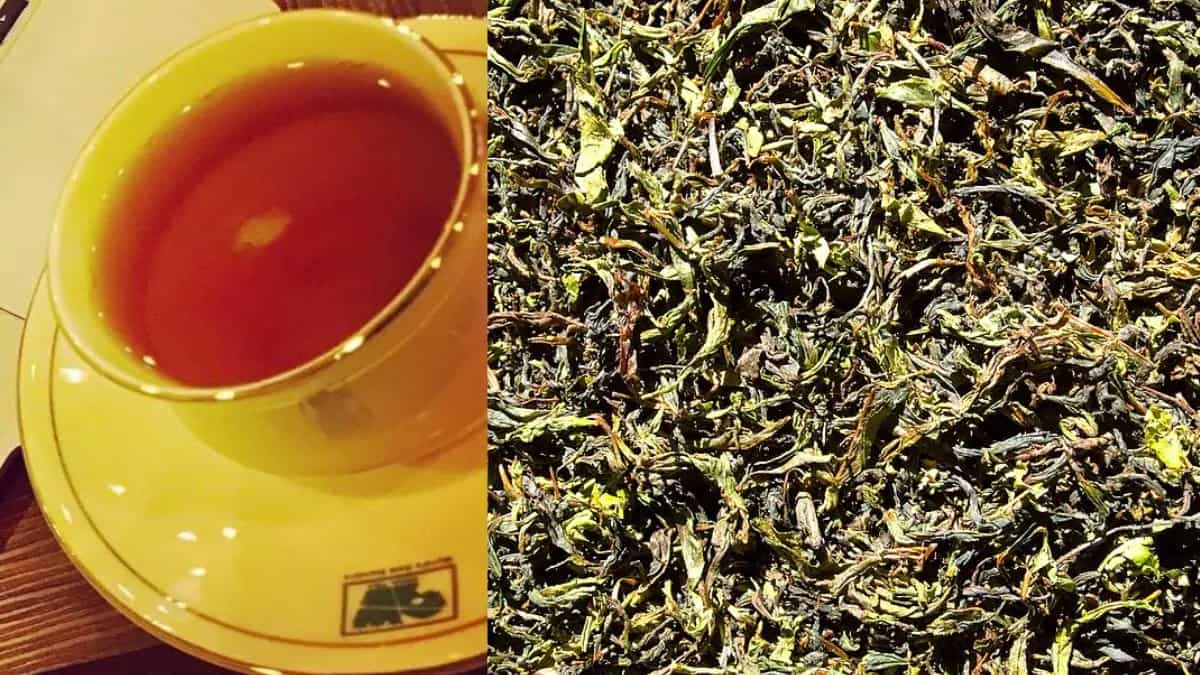
Darjeeling tea, among the teas cultivated in India, carries a particular quality and flavour profile, as well as a global reputation dating back over a century. Two elements, in general, contribute to its outstanding and distinct taste: geographical origin and processing. Having a cup of cha became a symbol of far more than refreshment as in the 1920s and 1930s, tea stores began to appear in major city centres. In the eastern metropolis of Kolkata, tiny cafés known as "tea cabins" sprang up in neighbourhoods surrounding universities, selling Darjeeling tea and snacks. They immediately became hotbeds of news, political gossip, and vigorous conversations about cultural issues and in subsequent decades, key gathering places for intellectuals and pro-independence Indians.
Image Credit: Rajlakshmi Dastidar
For more than a century and a half, Darjeeling tea has been planted, developed, and manufactured in tea gardens in a well-known geographical location, the Darjeeling district in the Indian state of West Bengal. The tea gardens are found at elevations over 2,000 metres above sea level. Even though India's tea business is private, it has been statutorily governed and supervised by the Ministry of Commerce since 1933, via numerous enactments culminating in the Tea Act of 1953. The Tea Board was established under this Act, with its head office in Kolkata. A significant portion of Darjeeling tea's yearly output is exported, with prominent consumers including Japan, Russia, the United States, the United Kingdom, and other European Union nations such as France, Germany, and the Netherlands. Recently, Darjeeling tea has seen a sudden production fall, and one of the main reasons is that climate change has had a particularly devastating impact on this famed tea region during the last decade.
The Climate Crisis Brewing In Every Cup Of Darjeeling Tea
Darjeeling's weather patterns have changed; topsoil has deteriorated, rainfall is irregular, landslides are more common, and the region has seen extended dry periods. This affects the environment, but it also endangers the tea business and local livelihoods. Speaking to the team at the Tea Board of India, Slurrp was able to dig a little deeper into what is actually happening. On International Tea Day 2026, the call is clear: to restore the lost glory of Darjeeling tea and remind the entire country of a beverage that is, in every sense, an art form.
Image Credit: Wikimedia Commons
Though all teas are made from the same plant, Camellia sinensis, Darjeeling has long been recognised as one of the most delicate and sought-after teas, planted and picked by hand rather than machines, and produced at elevation in the Himalayan terroir. But that delicate ecology is now in jeopardy, as is the livelihood of workers who already receive low wages. "The glaciers are disappearing. Daily temperatures have climbed, evenings no longer chill as they once did, and a sudden hailstorm can turn a hillside of tea plants into an icy mess. Particularly worrisome is the inconsistent and unexpected monsoon," says the Tea Board of India.
Tea plants require a consistent quantity of moisture to thrive, but this is no longer what is occurring. Praful Rao, a local environmentalist who has been studying rainfall in the Darjeeling area, documents monthly rainfall on his website using data from the Indian Meteorological Society. Last July, the region received almost 45 inches of rain, breaking previous records dating back to 2012 but the autumn and winter months were almost entirely dry. The problem with such unpredictable rain lies also in the damage it inflicts on the land.
When the region experiences monsoon downpours, experts note, the water washes away topsoil and nutrients, causing lasting harm to the tea bush.
This is exacerbated by India's excessive usage of pesticides and fertilisers. Following the Green Revolution in 1966, these inputs became more readily available and were quickly incorporated into all agricultural products in an effort to increase yields and feed more people. Anil Bansal co-owns the Ambootia Group, one of Darjeeling's major organic tea producers. His brother Sanjay also chose to pursue organic farming. Together, the brothers acquired 11 "sick" tea farms in Darjeeling and converted them to organic cultivation. "'Sick' meaning the bushes were in a poor state, the workers had not been paid in a long time, the estate was not making money, and the soil was weak," Anil informed Slurrp. Ambootia's flagship tea estate, the largest of its properties in Darjeeling, sits just below Kurseong. After almost a dozen turns, a steep gravel road leads to roughly 2,500 acres of tea plants beside the Teesta River.
Image Credit: Rajlakshmi Dastidar
While transitioning to organic growing can result in lower yields in the early years, the Bansals were confident that their investment would help the estate flourish year after year. Slurrp also had the opportunity to speak with Mr Atul Rastogi, Executive Director at Luxmi Tea Company, which owns the iconic Makaibari estate, to understand how consumers in India are shaping their lives around Darjeeling tea today. Because somewhere along those hilly roads, new trends and consumer preferences are always evolving and heritage, too, must find a way to reinvent itself. Perhaps Bengal will lead that renewal, with Darjeeling tea and its estates once again making the act of drinking tea one of the most celebrated rituals of one's day.
Why Darjeeling Tea Still Matters In The Age Of Wellness Drinks
Mr. Rastogi says: "Today's global consumers are increasingly experience-driven. They may choose herbal infusions such as Earl Grey, turmeric green tea, or Kashmiri Kahwa for wellness benefits, while continuing to seek premium teas like Darjeeling for balance, authenticity, and craftsmanship. Teas such as Silver Tips, delicately hand-plucked under specific seasonal and climatic conditions, reflect the artistry behind fine tea production."
Today, storytelling around origin, craftsmanship, heritage, and community plays a significant role in shaping the buyer experience. Darjeeling tea, therefore continues to hold strong relevance among consumers seeking not just a beverage, but a conscious and culturally rich experience.
Image Credit: Rajlakshmi Dastidar & Wikimedia Commons
He also shares that the way people drink tea is changing, and younger consumers are leading the shift. Convenience, wellness, and the desire for something new have replaced the slow ritual of a hot brew for an entire generation that wants its tea cold, clean, and ready when they are. Premium tea brands are responding. At Luxmi Group, the Makaibari estate's "Zero Proof" range is a direct answer to this movement, tea-based concentrates built for iced drinking, with no added sugar and no preservatives. It is heritage tea reimagined for a generation that reads ingredient labels and means it. The future of Darjeeling tea lies not in abandoning heritage, but in translating it into contemporary formats, cold brews, tea mocktails, wellness blends, and ready-to-drink experiences that resonate with younger global consumers while preserving the authenticity and terroir that make Darjeeling irreplaceable.
To Thrive As A Symbol Of Heritage And Quality
Behind every cup of Darjeeling tea lies an economy of extraordinary fragility. The tea bushes that produce the finest leaves are old, sometimes generations old, and when they age past their prime, replantation becomes necessary. But the earth does not guarantee its gifts twice. A replanted bush, however carefully tended, may never fully recapture the complexity of what once grew in its place.
The terroir is inherited, not manufactured. Thousands of families across the Darjeeling hills — pickers, processors, estate workers depend on the health of these gardens for everything. Capital investment in the estates is not merely an industry metric; it is the difference between stability and hardship for entire communities.
Image Credit: Wikimedia Commons
Production figures tell a sobering story. Output has fallen from 8–10 million kilograms to around 6 million kilograms, a decline reflecting the combined pressures of ageing bushes, climate uncertainty, and the slow economic attrition of the estates. The need for sustained governmental support — schemes covering replantation, infrastructure, worker welfare, and technological modernisation is not a luxury. It is a lifeline. Fortunately, every five years, new policies and trade schemes from the Ministry have continued to offer measured relief, helping estates stay afloat, and exports remain competitive.
In an effort to reclaim and amplify awareness, the Tea Board of India has worked to spread education about Indian teas through 17 regional offices across the country. "We want to bring the story of Darjeeling and Indian tea closer to the people who grow up never knowing what they have been missing," the Tea Board of India says. It is a story of identity, of craft passed quietly between hands, of a global reputation earned over more than a century.
And that reputation, internationally, remains formidable. Darjeeling tea continues to command admiration and premium pricing in markets across Europe, Japan, and beyond, a Geographical Indication–protected product that the world's most discerning buyers seek by name. The export story is, in many ways, one of quiet triumph.
The challenge is closer to home. The replanted bushes will reach their peak growth potential within the next two years. However, it will be another seven to nine years before the plants begin to produce an economically viable yield, where the cost of harvesting is outweighed by the return on sales. In between, the tea shrub must be carefully pruned. No one knows the precise lifespan of a tea shrub; if properly managed, they can potentially survive for 400 years, as some do in China. "Personal preference dictates whether you want a first, second, or third flush. The initial flush has a rich, aromatic character and is light, clear, and brilliant," says the Tea Board of India.
Image Credit: Rajlakshmi Dastidar
The second flush has its own devoted following. The purple leaf is prized for its quality, producing a more amber-coloured tea with a subtly fruity flavour.
"This is the crop that thrives from May to June and is associated with Darjeeling's famous muscatel flavour. The taste may also be characterised as 'spicy', 'flowery', and 'peachy' so delicate that connoisseurs frequently avoid adding milk or sugar to it," they add.
The import of inexpensive Nepalese teas has further exacerbated Darjeeling's financial difficulties, which are already strained by poor production, lower demand in export markets, and low price realisation. Nepal has also managed to reach key export markets for Darjeeling tea, with direct shipments to nations such as Germany and Japan. Darjeeling farmers are concerned that domestic consumers are mistaking Nepalese teas for Darjeeling teas, compounding damage to an already pressured industry.
Image Credit: Rajlakshmi Dastidar
When Slurrp put the question directly to Mr. Rastogi that if it’s losing not just a beverage, but an entire way of life tied to the hills of Darjeeling, his response carried both honesty and resolve. Despite the severe challenges facing Darjeeling tea, he said, the sector's resilience built on the backs of generations of hardworking tea communities has kept this heritage industry alive for over 200 years. With continued innovation, responsible marketing, and growing global awareness, Darjeeling tea can endure as the rare and culturally significant product it truly is. Sustainability, he emphasised, goes beyond an environmental commitment: it is a long-term responsibility toward preserving tea landscapes, the communities that depend on them, and a heritage that must be safeguarded for generations to come.