Necessity may be the mother of invention, but when it comes to coffee, accident is her rather mischievous sister. We tend to imagine that every great drink was dreamt up by a skilled barista tinkering patiently behind a counter and testing ratios until everything felt just right. The truth is often far messier, and a good deal more fun.
Some of the world's best-loved cups were never meant to exist at all. They came from a missing kettle, a flight forced back by a storm, a wartime shortage and a jug of milk that simply refused to cooperate. In each case, someone was handed a small problem and had to think on their feet, using whatever happened to be within reach. None of them could have guessed that their quick fix would one day travel across oceans and turn up on café menus thousands of miles away.
This International Coffee Day, here are four famous coffees that owe their existence to a happy accident.
Flat White, The Cappuccino That Fell Flat
Australia and New Zealand have been bickering over this one for decades. Sydney's claim rests on Alan Preston, who put the flat white on the menu at his Moors Espresso Bar in 1985, borrowing a term from cafés in his home state of Queensland.
However, the Kiwi version is the more charming tale. In 1989, at a Wellington café, barista Fraser McInnes was making a cappuccino with milk too low in fat to foam properly. The result was silky rather than bubbly, so he handed it over with an apology and a new name. Neither side has won the argument, but the drink has conquered cafés from London to Tokyo regardless.
Vietnamese Egg Coffee, A Shortage Turned Speciality
Source: Pexels
In 1946, as the First Indochina War tightened its grip on Hanoi, fresh milk grew scarce. Nguyen Van Giang, a bartender linked to the city's grand Metropole Hotel, went looking for a substitute and found one in the egg. He whisked yolks with sugar into a dense, custardy cream and spooned it over strong Vietnamese coffee.
The improvisation proved so popular that Giang opened his own place, Café Giang, which his family still runs in Hanoi's Old Quarter. Today, cà phê trứng is one of the first things visitors to the city go hunting for.
Also Read: International Coffee Day 2026: 5 Famous Cocktails That Cannot Do Without The Fragrant Bean
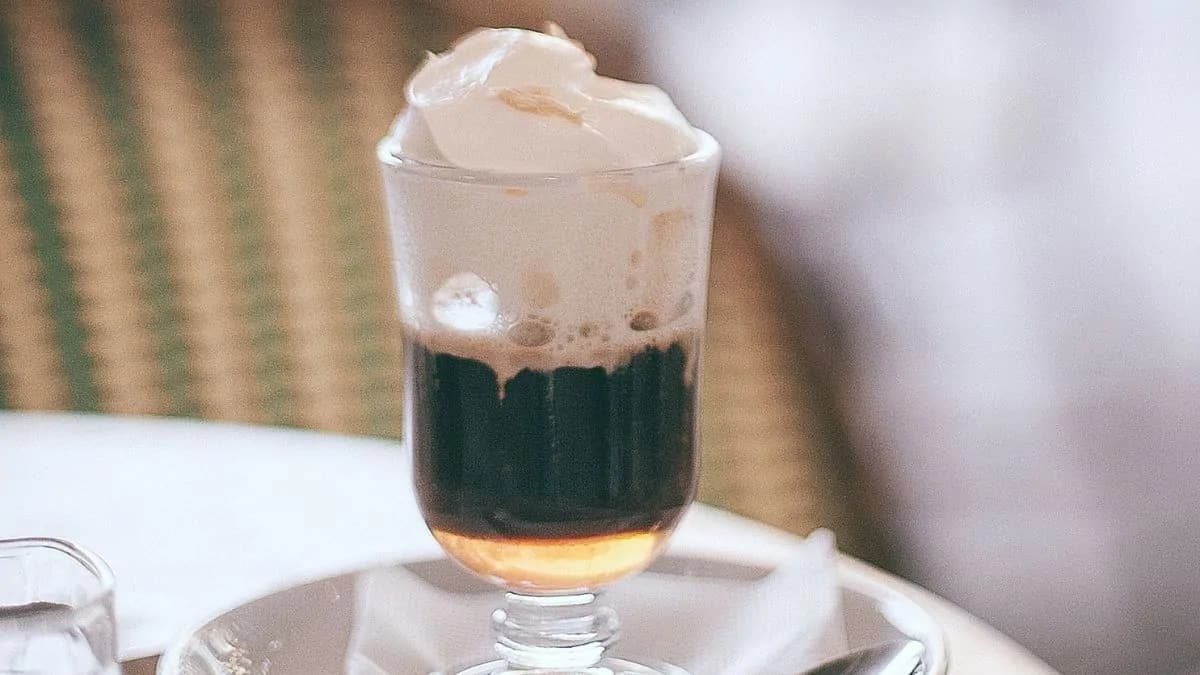
Irish Coffee
In the winter of 1943, Foynes, a small port town in County Limerick, was a key stopover for transatlantic flying boats. One night, a flight bound for New York battled foul weather for hours before its captain gave up and turned back. Kitchen staff were hastily summoned to look after a plane-load of chilled, bedraggled passengers.
Chef Joe Sheridan decided ordinary coffee wouldn't do. He stirred a measure of Irish whiskey and some sugar into the hot brew and floated cream on top. When a grateful traveller asked whether the beans were Brazilian, Sheridan is said to have quipped that it was Irish coffee. The name stuck, and after a travel writer carried the idea to a San Francisco bar in 1952, the drink set off around the world.
Greek Frappé: No Hot Water, No Problem
Source: Pexels
In September 1957, Nestlé was promoting an instant chocolate drink for children at the Thessaloniki International Fair, prepared by shaking the powder in a shaker. During a break, a company representative named Dimitris Vakondios craved his usual Nescafé but couldn't find any hot water. Undeterred, he tipped the instant coffee into a shaker with cold water and shook hard. Out came a thick, pale froth, and, as the story goes, a coffee-spattered suit to go with it. By the late 1970s, the frappé had become Greece's unofficial national coffee, sipped slowly through a straw at seaside cafés every summer.
The Beauty Of A Happy Accident
What links these four drinks is a moment of improvisation, as nobody set out to invent them. A chef, a salesman, a bartender and a barista each faced a small problem and solved it with whatever was at hand. So, as you raise a cup this Coffee Day, spare a thought for the happy mishaps that found their way onto menus around the world.