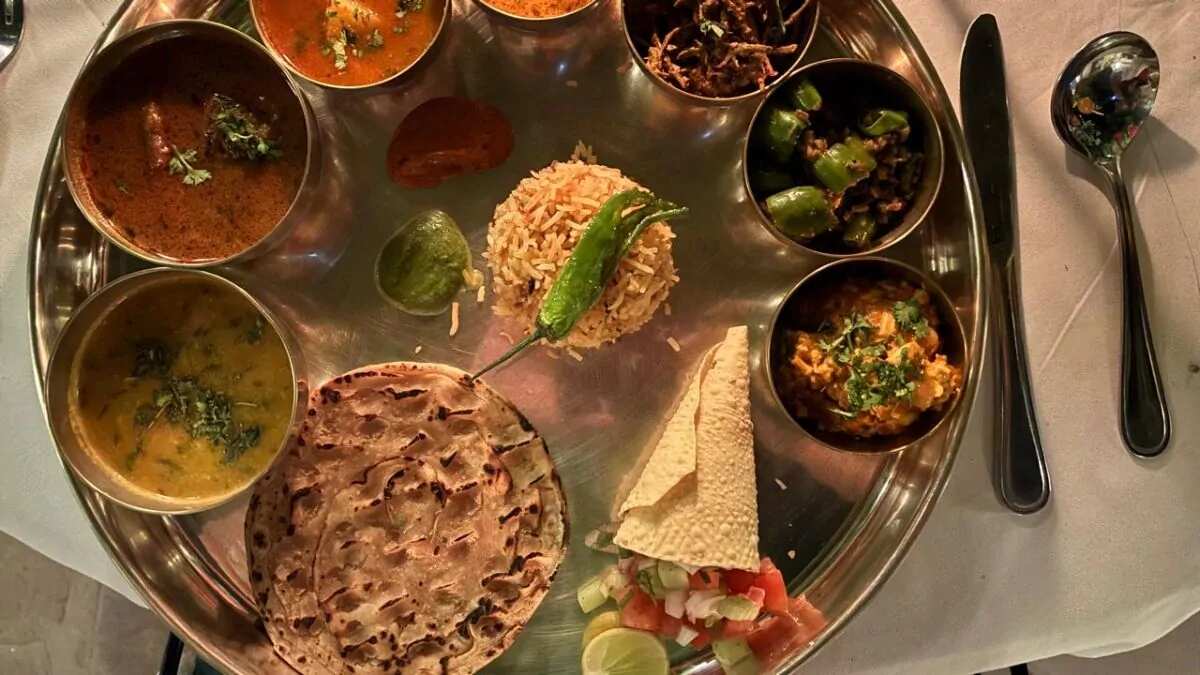
Situated on the outskirts of Jodhpur, Rohet Garh has been home to the same family since 1622, when it was awarded for valour during a fight. It first began in 1990 as a 34-room haven from the outside world with a focus on horseback riding. The late matriarch Jayendra Kumari was particularly well-known for her food, and she wrote a little cookbook at the request of many of her visitors. Today, Rohet Garh's chefs and their families gladly offer cooking classes to guests upon request. Cooking with Kadir Khan, who worked alongside Mrs Kumari for more than 25 years, is a once-in-a-lifetime experience which includes tasting their carefully chosen experiences and eating your way through the kitchen's dishes at your own leisure.
Image Credit: Rajlakshmi Dastidar
When you walk into someone’s space, like Rohet Garh, which is surrounded by greenery and situated beside a serene lake, it instantly contrasts with Rajasthan's typical mayhem. For breakfast, lunch, and dinner, the on-site restaurant offers a buffet of local cuisine. It's a lovely dining room with murals of horses galloping on the walls and a view of the pool. You can easily plan a two-night trip here and indulge in a variety of delectable local dishes and creamy curries that are a part of the Rohet Cuisine cookbook. Although it's not the largest buffet, there are enough options for meat, fish, and vegetables, along with the occasional Western items, to suit a variety of palates. The Rajasthani cuisine varies from region to region within the state, and in the village of Rohat, the Singh family builds it into your experience and lets you learn too. The Rohet Garh cuisine cookbook is handed to you, right before the culinary workshop begins, where you learn simple, daily-life dishes that you can customise to your liking.
Image Credit: Rajlakshmi Dastidar
A Rohet Cook Book For The Ages To Come
One dish at Rohet Garh that really stays with you is Harra Tamatar Ka Sabzi, straight out of the Rohet Garh cookbook, and rooted in memory. Avijeet Singh, Managing Director, tells Slurrp, "It’s a recipe passed down from my grandmother, something she created herself, and the family continues to cook it as a way of keeping her presence alive.” The cookbook itself feels more like an invitation than a rigid guideline; even if you're not very good in the kitchen, it encourages you to explore, interpret, and customise it. This improvisational energy is inherited, and he recalls watching his grandmother cook, always instinctive, always adding her own touch to keep the legacy going.
Image Credit: Rajlakshmi Dastidar
Food, here, is a legacy for him. Growing up in a family deeply connected to what they eat; ancestors, grandparents, parents, siblings, meals weren’t just routine, they were remembered, talked about, missed. “Guests who’ve stayed at Rohet Garh often carry those memories with them long after they’ve left. Raised on those standards, especially when it comes to Rajasthani cuisine, I intend to preserve that same feeling through every dish served today,” he explains.
Rohet Garh has maintained its Marwar and Rajasthani heritage while showcasing the cuisine to its guests. You’ll be having double servings of large chillis with soaked methi or fenugreek seeds and rabodi ki sabji, which are pasta-like sheets of buttermilk and maize flour that are dried like papads and cooked in a buttermilk or curd gravy with turmeric, chilli, and asafoetida, during one of the dinners. As part of the cookbook by the late Jayendra Kumari, the thali also has the lal maas and safed maas that are so popular among non-vegetarians.
Even while everything is rooted in the past, it establishes this equilibrium where nothing feels trapped in it. That's also the essence of the Rohet cookbook. With 37 years in the food and beverage sector, the bar programme at Rohet Garh also invites you to calm down. You can sip on a strawberry frappe cocktail that is as smooth as it sounds without a hint of bitterness that comes with your usual alcohol infused drinks, while another rose and peach cocktail really helps wash down the rest of the Rajasthani thali that has panchmel dal, gatte ke sabzi, ker sangri, missi roti, brown rice, papad, kachumbar, and some chutneys.
The interesting part about reading through the cookbook is that you learn every dish which has been taught to the chefs and the rest of the culinary team either by Mrs Kumari herself or by Chef Kadir Khan. If you follow the cookbook step-by-step, you’ll notice the difference, that’s just a smidge. Mrs Kumari mentions in the introduction that, to suit the Western palate, the dishes use very little chilli or no chillies at all.
For her and the family, this cookbook stands as the living legacy since 1622. The cookbook not only offers guests a taste of Rajastahn and the family but also leans into a few dishes like fish sula, poached egg in tomato gravy, Rajasthani mutton pulao, Rajasthani kadhi, amchur loonji, ghewar dal, sooji halwa and so on. These if you choose from the cookbook, or you have a larger group, the hotel will gladly allow you to learn these during the culinary workshop. Later on, you get to taste the cuisine you cooked and be your own judge!
Image Credit: Rajlakshmi Dastidar
Tasting traditional comforts, such as a well-prepared fruit trifle that hasn't changed over time, is one of the enduring attractions of the cookbook. A few of the desserts at Rohet Garh, such as a really delightful poached guava pudding, are reminiscent of pre-liberalisation India, when the kitchen was simple, and the ingredients were simple but well chosen. But, it’s dishes like the mirchi and methi seed sabzi, along with the classic trifle and biscuit pudding made with Marie biscuits, that stood out, especially in contrast to today’s often overworked desserts. Another interesting dish that you should try at home if you miss Rohet Garh is the Crepes de Rohet, which is a burst of fruity fillings of bananas, oranges, cream and sugar.
It's not simply unique to live in a 400-year-old house; it's a true honour and privilege. Avijeet says, “It also has some weight. It is our duty to protect what has been developed over many generations while allowing it to change. That harmony is evident in every aspect of Rohet Garh, from the way food is prepared and served to the way guests are welcomed.” On the other hand, the family’s sister property, Mihir Garh, offers a view of the Thar, a candlelight dinner and a cuisine that’s partly reviving forgotten techniques on a global culinary scale.
Image Credit: Rajlakshmi Dastidar
A Dinner At Mihir Garh: A Modern Culinary Take
A communal patio ideal for sunset viewing, two lounges, three courtyards with cascading fountains, and an infinity pool are among the architectural beauties inside Mihir Garh. They are creatively and vibrantly furnished with carved wood, embroidered and mirrored fabrics, and Rajasthani antiquities. Mirror work adorns fireplaces made by local women. Mihir Garh's name means “fort of the sun,” and it's difficult to think of a nicer place to be when the sun sets over the property. Nothing is ostentatious or showy, and a celebration of regional craftsmanship in food and culture is deftly and tastefully blended.
A deep blue infinity pool that empties into expansive, open pastures is accessible from the main restaurant. There is a certain amount of silence during meals here, occasionally disturbed by distant views of wildlife. The menu leans heavily into local flavours, but there’s a global flair that is enough variety to keep things interesting across multiple meals. An intimate, candlelit meal on the balcony one evening completely changes the atmosphere. Food at Mihir Garh is a splurge of finesse, so to say and the cocktails are a class apart. As you take a seat by the infinity pool, you are served your choice of wine, an Indian sauvignon blanc, or a refreshing gin and tonic as you watch live folk music every night.
Image Credit: Rajlakshmi Dastidar
“It doesn’t matter how humble the ingredient or how elaborate the technique; what matters is execution. Every dish is the result of careful research, repeated trials, and a clear intent to present the best possible version on the plate. It’s a quiet, rigorous approach that places perfection above all else,” say Avijeet.
Bringing Back Forgotten Flavours For The Modern Table
When talking about reviving cooking techniques in Mihir Garh that guests really want to taste food from, ‘khad maas’, a traditional desert technique utilised by nomadic populations, is one of the menu's most captivating. Meat is wrapped, frequently in rotis or banana leaves, buried underground with hot charcoal, and allowed to cook gradually over time because years ago, when the nomads were looking for their ways and needed to hunt to survive, not a lot of heavy equipment was available. At Mihir Garh, this forgotten method has been reintroduced with care, bringing both depth of flavour and a sense of history back to the table. It is a regal delicacy served with dollops of style, and the entire cooking procedure takes eight to nine hours, so if you’re planning to have it, be sure to let them know beforehand.
Image Credit: Rajlakshmi Dastidar
The restaurant is furnished with high-backed rattan seats, freshly cut flowers, and works of art. It is lit by lamps at night and flooded with sunlight during the day. With a few hours' notice, Chef Bahadur would gladly construct a custom menu for you if you wanted. He is an expert in regional Rajasthani, Indian, and European cuisines, which was the highlight of the dinner. Specialities include raan or spiced-crusted roast lamb, chicken pilaf and gatta, a luscious yoghurt-based curry with chickpea dumplings.
If you want, you can also step back into the days of the Raj with Shikar Dinners, reviving the romance of royal desert hunts in a refined, modern way. A camel cart ride through the quiet Thar landscape sets the tone, leading to mashaal-lit pathways and an intimate campsite. You sink into cushioned chaarpais as you sip on handcrafted drinks, while Manganiyar musicians and Terrah Taal dancers create a cultural backdrop. Follow a softly lit trail to your table beneath a sky full of stars, where a curated spread of smoky kebabs and contemporary barbecue brings together tradition and elevated dining in the desert. Meals are primarily made from local food and traditions passed down through generations, providing an authentic taste of Marwar.
Image Credit: Rajlakshmi Dastidar
That same weight is carried by the soil itself as well. Constructed on top of Malanath Ji Ka Dhora, a dune, the property is inspired by the Marwari horse dynasty and a warrior saint connected to the area's history. Lastly, ending the trip with a mouth-melting cheesecake, Avijeet tells Slurrp, “Even 50 years from now, we want Mihir Garh to be timeless. We want people to feel that it is fresh.”