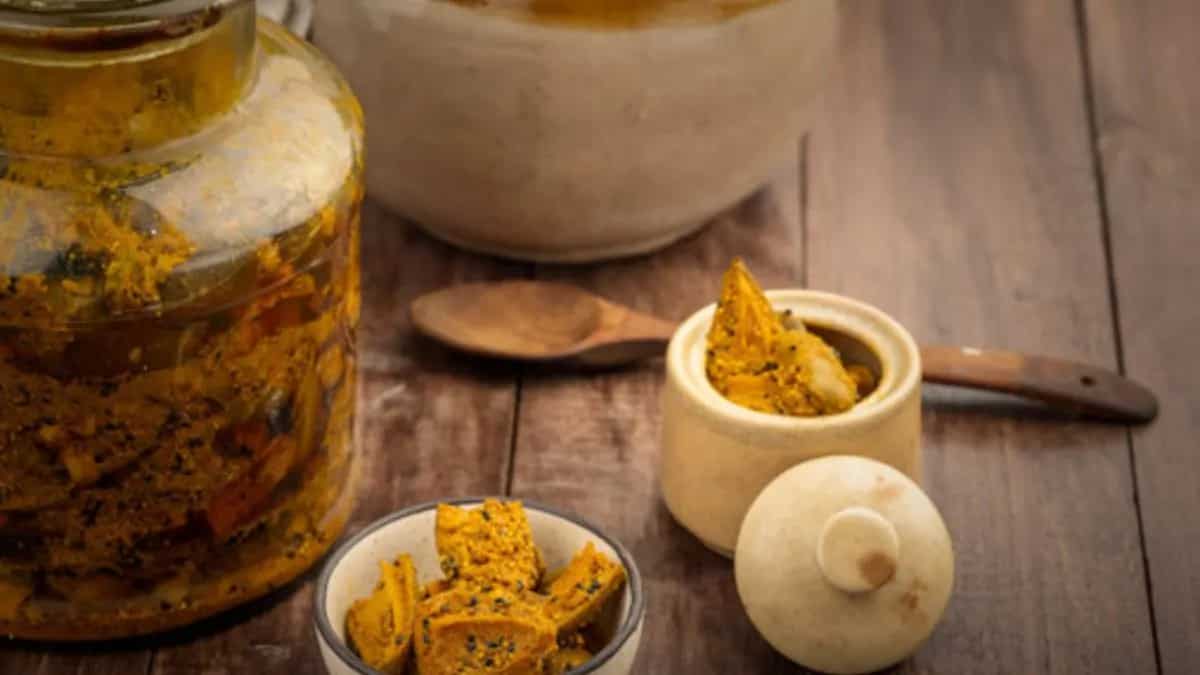
Pickle in India is seldom just about a jar of chopped mango placed beside a plate of dal and rice. Across the country, there are many local ingredients that have found their way into pickles, particularly when a seasonal fruit, wild plant or regional vegetable has to be preserved for a longer time. That is how you get pickles that are made with desert berries in Rajasthan, soft fern shoots in the Himalayas, bamboo shoots in the Northeast and sharply sour fruits along the Konkan coast.
Some are dry and extremely spiced, whereas others depend on salt, oil or fermentation to create their taste. They also taste very distinct from the typical aam and nimbu pickles found across India. From ker-sangri achar to lingri and hog plum pickle, these regional varieties show how innovative Indian pickling traditions can go beyond when the ingredient changes.
Ker Sangri Achar: Rajasthan’s Desert Pickle
Ker and sangri are closely knitted with Rajasthan’s arid landscape, where these hardy desert ingredients turn into part of local cooking. For the pickle, ker berries and sangri beans are first cleaned, dried or soaked as needed and mixed with mustard oil, salt, chillies and whole spices.
The outcome is quite distinct from a juicy mango pickle. Ker brings a sharp, a bit bitter tang, whereas sangri adds a firmer and chewy texture. The masala and mustard oil give it warmth and depth. It works especially well when paired with bajra roti, dal or a simple Rajasthani meal.
(Credits: Wikimedia Commons)
Lingri Achar: A Himalayan Pickle Made With Fern Shoots
In Himachal Pradesh, lingri refers to soft fiddlehead fern shoots, which are fed when young and are tightly coiled. Rather than letting this short seasonal window pass away, the shoots are preserved as pickles by mixing salt, mustard and spices. The fern has a distinct firm, a bit crunchy texture and an earthy vegetal taste that takes on the sharpness of the masala of the pickle.
Unlike the soft pieces of many fruit pickles, lingri offers you something to bite into. It is classically served as an accompaniment to regular mountain meals, making it an extremely interesting example of how Himalayan communities preserve the seasonal produce.
Bamboo Shoot Pickle: The Fermented Side Of Northeast India
Bamboo shoots are used across many Northeastern cuisines, but in pickle form, it brings out another side of this ingredient. Relying on the regional cooking method, young bamboo shoots may first be fermented and then mixed with salt, chillies, mustard oil and spices, then kept for fermentation. Fermentation gives the pickle its typical sour, earthy fragrance, while the shoots remain a satisfying crunch.
Varieties like mesu are linked with the Himalayan and Northeast region, whereas other fermented bamboo shoot preparations are found across states like Manipur and Assam. The flavour is more pungent and fermented than the usual oil-heavy achar, making it an effortless way to discover another side of Indian pickling.
Hog Plum Pickle: A Konkani Favourite With A Sharp Sour Bite
Known as ambade or amtekayi in various Konkani and Karnataka food cultures, hog plum is a seasonal fruit that has a naturally tart and sour taste. Tender fruits are salted at first, letting them soften their tartness and release their juices, before being mixed with roasted mustard, chilli and fenugreek (methi).
Some traditional South Canara versions are also made without oil, letting the fruit and spice blend add the character of the pickle. The result is too sour, salty and spicy, having a firm bite when soft hog plums are used. It pairs particularly well with rice and dal, where its acidity cuts through an otherwise simple meal.
Gandal Ka Achar: Punjab’s Mustard Green Stem Pickle
Not every pickle requires a fruit or vegetable that is generally treated as the main ingredient. Gandal ka achar uses the delicate stalks of mustard greens, turning a part of the winter crop into a spicy and tangy Punjabi pickle. The stems are seasoned with mustard seeds, fennel, fenugreek, turmeric, chilli and mustard oil, with vinegar used in some versions.
The final taste of the pickle is crunchy, pungent and warmly spiced, having the unmistakable character of the mustard greens. It is especially interesting as it reflects the seasonal rhythm of Punjabi kitchens, where fresh sarson arrives in winter, and even its stalks are used in cooking, that is otherwise discarded as waste.