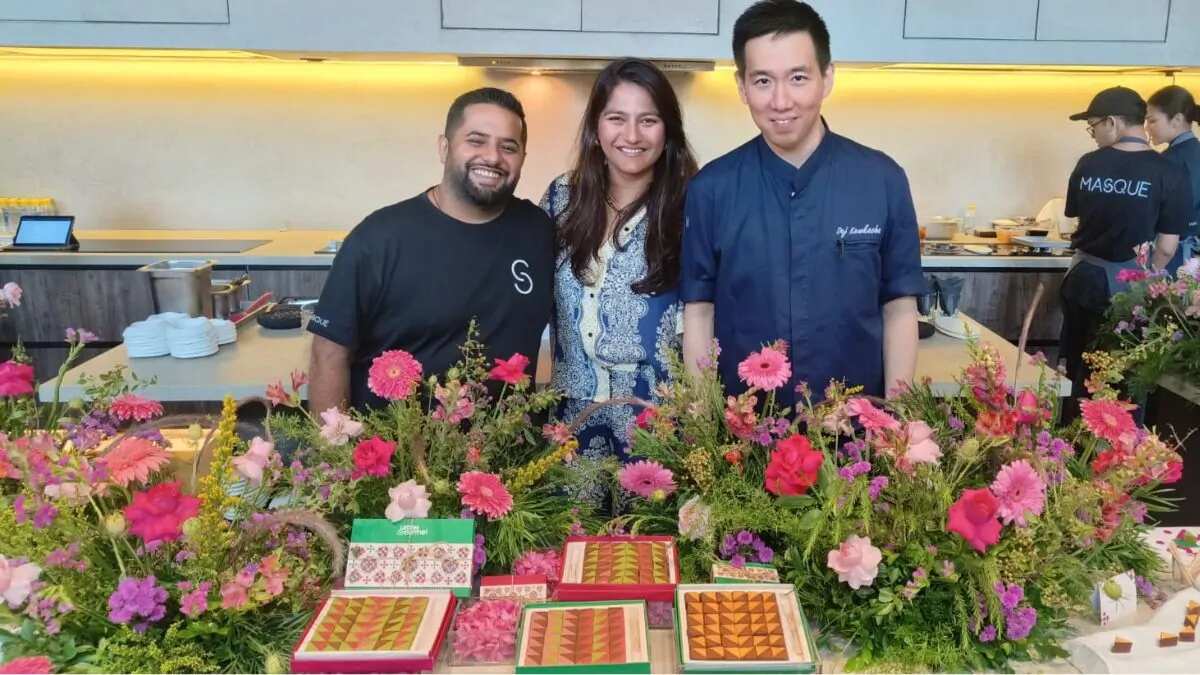
“Muh meetha karo,” you’ll hear every Indian aunty echo whenever good news is in the offing. For festivals, birthdays, new jobs or simply a meeting between loved ones, sharing sweets to commemorate or invite good fortune is a language that knows no borders. During the many festivals that pepper the year, you’ll find desserts of all kinds in the spotlight and in 2025, the concept is getting a bit of a makeover. Two culinary worlds have collided in the most delicious way imaginable as Chef Varun Totlani of Masque, the four-time winner of 'Best Restaurant in India' at Asia's 50 Best helmed by Aditi Dugar, has joined forces with Thai pastry virtuoso Chef Dej Kewkacha, crowned Asia's Best Pastry Chef for 2025. And together, they've concocted Rangoli – a mithai collection that redefines what Indian sweets can be.
Though at its heart it’s a seasonal festive offering, it’s also a meeting of two culinary styles and cross-cultural ingredients. Chef Varun Totlani's contemporary Indian approach meets Dej's innovative use of local Thai flavours which shaped dessert culture across Southeast Asia. The brainchild, Rangoli, named after the vibrant floor art that adorns Indian homes during festivals is emblematic of the artistry that went into this collaboration.
The Meaning Of Mithai
Is any Indian celebration complete without mithai? From the simplest family gathering to the grandest festival. They're offerings to deities, tokens of love between families, and symbols of prosperity and joy. With Rangoli, Chefs Totlani and Kewkacha have achieved a balance between old world and new. Rather than abandoning the cultural significance of mithai, they've enhanced it with techniques and flavour profiles that speak to contemporary palates while honouring India’s mithai-laden past.
The Essence Of Rangoli
The collection features six distinctive flavours that showcase this east-meets-southeast philosophy, Matcha Coconut, Raspberry Rose, Tamarind Chilli, and Hazelnut Chocolate form the core options, whilst Orange Dark Chocolate and Passion Fruit Dark Chocolate cater to vegan preferences. Each one is carefully constructed highlight the individual ingredients. For example the umami depth of Japanese-inspired matcha meeting the tropical smoothness of coconut, or the tartness of tamarind (a fruit beloved in both Indian and Thai cuisines) balanced with the heat of chilli.
On The Tamarind Trail
One of the favourites for both chefs is the Tamarind Chilli variant which is tart with a lingering heat and none of the cloying aftertaste which so many mithais fall prey to. Chef Dej's personal affinity for working with tamarind also shines in this flavour. The fruit, which features prominently in both Thai and Indian cooking, serves as a natural bridge between the two culinary traditions. In Thai cuisine, tamarind provides the sour element in classics like pad thai and som tam, whilst in Indian cooking, it's essential to sambar, chutneys, and numerous regional specialities. Dej's expertise with this ingredient allows him to navigate the delicate balance between the fruit's natural tartness and the sweetness expected in festive treats.
This understanding of shared ingredients but different applications exemplifies the brilliance of the collaboration. Both chefs recognise that whilst their techniques may differ, Dej's French-influenced precision meeting Totlani's bold Indian flavour combinations, their respect for ingredient integrity remains constant.
A Visual Feast
Aside from being a delight for the palate, the visual presentation of Rangoli mirrors its conceptual nature. The vibrant pink and green colourways streaking through the mithai boxes are designed to create beautiful, colourful patterns reminiscent of traditional rangoli art. This aesthetic approach is well-practiced and typical of both chefs' ethos of storytelling through food, something that has become Masque's signature under Totlani's leadership and of Dej's work at Bangkok's Kyo Bar, Thailand's first dessert bar featuring seasonal omakase menus.
While mithai for festive gifting is never likely to go out of style, this collaboration highlights what we’re seeing so much of in the world of modern Asian dining. A launch into the world of innovation, that’s still deeply grounded in tradition. As Indian cuisine gains global recognition and Thai flavours become increasingly popular worldwide, Rangoli represents a maturation of both culinary scenes. It's not fusion for fusion's sake, but rather a thoughtful consideration of how traditional celebrations can embrace global influences.
The Rangoli boxes will be priced at:
- 250 gm – INR 3150*
- 350 gm – INR 4200*
(*Prices are inclusive of taxes, delivery is extra)