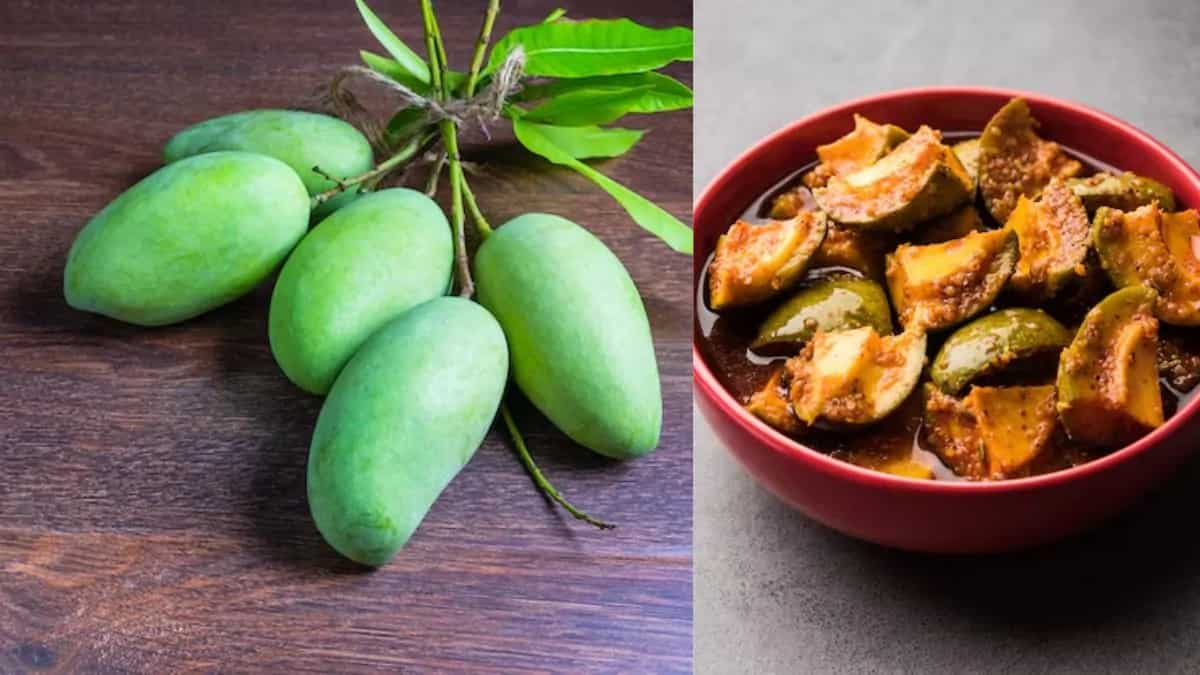
The process of making mango pickle at home begins long before the oil, spices, or jars come into the thought. It starts by choosing the perfect raw mango. And that one simple step can decide how your pickle will turn out to be, whether it remains crisp, absorbs the spices nicely, or if it lasts through the season.
Raw mangoes that are used for pickling are very distinct from the ones you may choose for chutney or panna, so don't pick them with the same metrics in mind. For pickling, you need to look for firmness, low fibre, and a certain sharp sourness that keeps up even after weeks of curing. A slightly wrong pick can lead to soft, soggy pieces or a pickle that does not taste balanced.
If you have ever wondered why some homemade pickles taste just perfect while others are extremely flat, the answer is the mango itself. Knowing what to examine for makes the process much easier and far more dependable. Here are a few helpful ways to pick raw mangoes that truly work well for pickling.
Go For Firm, Hard Mangoes
When you pick up a raw mango for pickles, it should feel solid and heavy when you have it in your hand. There should be no soft spots or little give when you press it. Softness usually means the mango has begun to turn ripe, which can affect the texture of the pickles. Firm mangoes retain their shape even when being cut and soaked in the spices. This is what gives pickles their signature bite, a bit slightly crunchy and not mushy. If the mango feels even a bit spongy, it's good to skip it.
(Image credit: Freepik)
Check The Skin For A Clean, Tight Surface
The outer skin reveals a lot in itself. Look for mangoes that have smooth, tight skin that does not have wrinkles, dents, or even the black patches. A dull or shrivelled surface often means the fruit is aging or losing its moisture. For pickles, you can have mangoes that are fresh and full of natural juices, as that aids in proper curing. Small natural marks are fine, but avoid anything that appears damaged or bruised, as it can impact both taste and shelf life.
Choose Mangoes That Feel Heavy
A good raw mango should feel thick and a bit heavier than it appears. This usually means it has more pulp and moisture within, which helps the pickle develop flavour over time. Lighter mangoes can often feel dry or fibrous, which does not work well for the pickle. When you are buying in bulk, just pick up a couple and compare, and you will notice the difference for yourself. Heavier mangoes nearly always give better results.
Look For A Bright Green Colour
For pickling, the colour matters more than you think. Raw mangoes should have a bright, even green shade. If you see yellow patches or a bit of blush, it means the fruit has begun to ripen. It will affect both the sourness and the firmness. A good pickle needs that sharp kick, which can only come from fully raw mangoes. Uniform green skin usually means the mango is at the right stage for pickling.
Cut One To Check Fibre And Seed
If you are buying mangoes in large quantities, it is worth cutting one mango before you begin the process. The inside should be pale, firm, and not too stringy. Excess fibre can make the pickle feel a bit uneven. Also, examine the seed—it should be soft and underdeveloped. Mature seeds indicate the mango is older, which can affect the texture of the pickle. This one small check can save you from making a whole batch of the pickle that doesn't turn out right.
(Image credit: Freepik)
Smell For Freshness
Raw mangoes for pickling have a light, fresh smell and not a sweet or fruity smell. If the mango smells slightly ripe, it is not ideal for the pickle. That sweetness can toss off the sharp, tangy flavour that is expected out of a pickle. A neutral, green smell is what you should be looking for. It indicates freshness without any hint of ripening, which is just what works best for long-lasting pickles.