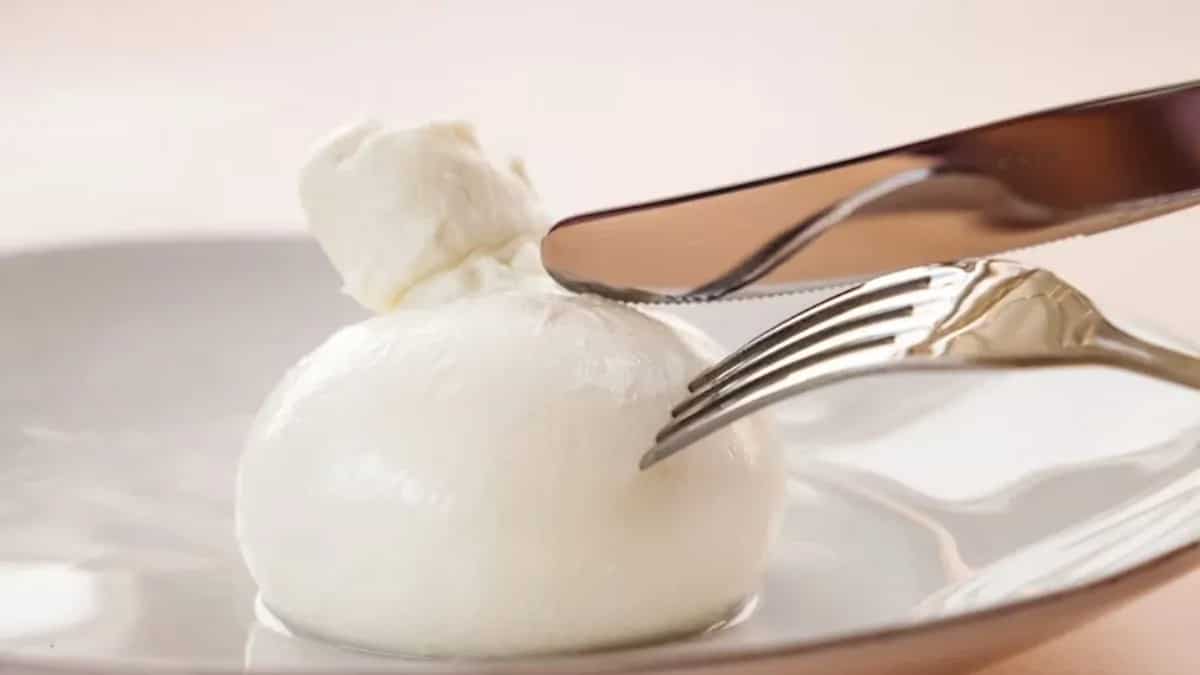
Who doesn't love a creamy dollop of burrata sitting atop their pasta? This luscious, wobbly cheese from Puglia is essentially a 'pouch' of stretched mozzarella filled with a mixture of fresh cream and stracciatella, which are shreds of mozzarella soaked in cream. For those who are cheese lovers, in texture, the outer surface of burrata is solid, and the inner layer is stracciatella, a type of cheese and cream. Usually, these are paired with salads and even used in pizzas to kickstart your taste buds.
Image Credit: Unsplash
The soft dumpling of cheese typically sits over a cooked dish as it is split open with a knife, oozing out soft, creamy and heavy cheese which can be smeared over the dish. The burrata has a neutral taste which can be paired with a large number of dishes; in consistency, it can be compared to heavy Indian malai, which is spreadable, especially since it's a milk cream cheese. If ever you’ve wanted to use burrata in your recipes at home, make it on your own; it’s fun. It is not only time-saving, but it will also give you a newfound skill that you can later brag about when you cook up some tasty Italian dishes. Here are some tips to help you along the way!
Choosing The Milk Is Crucial
The foundation of great burrata is high-quality, whole milk, so you need to always opt for the freshest, full-fat cow's milk you can find. This means that non-homogenised or "vat pasteurised," as ultra-pasteurised milk will not curdle properly. Raw milk, when legally available, produces the richest flavour of burrata. The higher the fat content, the creamier your final burrata will be. Also, another tip while making burrata at home is to try to avoid skim or low-fat varieties entirely. For a more authentic Italian taste, try sourcing buffalo milk which delivers a richer, slightly tangy flavour that traditional burrata makers in Puglia have relied on for generations.
Image Credit: Wikimedia Commons
Art Of Curdling Milk
Proper curdling is what separates great burrata from mediocre cheese as you know and can probably tell when you taste it. What you need to do is heat your milk slowly to around 35–38°C and try never to rush this step since it might damage the proteins. Add liquid rennet, diluted in cool, non-chlorinated water, then gently stir for 30 seconds. You have to let the pot sit undisturbed for 30–45 minutes until you get a clean, firm curd. You can try to test the texture by pressing a finger in and if the curd breaks, its ready for the next step. It’s recommended not to use chlorinated tap water as it can inhibit curdling, so always use filtered or bottled water for consistency!
Performing The Pasta Filata
The stretching process is known as pasta filata and this is what gives burrata its signature silky, mozzarella-like shell. Cut your curds into small cubes, let them rest briefly, then heat them in hot water around 80°C or whey until pliable. Using gloved hands or wooden paddles, fold, pull and stretch the curd repeatedly until it becomes smooth, glossy, and elastic. The simple rule you need to follow is you have to work quickly while the curd is hot sinceit stiffens fast as it cools down. Over-stretching makes it tough; under-stretching leaves it grainy, so, you need to aim for a soft, pillow-like texture before shaping it into your pouch.
Image Credit: Wikimedia Commons
Strain & Drain
After cutting the curds, ladle them into a fine-mesh strainer or cheesecloth-lined colander and allow the whey to drain naturally. It might take some time but avoid squeezing or pressing which toughens the final texture. Let the curds drain for at least 15–20 minutes at room temperature.
Mixing The Filling
The stracciatella filling is the soul of burrata and getting it right makes all the difference. Shred or hand-tear leftover mozzarella curd into thin, irregular strips; the uneven texture is intentional and desirable. Gently fold the strips into cold, very fresh heavy cream using a light hand; do not whip or over-mix. Season with a small pinch of fine sea salt to elevate the flavour subtly. The ratio should be roughly two parts cream to one part curd by weight, creating a filling that is rich, pourable, and slightly tangy.
Serve Burrata At Room Temperature
Burrata’s flavour is best when served at room temperature. If you’re planning to serve burrata to your guests, remember to take it out of the freezer at least 30 minutes beforehand so it has time to warm up. Since burrata is classified as fresh cheese, it’s recommended to eat it as soon as it’s made. This means that burrata shouldn’t be stored for days at the end.
Best Pairings With Burrata
Burrata pairs well with fresh tomatoes, arugula in salads and can be commonly found atop a Caprese salad. It also pairs well with prosciutto pizza. When paired with meats, burrata goes well with prosciutto crudo and bresaola. A drizzle of olive oil and black pepper are the only condiments that you would need to enjoy this otherwise delicious fresh cheese. It is less common to pair burrata with fruit, honey, or jams, and it definitely does not go well with fish. Wines that you could enjoy alongside a dish with burrata include sparkling wine, such as champagne or prosecco, white wine such as Pinot Grigio, Pinot Blanc or Grüner Veltliner and light-bodied red wine, such as Pinot Noir.